Rocket Booster Refurbishment: From Recovery to Flight-Ready
The booster stays on its stand — the workstation moves along it.
Reusable rockets changed the economics of launch — but only if the turnaround is fast, safe and traceable. This guide walks through what actually happens to a recovered first stage, stage by stage, and shows where fixed workstations become the bottleneck.
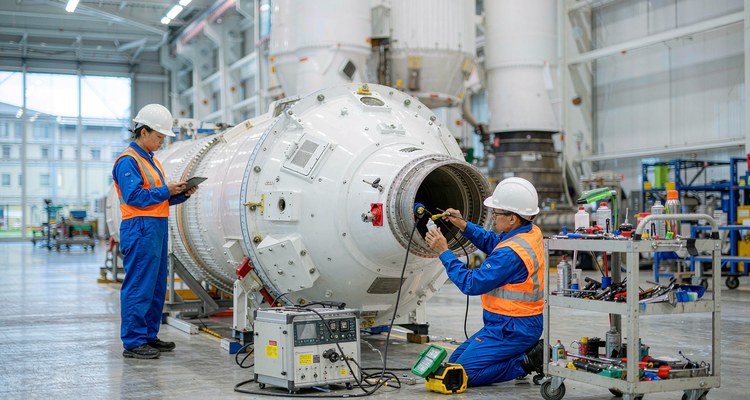
Five stages after touchdown
Recovery & Transport
Booster is secured, transported to the refurbishment facility and placed on horizontal integration stands.
Cleaning & Assessment
Residue and salt/soot removal, then a general condition assessment against the flight log.
Inspection & NDT
NDT on welds and high-stress structures; engines, avionics and valves bench-tested or borescoped in place.
Refurbishment
Consumables and life-limited parts replaced; protective coatings renewed; findings from stage 3 closed out.
Re-verification
Static fire or acceptance tests, documentation review, and stacking for the next mission.
Why fixed stations slow the turnaround down
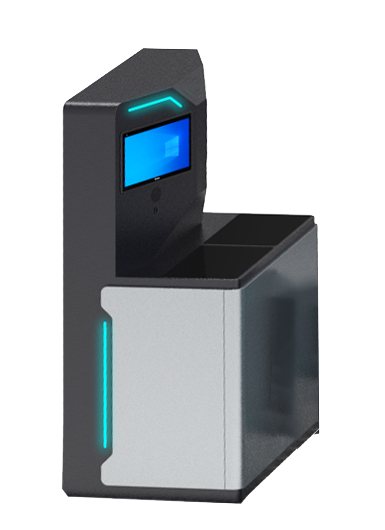
One mobile workstation across all five stages
Follows the booster axis
Extra-long segmented deck and fine travel drive smoothly along horizontal stands — no re-rigging between zones.
Carries the control layer
Weighing gate, tool/material cabinets and digital kanban ride on the platform, so control is where the work is.
Keeps records flight-ready
Every boarding, tool check-in and work step is logged — the audit trail a reuse program needs, built in from day one.
Frequently asked questions
Publicly reported turnarounds for leading operators range from a few weeks to months for early flights, with the best cases measured in weeks. The bottleneck is rarely a single repair — it's access: every hour spent re-rigging scaffolding or waiting for a free station adds to the clock.
Foreign Object Debris — any tool, fastener or material left inside the vehicle. On a reused booster that flies again, leftover items can cause mission loss. That's why serious programs control tool and material flow at the work zone, not just at the hangar door.
Yes. The platform base can be purchased alone and interfaced to your existing stands and tooling, or the full superstructure — cabinets, weighing gate, kanban — can be built together for native integration. Modules you don't need are not added.