Canada's luxury real estate market has changed. Security is no longer an afterthought — it is a design priority.
In Toronto's Bridle Path and Vancouver's West Side, estates worth twenty million dollars or more sit behind gates that were never designed to stop a vehicle. Cameras record. Alarms sound. But a vehicle driven through a gate reaches the main house in seconds.
Automatic bollards close that gap.
Why Canadian Luxury Homeowners Are Installing Bollards
Across Canada, from Ontario to British Columbia, high-end residential security is shifting from passive monitoring to active access control. Several trends are driving this:
1. Rising property crime in affluent neighborhoods. In Toronto, vehicle-related break-and-enters in upscale postal codes have increased year over year. Thieves no longer arrive on foot — they drive in, breaching ornamental gates with SU Vs or pick-up trucks.
2. Larger lots, longer driveways. Luxury properties in the GTA (Greater Toronto Area) and Greater Vancouver typically sit on half-acre to multi-acre lots. The driveway from the street to the main house can exceed 100 metres. A gate at the street entrance cannot protect the house itself.
3. Snow removal and winter access. Canadian winters create unique security challenges. A bollard installed at the inner driveway can remain operational even when gates freeze or snow obscures ground-level sensors. UPARK bollards operate reliably at minus 35 degrees Celsius.
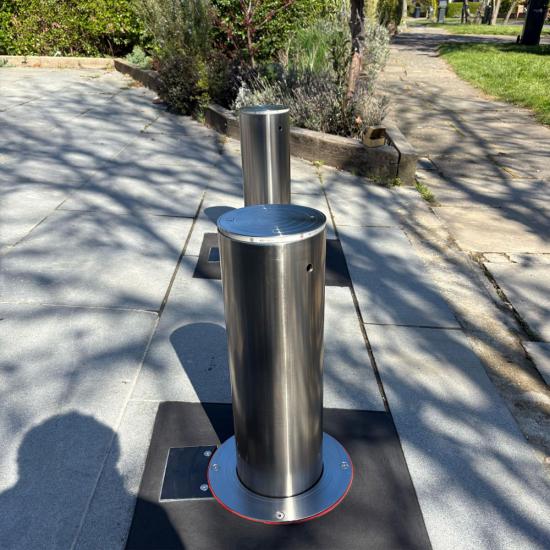
4. Aesthetic expectations. Canadian luxury homeowners invest heavily in landscape architecture. A bollard finished in brushed stainless or custom powder-coat must disappear into the design — not dominate it. The slim 168mm profile meets that requirement.
Where Bollards Fit on a Canadian Estate
The most effective residential bollard installations in Canada follow a simple principle: place the barrier where the driveway meets the house, not just at the street.
- Main house entrance. A single bollard placed 10 to 15 metres from the front door creates a hard stop. Even if the outer gate is breached, vehicles cannot reach the house.
- Motor court / turning area. Many Canadian luxury homes feature a paved motor court where residents and guests park. A raised bollard prevents unauthorized vehicles from entering this space.
- Guest house or garage court. Secondary access points benefit from independent bollard control, allowing selective access without compromising the main residence.
- Boat, RV, or equestrian trailer storage. Properties in Ontario's cottage country and British Columbia's Fraser Valley often include outbuildings or storage areas for recreational vehicles. Controlled access prevents theft of high-value equipment.
What Canadian Installations Require
Canadian residential projects have specific requirements that not every bollard manufacturer can meet.
Cold-weather hydraulics. The hydraulic system must operate reliably at minus 35 degrees Celsius. UPARK bollards use low-temperature hydraulic fluid and sealed stainless steel construction tested to minus 40. In a Toronto January or a Vancouver February cold snap, the bollard operates without warm-up time.
Corrosion resistance. Road salt is unavoidable in Canadian winters. Stainless steel 316 (marine-grade) construction is the minimum standard for residential installations in Canada. Lesser grades will pit and stain within two winters.
Electrical permits and 36V safety. Canadian electrical codes (CEC) require licensed electricians for high-voltage installations. The 36V DC low-voltage system avoids this requirement in most jurisdictions — the bollard can be installed by the same contractor handling landscape lighting, reducing both cost and permitting complexity.
Smart home integration. In Canadian luxury homes, Control4 and Savant are the dominant smart-home platforms. UPARK bollards accept dry-contact inputs compatible with both systems. The bollard becomes part of the home's automation — not a separate industrial system.
UPARK Bollards in the Canadian Residential Market
UPARK automatic bollards are installed at residential and commercial sites across North America and Europe. For Canadian homeowners and their security consultants, three features stand out:
The 36V DC low-voltage system eliminates the need for high-voltage electrical permits. In Ontario and British Columbia, this can reduce installation time by weeks and cost by thousands of dollars.
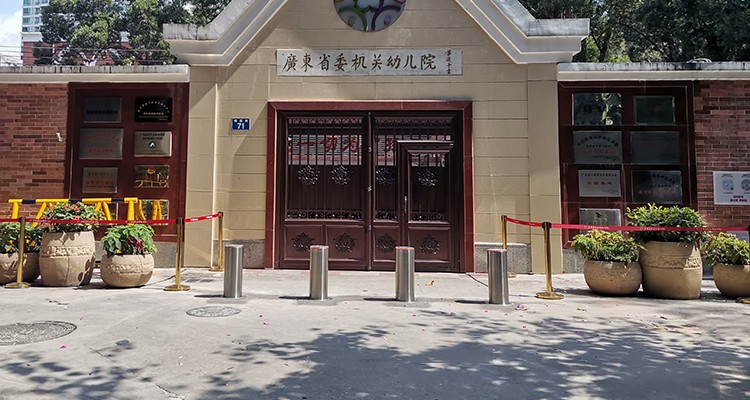
The 20-centimetre overlap between the rising post and the ground sleeve keeps out water, ice, and road salt debris. In a country where winter road salt and freeze-thaw cycles are annual facts of life, this design detail prevents the most common cause of bollard failure in Canadian installations: a jammed mechanism from ice or salt buildup.
And the hydraulic drive operates silently across a temperature range from minus 35 to plus 60 degrees Celsius. No seasonal adjustments. No winter warm-up cycles. The bollard works the same in a Muskoka February as it does in a Vancouver August.
Frequently Asked Questions
Do I need a permit to install automatic bollards on my property in Canada?
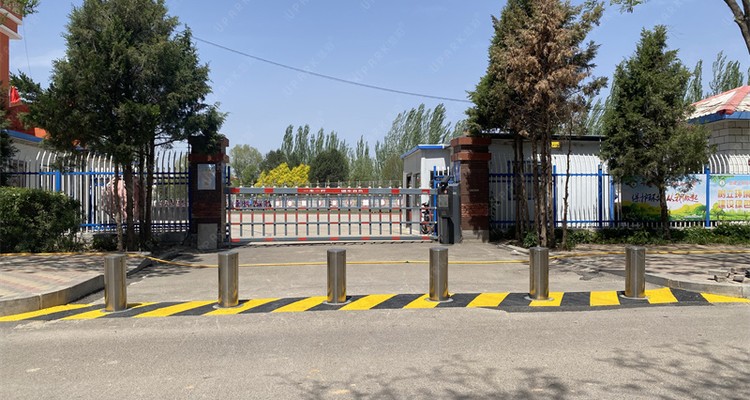
In most Canadian municipalities, installing a bollard on private residential property does not require a building permit, provided it is within the property's boundaries and does not obstruct public right-of-way. Always consult your local municipality and HOA (if applicable) before installation.
How much do residential automatic bollards cost in Canada?
Installed systems typically cost between C$11,000 and C$24,000 per unit, depending on the model, finish, and site conditions. For a typical luxury driveway requiring two bollards, total installation cost ranges from C$22,000 to C$48,000.
Can automatic bollards operate during Canadian winters?
Yes, if the hydraulic system is rated for low temperatures. UPARK bollards use low-temperature hydraulic fluid and sealed stainless steel construction tested to minus 35 degrees Celsius — well below the coldest recorded temperatures in Toronto, Vancouver, Calgary, and Montreal.
Are automatic bollards compatible with Control4 and Savant smart home systems?
Yes. UPARK bollards accept dry-contact inputs compatible with Control4, Savant, and most other major North American smart home platforms. Integration allows the bollard to be controlled from the same interface used for lighting, cameras, and gate access.
Why Security Consultants and Architects Specify UPARK in Canada
For residential projects in Canada, the specification process typically begins with the architect or security consultant. UPARK provides CAD details, specification sheets, and BIM objects to support the design process. The 36V system simplifies the electrical specification and avoids the need for high-voltage permitting.
For homeowners, the benefit is day-to-day: one less thing to worry about through a Canadian winter. The bollard operates automatically, integrates with the home's existing systems, and requires no daily attention.
For Canadian luxury residential properties, security is not just about recording events. It is about preventing them. Automatic bollards are the only measure that physically stops a vehicle-based intrusion — and for high-end residential properties from Toronto to Vancouver, that makes the difference between a secure home and a vulnerable one.
call us :
+86 18206096507 e-mail : [email protected]




 ipv6 network supported