Smart locks have become the go-to solution for homeowners looking to upgrade their security. Keypad entry, smartphone control, voice activation – these features feel cutting-edge. But here's the uncomfortable truth: a smart lock only secures your door. It does nothing to stop a vehicle from driving straight into your home or garage.
In Shakopee, Minnesota, a driver crashed through a residential gate post before hitting another vehicle and fleeing the scene. The incident made headlines, but similar cases happen across the country every week. Residential driveways and entry points remain surprisingly vulnerable – and most homeowners haven't done anything to address that gap.
The Gap Between Digital Security and Physical Protection
The United States recorded 659,880 vehicle thefts in 2025 – the lowest in 40 years, according to the National Insurance Crime Bureau. That sounds like good news until you realize 660,000 stolen vehicles is still a staggering number. In Australia, 65,603 homes experienced vehicle-related theft in 2024, with 55% of incidents occurring in residential areas. In the UK, a vehicle is stolen every seven minutes.
These aren't just statistics. They're gaps in protection that criminals actively exploit.
Modern security focuses heavily on digital protection. Alarm systems connect to smartphones. Cameras send real-time alerts. Smart locks eliminate the need for physical keys. But what happens when someone bypasses your gate entirely and drives through it? Most residential gates are ornamental – decorative ironwork that looks imposing but offers minimal resistance to a determined driver.
When Gate Posts Become Impact Barriers
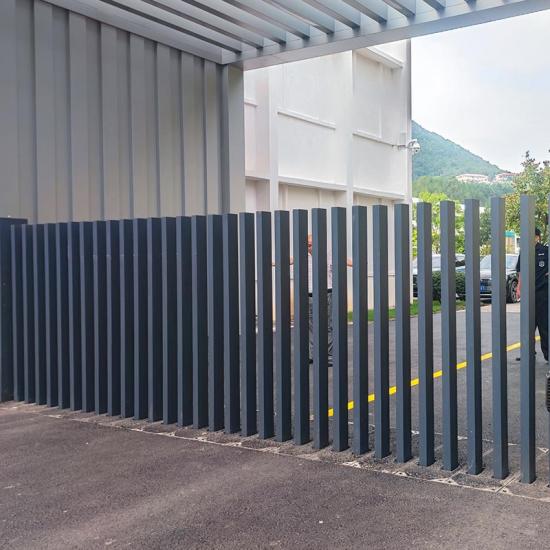
The Shakopee incident highlights something many homeowners overlook: gate posts and entryway structures are often the first point of impact in vehicle-related crimes. Whether it's a drunk driver losing control, a thief attempting forced entry, or an act of intentional aggression, the entryway bears the brunt.

Standard gate posts aren't designed for impact resistance. Most residential gates use hollow steel or aluminum posts set in concrete footings – adequate for wind loads and normal use, but not engineered to stop a moving vehicle. This is where bollards and security posts change the equation.
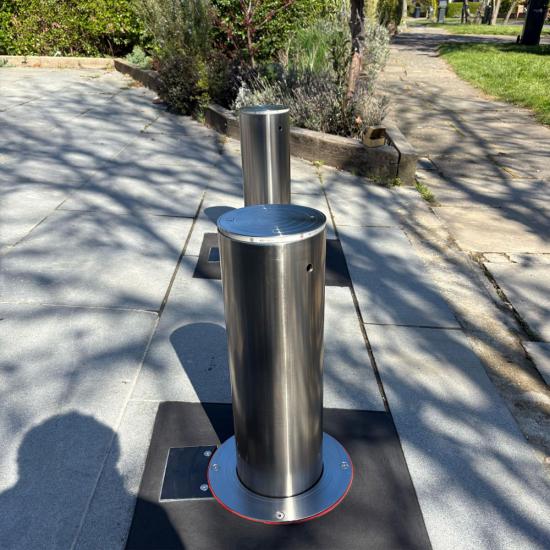
Retractable security bollards install directly into driveways and entryways. When raised, they create a solid steel barrier capable of withstanding significant impact. When lowered, they disappear flush with the ground, allowing normal vehicle access. Homeowners get both security and convenience.
Real Protection, Not Just Appearance
Australia has seen a noticeable uptick in homeowners installing physical barriers after insurance claims for residential vehicle incidents climbed 96% over the past decade. Canadian homeowners in Toronto have begun treating bollard installation as standard home security – not a luxury upgrade.
The reasoning is straightforward. Insurance covers losses after an incident occurs. Bollards prevent incidents from happening in the first place. The math often works out favorably: a single vehicle theft or property damage claim frequently exceeds the cost of a quality bollard system.
Beyond theft prevention, there's the matter of personal safety. A vehicle that crashes through a gate doesn't stop – it continues into the garage, the yard, or worse, the family gathered outside. Physical barriers at entry points create a buffer zone that separates vehicle traffic from living spaces.

Making the Upgrade
Residential bollard systems have evolved significantly. Modern automatic bollards operate via remote control, smartphone app, or keypad – integrating with existing smart home setups rather than requiring separate management. Installation typically takes one to two days for a standard single-driveway configuration.
The choice between fixed and removable bollards depends on usage patterns. Homes with frequent visitors or delivery traffic benefit from automatic retractable systems. Properties with occasional access needs might prefer removable bollards that homeowners install and remove as required.
For most residential applications, a minimum of two bollards positioned at the primary entry point provides adequate protection. Higher-security situations – properties with valuable vehicles, historical significance, or elevated threat profiles – may warrant additional barriers or higher-rated impact-resistant models.
The smart lock on your front door is a worthwhile investment. But protecting your home requires thinking beyond the threshold. Entryway barriers won't make headlines the way smart home gadgets do, but they close a security gap that no keypad can address.
UPARK Product Links:
call us :
+86 18206096507 e-mail : [email protected]




 ipv6 network supported