Getting a contractor quote for automatic bollard installation can feel like a lottery. Prices range from $300 to $800 per bollard, sometimes more, and it's not always clear what you're paying for.
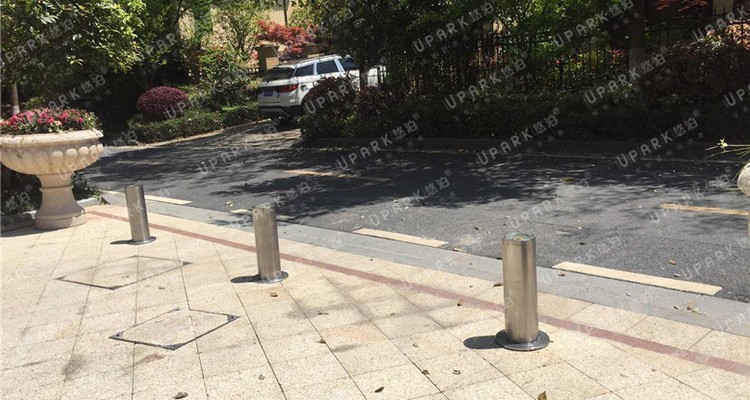
Here's where the money actually goes.
Excavation takes the most time. A standard bollard pit is roughly 400mm wide and 600mm deep. On concrete or asphalt, that means cutting, breaking, and hauling. Labor alone can be $80–$150 per hole depending on your location.
The foundation pour and cure adds another day. Most contractors use a concrete sleeve or ready-mixed fill. Factor in $30–$60 for materials per unit, plus waiting 24–48 hours before the bollard goes in.
Electrical work is where costs spike on 220V systems. You need a licensed electrician for high-voltage wiring. That's a separate trade, a separate invoice, and sometimes a permit. Budget $100–$200 per bollard just for the electrical connection — more if you're running new conduit.
36V low-voltage bollards change this. The voltage is below the threshold that requires a licensed electrician in most regions. A competent handyman or facilities team can handle the connection. That alone saves $100–$200 per unit.
DIY installation is possible with low-voltage systems, but be realistic about what it involves. You'll need a concrete saw or angle grinder, a hammer drill, and a good understanding of the foundation spec. Rental costs for these tools run $80–$150 per day. One mistake on depth or alignment and you're grinding again.
The hidden costs contractors rarely mention upfront: road surface patching ($40–$80 per bollard area), drainage around the pit ($50–$200 depending on soil), and cable conduit if you're running from a distant control panel.
What actually determines cost is the surface type and voltage requirement. Soft soil with a 36V bollard? You can realistically DIY for under $150 per unit in materials. Reinforced concrete with a 220V system and a remote access card reader? Expect $600–$900 fully installed.
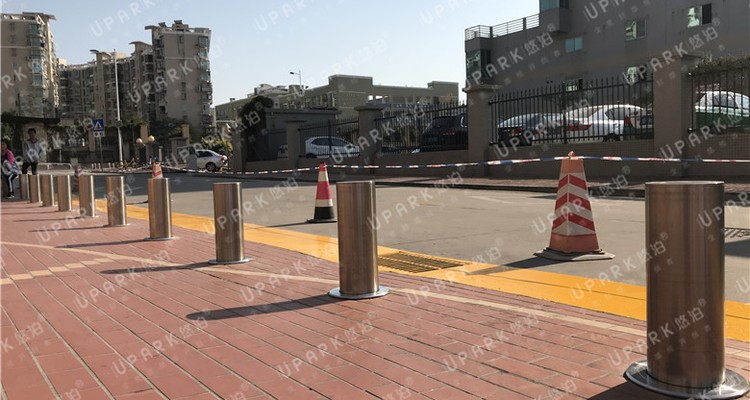
For most commercial properties, the realistic decision isn't DIY vs contractor. It's choosing equipment that keeps contractor costs low. A 36V automatic bollard skips the electrician, simplifies the cable run, and often qualifies for installation by your existing maintenance staff.
If you're comparing quotes, ask each contractor to break out excavation, foundation, electrical, and surface repair separately. The ones who can't are likely bundling costs you could eliminate by switching to low-voltage equipment.
The bollard itself is usually 30–40% of total project cost. The rest is labor and ground conditions. Control those variables and the math gets much better.
call us :
+86 18206096507 e-mail : [email protected]




 ipv6 network supported