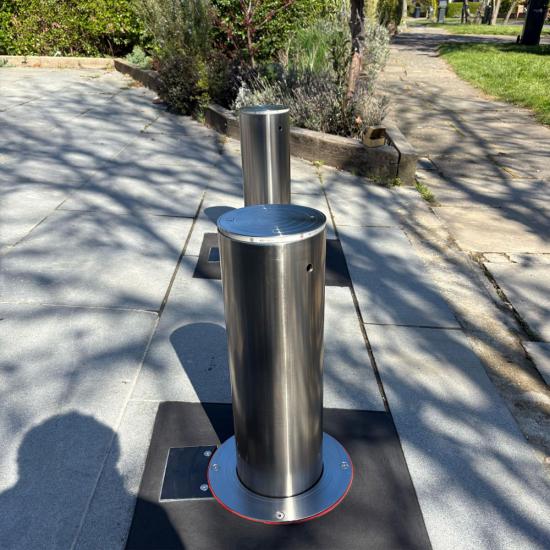
Automatic bollards are built to last, but like any mechanical system, their longevity depends heavily on how well they are maintained. A proactive maintenance routine can mean the difference between a system that lasts 10 years and one that starts giving trouble after three. This guide walks through the key practices that help keep automatic bollards running smoothly for longer.
The single most overlooked maintenance task is also the simplest: regular cleaning. Bollard cylinders collect dust, sand, gravel, leaves, and road salt over time. If these particles work their way into the guide rails or the cylinder housing, they accelerate wear on seals and moving surfaces. A monthly rinse with clean water and a soft brush is usually enough for most environments. In areas with heavy snowfall or sandy soil, increasing the frequency to every two weeks during active seasons helps prevent abrasive buildup from grinding against the piston mechanism.
Automatic bollards contain several moving components that need periodic lubrication. The guide sleeves, base plate bearings, and internal piston shaft all benefit from a light machine oil or lithium-based grease applied on a set schedule. Without lubrication, metal-on-metal contact increases friction and heat. Over months or years, this wears down tolerances and leads to slower raising and lowering speeds, or in severe cases, motor strain that triggers early failure. Most manufacturers recommend lubricating every six months under normal use and every three months in high-traffic or coastal environments where salt air accelerates corrosion.
The hydraulic or pneumatic seals inside a bollard cylinder keep moisture and contaminants away from the internal mechanism. These seals degrade over time due to pressure cycles, temperature fluctuations, and chemical exposure. Inspecting them during each lubrication cycle lets you catch hardening or cracking before leaks develop. Replacing seals proactively costs a fraction of what a full cylinder rebuild or motor replacement would cost, and it takes less than an hour for an experienced technician.

For electro-mechanical bollards, the control panel, wiring, and loop detectors are just as important as the physical cylinder. Corroded terminals, loose wires, and burned-out loop coils are common culprits behind intermittent operation or sudden system failures. A quarterly inspection of all electrical connections, combined with a functional test of the safety sensors, gives early warning of problems that might otherwise leave a bollard stuck in the raised or lowered position at an inconvenient moment.
Standing water inside a bollard housing is a problem. In regions with freezing winters, any moisture trapped inside the cylinder can expand when it freezes, damaging seals, distorting the cylinder wall, and stressing the motor. Installing bollard dome covers during the off-season, ensuring proper drainage around the housing, and using bollards rated for the local climate zone all contribute to trouble-free operation through the cold months.

Some maintenance tasks are firmly in the DIY category, but others require a qualified technician. If a bollard starts making unusual grinding noises, responds sluggishly to commands, or fails to rise to its full height, it is time to bring in someone with hydraulic or electro-mechanical expertise. Attempting major repairs without the proper tools and training often makes the problem worse and can void the warranty.
One of the most valuable habits for extending bollard lifespan is keeping a simple maintenance log. Record each inspection, cleaning, lubrication, and repair with the date and any observations about the condition of the system. This log helps identify recurring issues, supports warranty claims, and gives technicians a clear picture of the system's history when service is needed.
Automatic bollards are a long-term investment in site security. A modest investment of time in regular maintenance pays back in extended service life, fewer emergency repairs, and consistent security performance. By establishing a simple routine and addressing problems early, facility managers and homeowners alike can get the most value from their bollard systems for years to come.
For information on UPARK automatic bollard models and specifications, visit UPARK automatic bollards.
call us :
+86 18206096507 e-mail : [email protected]




 ipv6 network supported