A transit interchange is where every mode of transport bumps into every other. Buses pull in, taxis creep for a fare, private cars circle for a drop-off, and passengers walk straight through the gaps. The painted island in the middle of that mess is only as safe as drivers choose to make it. A bollard turns that painted refuge into a physical one, which is the only kind that actually holds.
The interchange problem
The danger at a hub is the mix, not the speed. A bus easing to the kerb, a taxi cutting across, a parent with a suitcase and a child all occupy the same few metres. Paint tells a driver where not to go; a post tells the vehicle it cannot. For a space used by strangers all day, the physical stop beats the polite hint every time.
A fixed ring around the pedestrian island
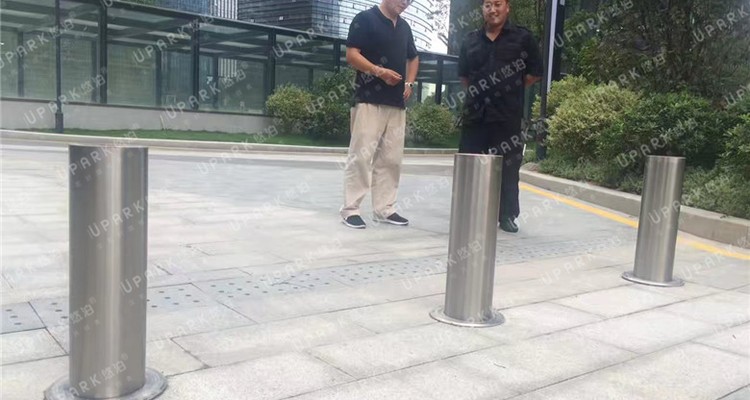
Ring the boarding island with fixed posts so a bus can pull close yet never mount the kerb, and a circling car cannot drift onto the waiting crowd. The island stays a true refuge between services, not a stripe that vanishes when traffic gets busy. Specs and spacings for that perimeter are on the fixed bollards page.
Automatic posts at the drop-off point
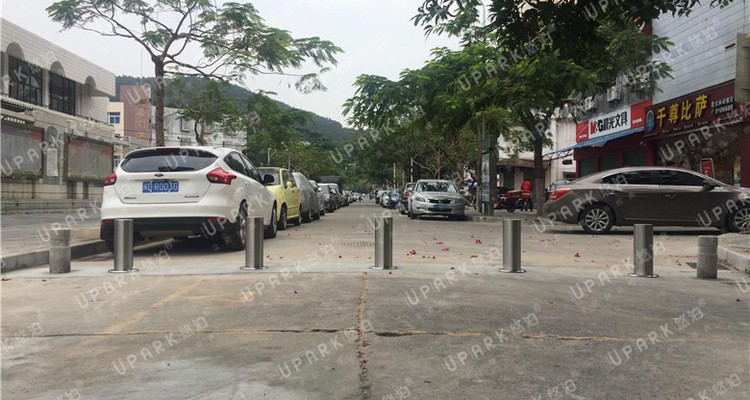
At the kiss-and-ride or taxi set-down, an automatic post drops for the authorised vehicle, lets it stop a few seconds, then rises. The result is a real set-down instead of a double-park that blocks the bus lane behind it. Card, fob or loop detector runs it hands-free, and the same control can log every opening for the operator. The automatic bollards range covers the drive and control options.
Electromechanical for high cycling
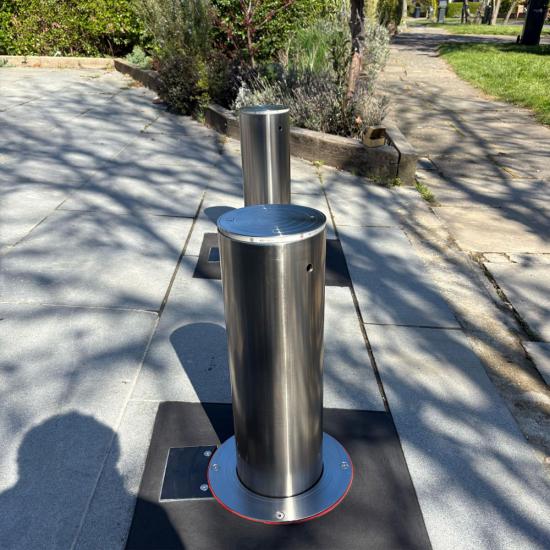
An interchange post moves often: a bus hub can cycle hundreds of times a day. A sealed electromechanical screw drive has no oil to leak onto a public pavement and no pump to cook in a heatwave, so it keeps lifting through a summer of constant use. It runs on 36V DC, which is the safe choice in a space packed with people and prams, and the IP67 casing shrugs off the weather a roadside post lives in.
Pairing with platform screening
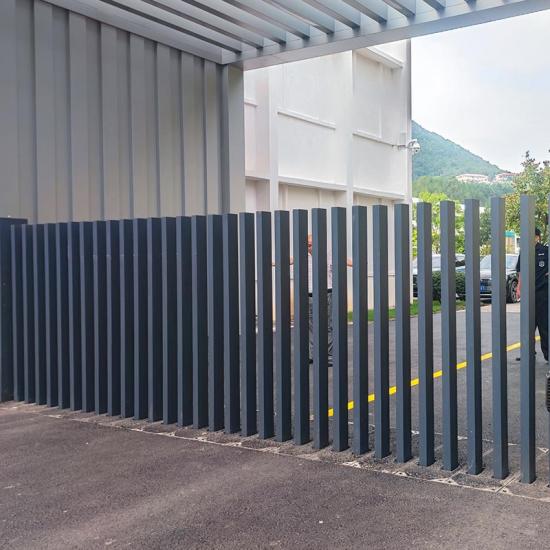
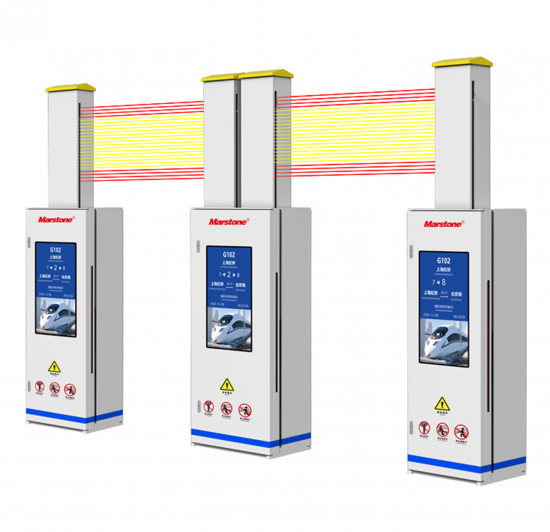
Inside the station, the protected edge is a screen door or platform barrier; outside, at the roadside island, it is a bollard. The two are complementary layers of the same idea, and a hub that uses both gives passengers a continuous protected path from curb to platform. When the layout is still taking shape, our team can talk through the UPARK approach to layered access control.
The bottom line
You cannot supervise a busy interchange every second of every day. A bollard line does the watching for you, quietly, through every service. For a hub whose users are strangers in a hurry, that is about as good a safety investment as an operator can bolt into the road.
call us :
+86 18206096507 e-mail : [email protected]




 ipv6 network supported