Strategic Campus Security: Automatic Bollards for Educational Institutions
Educational institutions—from elementary schools to major universities—face a complex security landscape that extends far beyond traditional concerns of bullying or campus crime. The threat of vehicle-ramming attacks, unauthorized vehicle intrusions, and the need to balance open, welcoming campuses with robust security have made automatic bollards an essential component of modern campus safety strategies.
This strategic guide provides education administrators, facility managers, and school boards with a comprehensive framework for evaluating, funding, implementing, and measuring the effectiveness of automatic bollard systems. Drawing on case studies from K-12 and higher education, we present an actionable roadmap for enhancing campus safety while maintaining the open, accessible character that defines educational environments.
Understanding the Evolving Threat Landscape for Schools
# Vehicle-Related Incidents: More Common Than You Think
While mass shootings dominate headlines, vehicle-related security incidents on school campuses occur with surprising frequency:
• **Accidental vehicle encroachment**: Vehicles jumping curbs into student areas during drop-off/pick-up (estimated 50+ incidents annually in US schools)
• **Intentional vehicle-ramming**: Deliberate attacks using vehicles to breach perimeters (increased 200% globally since 2017)
• **Vehicle-borne contraband**: Using vehicles to deliver drugs, weapons, or unauthorized personnel onto campus
# The Unique Vulnerability of Educational Campuses
Schools are particularly vulnerable because:
1. **Open character**: Campuses are designed to be welcoming and accessible—the opposite of fortresses
2. **High pedestrian density**: Students move in large groups between classes, creating potential mass-casualty scenarios
3. **Multiple access points**: Large campuses have numerous entrances that are hard to monitor
4. **Limited security staffing**: Most schools rely on part-time SROs (School Resource Officers) or private security
Conducting a Campus Security Assessment
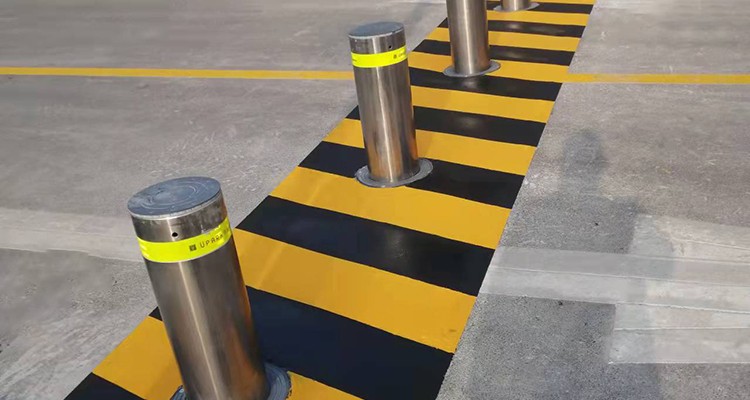
Before installing bollards, conduct a thorough security assessment.
# Step 1: Identify Critical Assets
What are you protecting? Prioritize:
• **Student assembly areas**: Playgrounds, quads, outdoor seating
• **Building entrances**: Main doors where students congregate
• **Special facilities**: Stadiums, performance venues, research labs (for universities)
# Step 2: Map Current and Desired Vehicle Flows
• **Authorized vehicles**: School buses, delivery trucks, maintenance, emergency vehicles
• **Unauthorized vehicles**: What you want to prevent
• **Student pedestrian routes**: Where students walk—these need protection
# Step 3: Analyze Historical Incidents
Review:
• Near-misses (vehicles jumping curbs)
• Actual incidents (property damage, injuries)
• Security audit findings
• Parent complaints about drop-off/pick-up safety
Engaging Stakeholders: Building Consensus for Security Upgrades
Campus security upgrades require buy-in from multiple stakeholders.
# School Boards & Administrators
**Key concerns**: Liability, cost, community perception
** messaging**: 'Automatic bollards enhance safety while preserving campus openness. They're invisible when not needed.'
# Parents & Parent-Teacher Organizations
**Key concerns**: Student safety, aesthetics (will it look like a prison?)
**Messaging**: 'Visible security measures show we take your children's safety seriously. Bollards create secure drop-off zones where parents can feel safe.'
# Facility & Operations Staff
**Key concerns**: Maintenance burden, operational disruption during installation
**Messaging**: 'UPARK's 36V motor-driven bollards require minimal maintenance—just annual lubrication. Installation can be phased over summer break.'
# Students (for Universities)
**Key concerns**: Campus aesthetics, accessibility
**Messaging**: 'Security that doesn't compromise the college experience. Bollards lower flush when not needed.'
Funding Strategies for Educational Institutions
Schools often operate on tight budgets. Creative funding is essential.
# Federal Funding (US)
**COPS School Violence Prevention Program (SVPP)**:
• Grants up to $500,000 per school
• Covers up to 75% of eligible costs
• Requires matching funds (25%)
• Application cycle: Typically opens January, closes March
**STOP School Violence Act Grants**:
• Focus on technology and equipment for violence prevention
• Covers physical security measures (including bollards)
# State & Local Funding
Many states have dedicated school safety funding. Examples:
• **Texas**: School Safety and Security Grant (up to $200,000 per campus)
• **Florida**: Marjory Stoneman Douglas AWARE Act (funding for physical security upgrades)
• **California**: School Facility Program (SFP) allows safety upgrades in modernization projects
# Private School Strategies
**Capital campaigns**: Include perimeter security as a priority item
**Parent fundraising**: Safety-focused fundraisers (e.g., 'Secure Our School' campaign)
**Lease-to-own**: Spread costs over 3-5 years
#University-Specific Funding
• **Facility renewal fees**: Many universities charge students a small fee for campus improvements
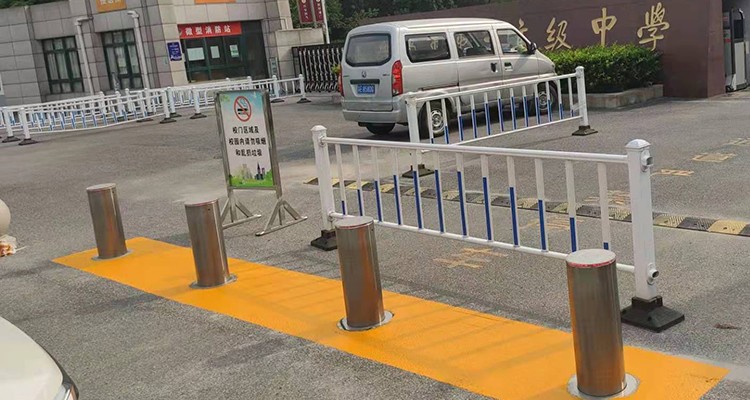
• **Alumni donations**: Target security-conscious alumni for targeted donations
• **Research security grants**: For universities with federal research contracts (DOD, DHS)
Implementation Project Management for Schools
School projects have unique constraints: must minimize disruption to instruction.
# Phase 1: Planning & Design (Months 1-3)
• Conduct security assessment (engaging campus security consultant)
• Develop conceptual design (bollard placement, access control integration)
• Prepare grant applications (if pursuing federal/state funding)
• Engage stakeholders (present plans to school board, parent groups)
# Phase 2: Permitting & Procurement (Months 4-6)
• Finalize detailed design (with input from facilities staff)
• Obtain necessary permits (building, right-of-way if installing on public sidewalks)
• Complete procurement (bid process for public schools, direct select for private)
• Coordinate with utility companies (811 calls, utility relocations if needed)
# Phase 3: Installation (Ideally During Break Periods)
**Summer break (ideal for K-12)**:
• 10-12 week window
• Allows phased installation if project is large
• Minimizes disruption to instruction
**Winter break (shorter option)**:
• 2-3 week window
• Feasible for smaller projects (single entrance, limited bollards)
**University semesters**:
• Can work around class schedules (nights/weekends)
• More flexible than K-12, but still prefer summer for major work
# Phase 4: Testing, Training & Handover (Post-Installation)
• Test all bollards through 50+ rise/fall cycles
• Train facilities staff on operation and basic troubleshooting
• Train administrative staff on access control integration (badging systems, visitor management)
• Conduct tabletop exercise (simulate emergency scenarios: lockdown, evacuation)
Measuring Success: KPIs for Campus Security Investments
After installation, track these KPIs to demonstrate value and identify improvement areas:
# 1. Safety Metrics
• **Incident rate**: Compare pre- and post-installation vehicle encroachment events
• **Near-miss reporting**: Encourage staff to report near-misses (indicates heightened awareness)
• **Parent feedback**: Survey parents on safety perception (annual)
# 2. Operational Metrics
• **System availability**: % of time bollards are operational (target: 99.5%+)
• **Maintenance costs**: Actual vs. budgeted
• **Response time**: How quickly facilities staff can respond to bollard malfunctions
# 3. Financial Metrics
• **Insurance premium changes**: Document savings
• **Grant fund utilization**: Track grant dollars secured and expended
• **ROI calculation**: Compare total investment to value of incidents prevented (including reputational damage)
Case Study: Large Suburban High School District
**District**: 5 high schools, 15,000 total students
**Challenge**: Multiple near-miss vehicle incidents at student drop-off areas; parent safety concerns affecting enrollment
**Solution**: Phased installation of UPARK 120mm automatic bollards at all 5 campuses (12-18 bollards per campus)
**Funding**: Combined COPS SVPP grants ($2.1M across 5 schools) + local bond match ($700K)
**Results (2 years post-completion)**:
• Zero vehicle encroachment incidents across all 5 campuses
• Parent satisfaction scores up 28% (district-wide survey)
• Insurance premiums reduced by 12% ($85,000 annual savings across district)
• Enrollment inquiries up 15% (district attributes portion to improved safety perception)
• Used grant success as model for subsequent security upgrades (access control, CCTV)
Conclusion: Security as Educational Priority
For educational institutions, automatic bollards are not just a physical security upgrade—they're a statement to students, parents, and the community that the institution takes safety seriously. The combination of enhanced protection, insurance savings, and community confidence delivers value that extends far beyond the initial investment.
UPARK's education-grade automatic bollards are designed specifically for the unique needs of educational campuses. With 36V safe operation, fully flush design when lowered, and proven performance at schools and universities worldwide, our solutions deliver the security and aesthetics that education professionals demand.
Invest in your students' safety. Contact UPARK Education Security Division for a campus-specific assessment and funding strategy consultation.
call us :
+86 18206096507 e-mail : [email protected]




 ipv6 network supported