Railway platforms around the world face a common challenge: how to keep passengers safe without spending a fortune or redesigning the entire station. For decades, the default answer has been platform screen doors (PSDs), those full-height glass or metal walls that line the edge of the platform. They look modern, and they do the job. But they also come with a long list of drawbacks that many operators only discover after installation.
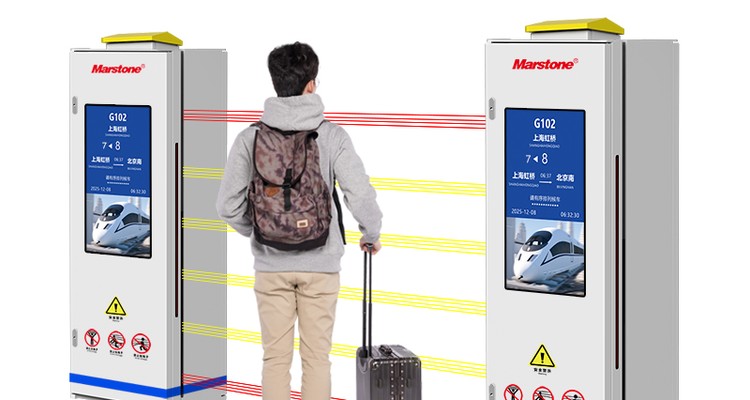
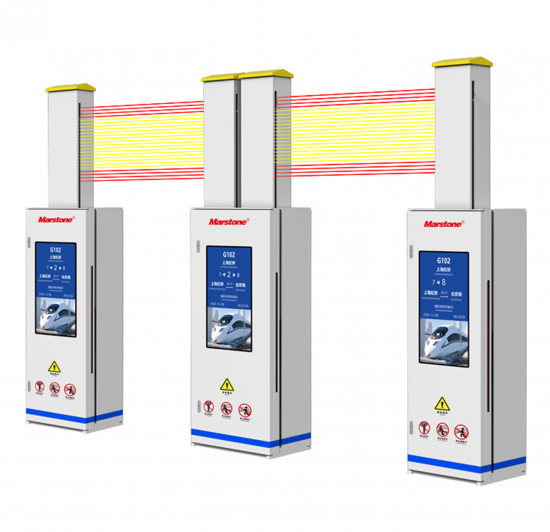
Enter the retractable cable barrier, sometimes called a platform safety barrier gate or PSBG. Instead of a solid wall, this system uses several stainless-steel cables that rise from floor level to create a physical barrier when the platform is active, then retract into the floor when the train arrives. It is a simpler, more flexible approach, and a growing number of railway systems are taking notice.
The most obvious difference between the two systems is price. A typical PSD installation can cost tens of thousands of dollars per bay, especially when you factor in the structural reinforcement needed to support a wall of glass and steel. Retractable cable barriers, by contrast, use a low-profile drive unit embedded in or mounted on the platform edge. There is no need to reinforce the station structure or install heavy machinery on the roof. The upfront cost is significantly lower, and the payback period is shorter for operators working with limited capital budgets.
Maintenance costs tell a similar story. PSDs have many moving parts, including motors, door leaves, sensors, and interlocks, and every one of them is exposed to the elements or to constant passenger contact. Glass panels break. Sensors get misaligned. Emergency release mechanisms jam. Cable barriers have fewer parts, and the cables themselves are made from marine-grade stainless steel that can handle years of use with minimal attention.
Platform screen doors need a precise alignment between the door leaves and the train doors. That sounds simple until you realise that many railway systems operate mixed fleets with different train models, different door positions, and sometimes even different platform heights across the same line. PSDs have to be custom-engineered for each situation, and even then, a small misalignment can cause delays or safety incidents.
Cable barriers are far more forgiving. The barrier runs along the entire platform edge as a continuous safeguard. Passengers can board and alight at any point along the platform, not just at the door positions. This flexibility is especially valuable for heritage railways, commuter lines, and stations in developing markets where train specifications may vary or change over time.
Installing PSDs is a major construction project. It often requires closing the station for weeks or months, reinforcing the platform structure, running new power and data lines, and commissioning each door leaf individually. For busy urban stations, that kind of downtime is a non-starter.
Cable barrier systems are designed for fast installation. The drive units are compact, the cabling is pre-assembled in sections, and the control system can be integrated with existing signalling infrastructure. In many cases, installation can be completed overnight or during scheduled maintenance windows, without disrupting passenger service.
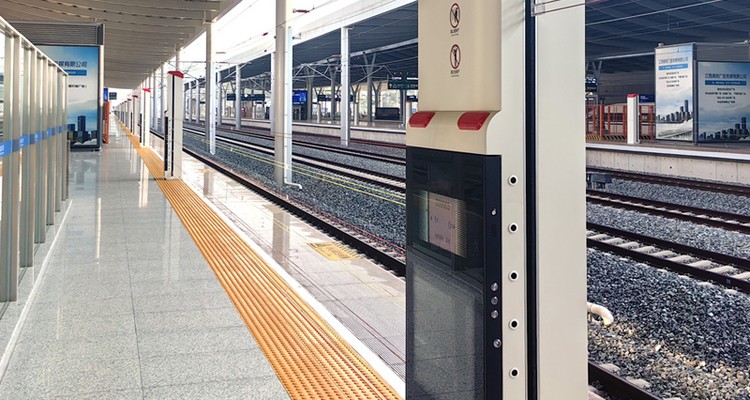
Critics sometimes argue that a cable barrier cannot be as safe as a solid wall. The reality is more nuanced. PSDs are highly effective at preventing falls, but they introduce new risks: passengers can get trapped between the doors, the doors can malfunction and delay trains, and the glass panels themselves can become hazards if they break.
A well-designed cable barrier system meets the same core safety objective: preventing unauthorised access to the track. The cables are spaced closely enough to stop a person from slipping through, and they are strong enough to withstand significant impact. Modern systems also include emergency retract modes, obstacle detection, and integration with train arrival signals, the same safety features you would expect from a PSD, without the downsides of a solid barrier.
None of this means PSDs are obsolete. They remain the right choice for high-volume, high-speed metro systems with standardised train fleets and the budget to match. If you are building a new line from scratch and can design the stations around the PSDs from day one, they are a proven solution.
But for everyone else, commuter rail, heritage lines, stations with mixed fleets, operators working with retrofit budgets, retractable cable barriers offer a compelling alternative. They deliver the same fundamental safety outcome at a fraction of the cost, with far less disruption to install, and with greater flexibility to adapt as the railway evolves.
As passenger safety expectations rise and budgets come under increasing pressure, more operators are asking whether the traditional PSD model is the only way, or even the best way, to secure a platform. The early adopters of cable barrier technology suggest the answer is no.
call us :
+86 18206096507 e-mail : [email protected]




 ipv6 network supported