You spent money on security cameras. The system records everything. You can check your phone and see the parking lot in real-time. But here is the uncomfortable truth: cameras only document what happened. They do not stop anything.
A parking lot with cameras but no physical barriers is like a house with a doorbell camera but no deadbolt. You know who came by. You watched it happen on your phone while someone walked off with your catalytic converter.
The Parking Security Gap
Commercial parking facilities face a specific problem. They need to allow legitimate customers in while keeping out unauthorized vehicles. This sounds simple, but the execution gets messy fast.
A parking garage open to the street invites trouble. Vehicles can enter from any direction. Thieves use them as staging grounds. Homeless individuals set up camp in remote corners. Without proper access control, you are essentially running an unsecured storage facility for people's vehicles.
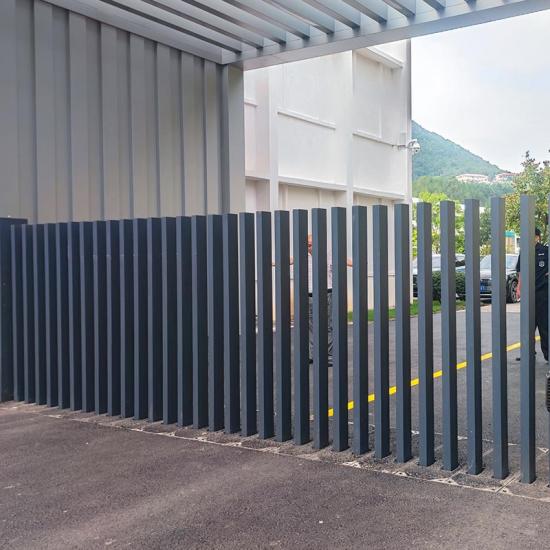
Traditional barriers like chains and cones do not work. They require someone to install and remove them. They fail in bad weather. They send the wrong message about your property. And they take about 30 seconds to bypass if someone really wants to.
What Automatic Bollards Actually Do
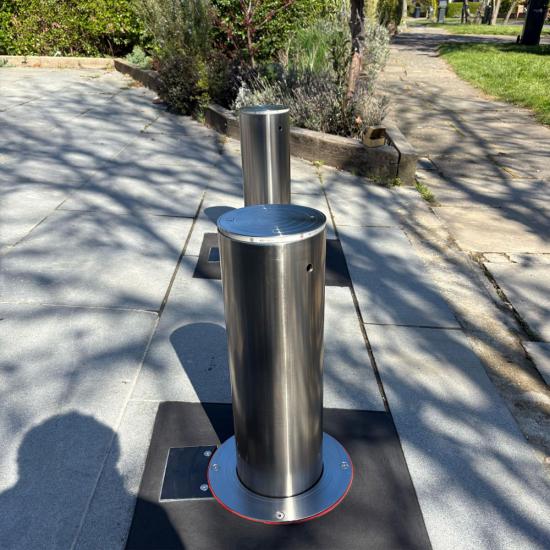
An automatic bollard is a steel post that sits flush with the ground during normal operation. When authorized vehicles approach, the bollard lowers into the foundation, allowing entry. For unauthorized vehicles or after hours, the bollard stays raised, creating a solid physical barrier that cannot be pushed through or bypassed.
The key difference from cameras is simple: bollards create consequences for unauthorized access. A car cannot simply drive through a raised bollard. The barrier forces a response. Either the driver leaves, or they cause enough damage to set off alarms and draw attention.
This changes the economics of crime at your facility. Opportunistic criminals look for easy targets. A parking lot with automatic bollards at entry points is not an easy target. The next parking lot without them is.
Real-World Applications
Automatic bollards work in several parking scenarios.
Residential complexes use them to control garage access. Only residents with keycards or transmitters can lower the bollards. Delivery drivers and visitors can be granted temporary access through a call box or app. The system logs every entry, creating an audit trail.
Office buildings and commercial properties use them to separate employee parking from visitor parking. Certain areas can be restricted during off-hours while remaining open during business operations. The flexibility matters because most properties do not have uniform security needs across all hours.
Hotels and retail centers use automatic bollards to protect loading zones and prevent unauthorized overnight parking. A restaurant that needs delivery truck access at 6am but wants to discourage overnight camping can program access schedules accordingly. No staff member needs to be there to raise or lower barriers.
Beyond parking lots, automatic bollards protect sensitive areas like fuel stations, EV charging areas, and valet zones. Anywhere you need to control vehicle access while maintaining pedestrian flow, bollards provide a clean solution.
Why Not Just Use Barrier Arms?
Barrier arms are common. They are cheaper and more familiar. But they have limitations that matter for security applications.
A barrier arm blocks smaller vehicles and slower approaches. A determined driver in a larger vehicle can often drive through before the arm registers enough resistance to stop. Arms also do not provide the same visual deterrent. Anyone can see that a barrier arm is designed to keep out casual traffic, not committed intrusion.
Automatic bollards, by contrast, are rated for impact. High-security bollards can stop vehicles traveling at speed. Even lower-rated bollards provide enough resistance to prevent simple drive-throughs and require significant force to breach.
For properties where vehicle security is the primary concern rather than simple access management, automatic bollards are the better choice. For properties that primarily need to manage traffic flow and encourage compliance, barrier arms may suffice.
The Cost Question
Automatic bollard systems are not cheap. A basic single-bollard system with card reader access starts around a few thousand dollars. Larger installations with multiple entry points, integration with existing security systems, and high-impact-rated bollards can run significantly higher.
But compare that to the costs of not having them. A single vehicle break-in at a parking facility costs an average of $2,345 in damages, according to insurance industry data. Before factoring in liability exposure, reputational damage, and customer attrition, a few break-ins can easily exceed the cost of bollard installation.
For commercial properties, the calculus extends to insurance premiums. Many insurers now offer reduced rates for properties with documented physical security measures beyond cameras. The ROI on bollards includes both loss prevention and ongoing premium reductions.
What to Look For
If you are considering automatic bollards for your parking facility, a few factors matter.
Response time matters. The bollard should rise quickly enough to prevent someone from following closely behind an authorized vehicle. Look for systems with response times under 2 seconds.
Weather resistance matters in certain climates. If your facility is in an area with freezing temperatures or flooding, you need bollards rated for those conditions. Not all systems handle extreme weather equally well.
Integration capabilities matter if you have existing security infrastructure. Modern bollard systems can connect to license plate recognition, RFID systems, and central security platforms. Make sure the system you choose works with what you already have or plan to install.
Professional installation is non-negotiable. Bollards are anchored deep into concrete foundations. An improperly installed bollard will not perform under stress. This is not a project for general contractors or weekend warriors.
Making the Decision
Take a look at your parking facility. Watch how vehicles move through it. Identify the points where unauthorized access is most likely and most damaging. Ask yourself what it would take for a determined person to use your parking lot for purposes you do not intend.
If the answer involves simply driving in because nothing stops them, automatic bollards deserve serious consideration. They are not the right solution for every property, but for facilities where vehicle security genuinely matters, they provide protection that cameras and barrier arms cannot match.
The investment is real. But so is the risk of doing nothing.
call us :
+86 18206096507 e-mail : [email protected]




 ipv6 network supported