Belgium's luxury residential market occupies a unique position in Europe. Brussels hosts more diplomatic missions and EU institutions than any other city on the continent. The Tervuren corridor, the wooded suburbs of Uccle and Waterloo, and the beachfront villas of Knokke-le-Zoute represent some of the most valuable private property in Western Europe.
That value makes them targets. And the security measures that once felt adequate — CCTV, alarm systems, electric gates — are proving insufficient against organized vehicle-borne intrusions.
Automatic bollards are the missing layer.
Why Belgian Luxury Homeowners Are Installing Automatic Bollards
Belgium recorded a 23% increase in organized residential burglaries between 2022 and 2025, according to the Federal Police's annual crime statistics. What changed was the method: criminal networks began using vehicles to force gates and ram driveway barriers, bypassing traditional perimeter security in under a minute.
For homeowners in high-value areas, the implications are clear. A forced entry is no longer a matter of a broken lock. It is a vehicle driving directly to the front door.
Three patterns define the demand in Belgium:
1. Diplomatic and executive residences. Brussels' commune of Ixelles, home to ambassadors and senior EU officials, has seen growing demand for vehicle-rated access control. A diplomatic residence is not simply a home — it is a security asset. Automatic bollards provide the vehicle access control that matches the profile.
2. Estate properties in the Brabant countryside. From Waterloo to Overijse, luxury estates feature extended driveways where a vehicle, once past the outer gate, has unobstructed access to the main house. A second physical barrier — an automatic bollard — is the only way to close this gap.
3. Coastal villas in Knokke and De Panne. Belgium's coastline hosts some of the country's most expensive private residences. Seasonal occupation means properties can remain unoccupied for weeks. Automatic bollards that operate on a timer or remote command allow owners to control vehicle access from abroad, reducing the window of opportunity for opportunistic intrusions.
Where Automatic Bollards Belong on a Belgian Residential Property
The most effective placement depends on the property configuration. For Belgian luxury residences, three locations yield the greatest security return:
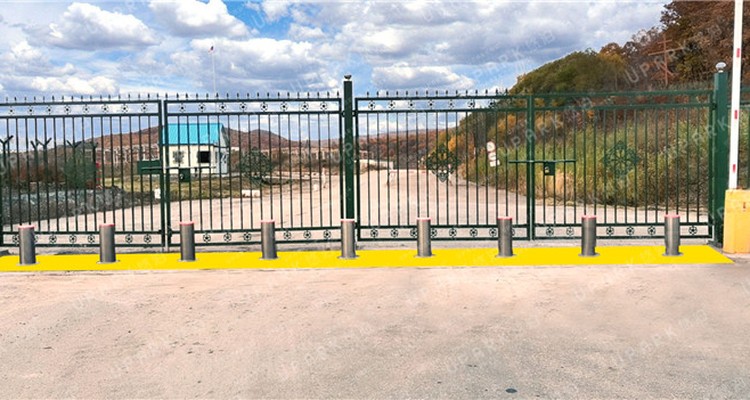
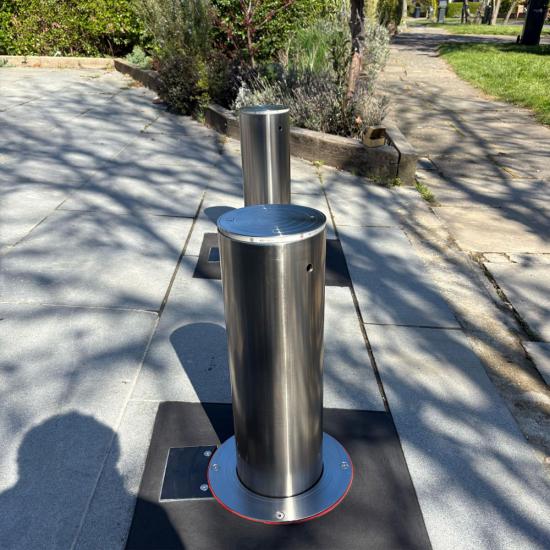
- Inner driveway barrier. After the outer gate, before the house. A single raised bollard creates a physical stop that a vehicle cannot breach without specialized equipment. This is the highest-value installation point for most properties.
- Garage approach. Luxury garages housing high-value vehicles — whether classic cars, sports cars, or motorcycles — benefit from a bollard positioned at the approach, independent of the main house entry.
- Garden and terrace access. Properties with level lawns and accessible terraces are vulnerable to vehicle incursions from adjacent public areas. A bollard at the access point prevents a vehicle from driving onto the grounds.
What Makes a Residential Bollard Different
Residential installations are not industrial projects. The bollard that protects a logistics park uses different specifications than the one protecting a luxury home. For Belgian residential properties, the relevant requirements are:
- Quiet hydraulic operation. The Belgian residential environment — cobblestone drives, enclosed courtyards, neighbors within earshot — demands a system that operates discreetly. Hydraulic bollards designed for residential use rise and lower without the mechanical noise typical of industrial systems.
- Corrosion resistance for coastal properties. Properties within three kilometers of the Belgian coast require marine-grade stainless steel (316 grade). Salt air accelerates oxidation on lesser materials. The bollard housing, the control wiring, and the ground sleeve must all be specified for coastal exposure.
- 36V low-voltage electrical system. In Belgium, high-voltage electrical work in residential settings requires approval from an accredited control office (ACEG or KEMA). The 36V DC system used by UPARK falls outside this requirement, allowing installation to be managed by the existing electrical contractor without additional certification.
- Smart home integration. KNX is the most widely specified smart home protocol in Belgian luxury residential construction. UPARK bollards accept dry contact inputs compatible with KNX, allowing the bollard to be integrated into the same interface that controls heating, lighting, and access.
UPARK Automatic Bollards for Belgian Residences
UPARK bollards arrive specified by security consultants and architects across Belgium and the broader Benelux region. Three features define the residential offering:
The 36V DC system eliminates the certification burden associated with high-voltage installations. For homeowners managing renovation timelines and contractor coordination, this simplification is practical.
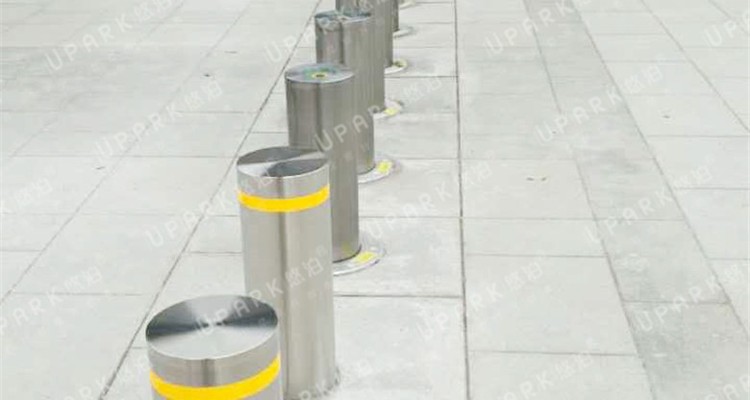
The 20-centimeter overlap between the rising shaft and the ground sleeve keeps water, grit, and leaves out of the mechanism. In Belgium, where annual rainfall exceeds 850 mm and winters bring regular freeze-thaw cycles, this design feature is the difference between a mechanism that operates reliably for ten years and one that requires annual service.
The hydraulic drive operates down to minus 35 degrees Celsius without modification. Whether the property is in the Ardennes highlands or on the Flemish coast, the bollard functions through Belgian winters without seasonal adjustment or additional heating elements.
Frequently Asked Questions
Do automatic bollards require planning permission in Belgium?
In most Belgian municipalities, installing a bollard on private property within the cadastral boundary does not require a building permit. However, properties in protected urban zones — particularly in Brussels' historical communes and coastal protection areas — may be subject to aesthetic regulations. Consult your architect or commune administration before specifying a finish.
How much do residential automatic bollards cost in Belgium?
Installed costs for a single residential bollard typically range from 9,500 to 20,000 euros, depending on the model, finish, and site preparation requirements. Properties with existing cobblestone or heritage driveways may incur higher installation costs due to careful reinstatement work.
Can automatic bollards be controlled remotely when the property is unoccupied?
Yes. UPARK systems include optional GSM or IP-based remote control modules that allow the owner to raise, lower, or lock the bollard from a smartphone or desktop interface. This is particularly relevant for Belgian seasonal properties that remain unoccupied during winter months.
Are automatic bollards safe for households with children, pets, and domestic staff?
Yes. The 36V system eliminates electric shock risk. Inductive loop sensors beneath the driveway surface detect the presence of vehicles, pets, or moving objects and prevent the bollard from rising. The same safety zone logic applies to the closing cycle, meaning the bollard will not descend if an object remains in the sensor field.
call us :
+86 18206096507 e-mail : [email protected]




 ipv6 network supported