Denmark's luxury residential market is anchored around Copenhagen's northern suburbs — Hellerup, Gentofte, and Charlottenlund — where property values rank among the highest in Scandinavia. Beyond the capital, Aarhus' Riis Skov district and the island estates of Funen and Bornholm represent significant concentrations of high-value residential property.
Physical perimeter security has become a growing specification item for Danish luxury homes, driven by a pattern that security consultants across the Nordic region have been tracking since 2022: vehicle-assisted residential burglaries targeting high-net-worth households.
The Case for Physical Access Control in Danish Luxury Residences
Statsministeriet's security advisories and the National Police's annual crime report both note a shift in the methods used by organized burglary networks. The shift is away from traditional door and window forced entry — both of which trigger immediate alarm responses — toward vehicle-assisted approaches. A vehicle can reach a residential property's main entrance in under thirty seconds from the outer gate. By the time an alarm signals and a response team is dispatched, the intrusion is complete.
For Danish luxury homeowners, gates and cameras remain standard. But they create a psychological deterrent, not a physical one. An electric gate that can be rammed open by a commercial vehicle is a gate in name only.
Automatic bollards provide what cameras and alarms cannot: a physical barrier that a vehicle cannot breach without specialized equipment.
Three Patterns Driving Demand in Denmark
1. North Shore properties with extended driveways. The Hellerup to Rungsted coastal corridor — often called the Gold Coast (Guldkysten) — features luxury estates with driveways stretching from public coastal roads to properties set well back from the shoreline. These extended driveways create a vehicle approach route that only a physical barrier can close.
2. Suburban estates in Gentofte and Charlottenlund. These municipalities host the highest concentrations of high-net-worth households in Denmark. Properties here are frequently targets of reconnaissance by organized networks before being selected for approach. Visible, credible physical barriers — not cameras — are what alter the selection calculus.
3. Rural and island estates used as seasonal residences. Properties on Funen, Mon, and the smaller Danish islands are often occupied seasonally. An automatic bollard controlled remotely allows owners to prevent vehicle access during extended absences, closing the opportunity window that makes unoccupied properties attractive targets.
Installation Requirements for Danish Residential Properties
Danish residential architecture presents specific installation considerations:
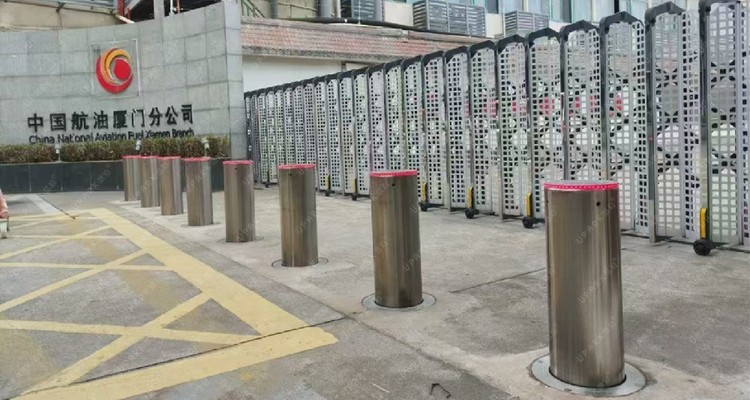
- Heritage driveway surfaces. Many high-value Danish properties feature historical cobblestone or granite sett driveways. Installation must accommodate careful surface removal and reinstatement. A bollard installation that damages heritage paving is unacceptable to Danish homeowners and their architects.
- Coastal exposure. Properties within proximity to the Oresund, Kattegat, or the Danish coast require marine-grade materials. 316 stainless steel is the correct specification for these environments; lesser grades develop surface oxidation within three to five years of coastal exposure.
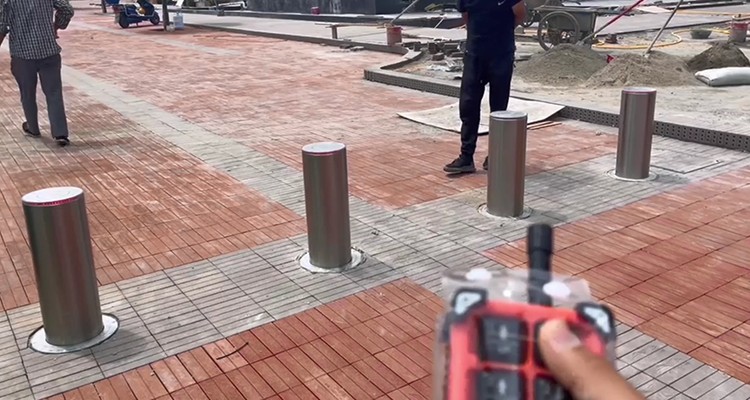
- Integration with Danish smart home standards. KNX and Loxone are the dominant smart home protocols in Danish luxury residential construction. UPARK bollards accept standard dry contact inputs compatible with both, allowing integration into the existing home automation interface.
- Cold-weather reliability. Denmark's winters are moderate by Nordic standards but include extended wet periods and regular freeze-thaw cycles. Bollard mechanisms must be sealed against water ingress and rated for freeze-thaw resilience.
Why the 36V System Matters in Denmark
Denmark's electrical installation regulations, governed by Sikkerhedsstyrelsen (the Danish Safety Technology Authority), impose significant compliance requirements on high-voltage residential installations. Certified electricians, detailed documentation, and post-installation inspection are standard requirements for high-voltage work.
UPARK's 36V DC system falls below the threshold that triggers these requirements. The installation can be managed by the property's existing electrical contractor, reducing the cost and scheduling complexity typically associated with residential security upgrades. For Danish homeowners managing renovation projects, this simplification is practically significant.
The 20-centimeter overlap between the rising bollard shaft and the ground sleeve is equally relevant in the Danish context. Denmark's high water table — particularly in coastal and low-lying areas around Copenhagen — means that underground installations are regularly exposed to groundwater and standing water. Without this overlap, water ingress into the bollard mechanism leads to corrosion and eventual failure. With it, the mechanism remains sealed through the full Danish winter without additional waterproofing measures.
UPARK Automatic Bollards for Danish Luxury Properties
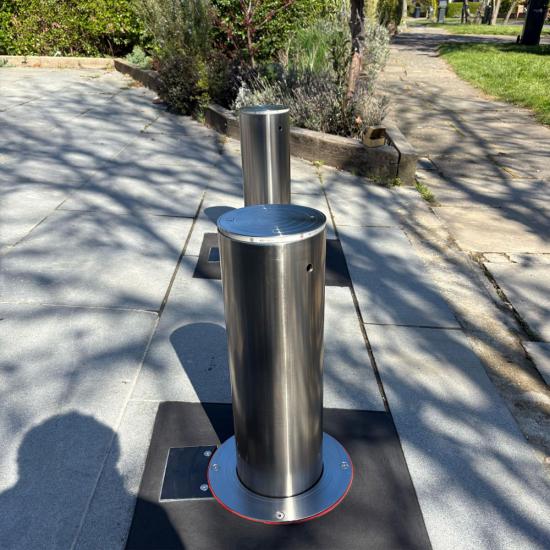
For properties on the Gold Coast and in Gentofte, the standard specification is 316 brushed stainless steel — understated, maintenance-free, and consistent with the clean architectural aesthetic of Danish luxury residential construction.
For rural and island properties requiring remote access control, GSM and IP-based control modules allow the owner to operate the bollard from a smartphone. Scheduled access windows can be programmed in advance, allowing contractors, gardeners, or caretakers to enter during defined periods while the property remains otherwise restricted.
The hydraulic drive operates across a temperature range of minus 35 to plus 60 degrees Celsius — more than adequate for Danish conditions in all seasons.
Frequently Asked Questions
Do automatic bollards require planning permission in Denmark?
On private residential land, a bollard that remains within the cadastral boundary and does not obstruct public rights of way typically does not require bygningstilladelse. However, properties in conservation zones, historic districts, or coastal protection areas may be subject to aesthetic regulations. Consult your architect and local kommuneplan before specifying a finish.
What is the installed cost of residential automatic bollards in Denmark?
Single bollard installed costs typically range from 70,000 to 150,000 DKK, depending on model, finish, and site conditions. Two-bollard driveway installations range from 140,000 to 300,000 DKK.
Can automatic bollards integrate with KNX smart home systems?
Yes. UPARK bollards use dry contact inputs, which are directly compatible with KNX, Loxone, and other platforms common in Danish luxury residential automation. The bollard operates as part of the unified home automation environment.
Are automatic bollards suitable for coastal properties near the Oresund?
Yes, with the correct specification. Marine-grade 316 stainless steel is required for coastal installations. UPARK provides this as standard for projects flagged as within three kilometers of the coastline. The 20-centimeter overlap seal and the corrosion-resistant ground sleeve ensure reliable long-term performance in salt-air environments.
call us :
+86 18206096507 e-mail : [email protected]




 ipv6 network supported