The Czech Republic's luxury residential market is anchored in Prague's historic villa districts — Hanspaulka, Ořechovka, and the diplomatic quarter of Bubeneč — where early twentieth-century villas and contemporary architect-designed homes command some of the highest property values in Central Europe. Beyond Prague, Brno's Masarykova čtvrť and the villa estates of the South Moravian wine region represent significant concentrations of high-value residential property.
Security Dynamics in Czech Luxury Residential Areas
The Czech Republic has the lowest unemployment rate in the European Union and a growing population of high-net-worth individuals concentrated in Prague. This wealth concentration has attracted organized property crime networks that operate across the Czech-Austrian and Czech-German borders, making residential security a practical concern rather than a theoretical one.
Czech security consultants report that luxury villa districts in Prague 6 experience regular reconnaissance activity — vehicles conducting slow passes of targeted properties, photographing access points, and mapping security measures. A villa with only cameras and an alarm presents a fundamentally different risk profile than one with physical vehicle barriers.
Three Target Property Profiles
1. Prague 6 Villa District Properties. Hanspaulka, Ořechovka, and Bubeneč contain Prague's most expensive residential real estate. Many villas feature long driveways descending from street level, with limited visibility from the main residence. This topography makes remote-operated bollards particularly valuable — the owner can verify and grant access without leaving the house.
2. Brno Luxury Developments. Brno's technology sector growth — driven by companies like Avast, Kiwi.com, and the Czech Technical University research cluster — has created demand for luxury residential property in Masarykova čtvrť and the surrounding villa neighborhoods. These newer properties often lack the mature landscaping and natural barriers of Prague's established villa districts, making physical perimeter security a practical priority.
3. South Moravian Wine Region Estates. The wine-growing regions around Mikulov, Valtice, and Lednice feature vineyard estates that combine residential use with wine tourism operations. These properties have multiple access points — residential driveways, service entrances, and visitor parking — requiring a physical access control system that can differentiate between authorized and unauthorized vehicle approaches.
Installation Considerations for Czech Properties
Czech residential architecture presents specific installation requirements:
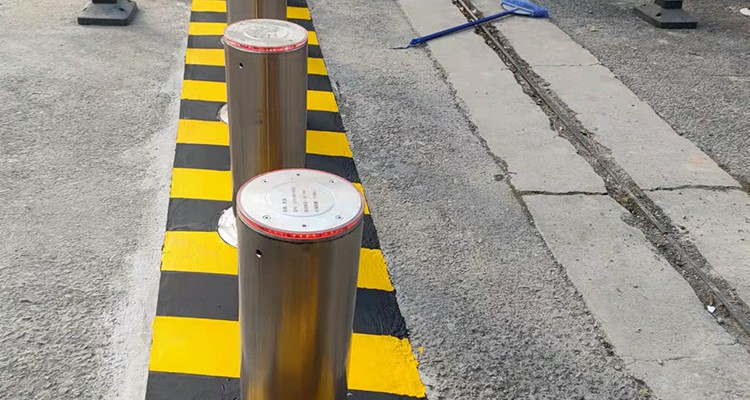
- Heritage protection. Many Prague 6 villas fall within památková zóna (heritage zones) regulated by the National Heritage Institute (NPÚ). Bollard installation must respect heritage driveway materials — typically granite setts or original cobblestone — with careful surface removal and reinstatement.
- Hillside topography. Prague's villa districts are built on hillsides overlooking the Vltava River valley. Sloped driveways create water runoff patterns that can channel rainwater toward underground installations. Bollard foundations must incorporate drainage measures to prevent water accumulation around the mechanism.
- Smart home integration. Loxone, an Austrian-developed smart home platform, has significant market penetration in Czech luxury residential construction. UPARK bollards accept standard dry contact inputs directly compatible with Loxone relay modules, allowing integration into the existing home automation interface.
Why Czech Homeowners Choose 36V
The Czech electrical installation standard ČSN 33 2000 series imposes certification and documentation requirements on high-voltage residential work. The 36V DC system operates below the voltage threshold that triggers these requirements, allowing the property's existing electrical contractor to handle installation without engaging a high-voltage specialist.
The 20-centimeter overlap between the rising shaft and the ground sleeve addresses a specific Czech concern: the freeze-thaw cycle that characterizes Central European winters. Czech winters alternate between snow accumulation and rapid thaw, creating conditions where water penetrates underground installations and freezes, expanding and damaging mechanisms. The overlap seal prevents this cycle from affecting the bollard mechanism.
UPARK Automatic Bollards for Czech Properties
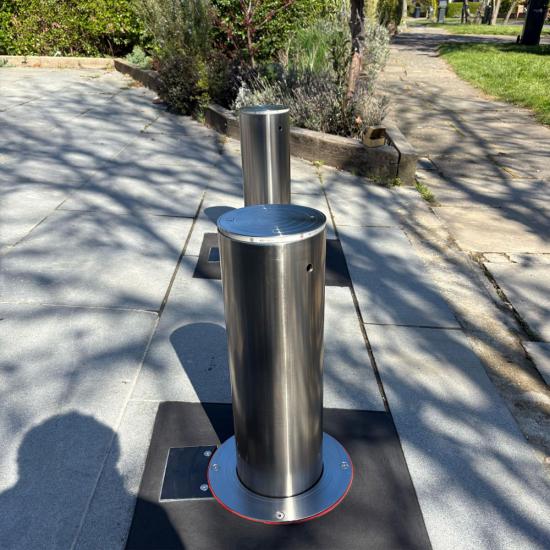
For Prague villa properties, 316 brushed stainless steel with a satin finish provides visual restraint appropriate to heritage contexts. The material ages without visible degradation, maintaining appearance through decades of Prague's continental climate.
For Brno and South Moravian properties, the same material specification applies. The inland climate does not demand marine-grade material, but the freeze-thaw resilience of the hydraulic mechanism and the sealed overlap design are essential.
The hydraulic drive operates from minus 35 to plus 60 degrees Celsius — covering the full Czech temperature range, including the extreme lows occasionally recorded in the Šumava and Krkonoše mountain regions where some luxury chalet properties are located.
Frequently Asked Questions
Do automatic bollards require heritage approval in Prague?
If the property falls within a památková zóna and the installation involves modification of protected driveway surfaces, approval from the National Heritage Institute (NPÚ) may be required. On private land with non-protected surfaces, a bollard typically does not trigger heritage review. Consult your architect and local stavební úřad before proceeding.
What is the installed cost of residential automatic bollards in the Czech Republic?
Single bollard installed costs typically range from 90,000 to 180,000 CZK, depending on model, finish, and site conditions. Two-bollard driveway installations range from 180,000 to 360,000 CZK.
Can automatic bollards integrate with Loxone smart home systems?
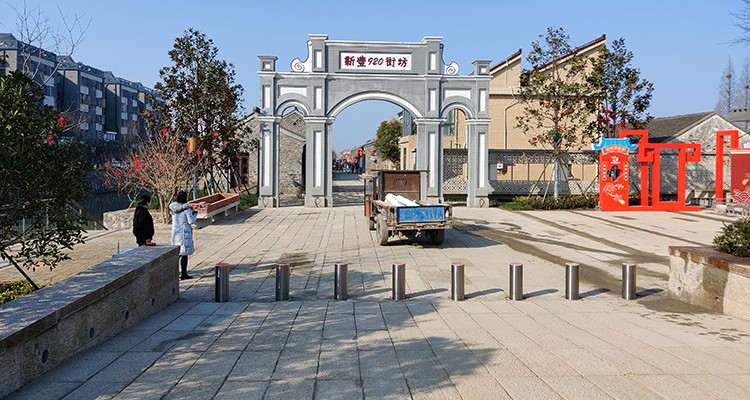
Yes. UPARK bollards use dry contact inputs directly compatible with Loxone relay modules and other platforms common in Czech luxury residential automation.
Are automatic bollards suitable for hillside villa properties?
Yes. Hillside installations require attention to drainage around the bollard foundation, but the sealed overlap mechanism and corrosion-resistant ground sleeve ensure reliable operation on sloped sites.
call us :
+86 18206096507 e-mail : [email protected]




 ipv6 network supported