Estonia's luxury residential market is defined by its tech-sector wealth — the country that produced Skype, Wise (TransferWise), and Bolt has created a concentrated class of entrepreneurs and technology executives investing in high-value residential property. Three zones dominate: Tallinn's coastal Pirita district, the villa suburbs of Viimsi and Nõmme, and the Baltic Sea island estates of Saaremaa and Hiiumaa.
The Digital Elite's Security Calculus
Estonia's reputation as Europe's most digitized society — with e-residency, digital IDs, and online-first government services — creates an interesting dynamic in residential security. Estonia's high-net-worth individuals are technologically sophisticated. They understand that electronic security systems, no matter how advanced, share a common vulnerability: they detect but do not prevent.
Security consultants serving Tallinn's luxury market report that estate owners increasingly demand physical perimeter barriers as the foundation of a layered security approach. Cameras and sensors provide intelligence. Bollards provide the physical layer that stops a vehicle before it reaches the residence.
Three Estonian Property Types
1. Pirita Coastal Villas. Tallinn's Pirita district stretches along the Baltic coastline east of the city center, featuring waterfront villas and contemporary architect-designed homes. Properties here combine coastal exposure with extended driveways descending from the Pirita tee toward the sea — a topography where remote-operated bollards provide both security and convenience.
2. Viimsi and Nõmme Villa Suburbs. Viimsi peninsula and the forested Nõmme district represent Tallinn's most established luxury residential areas. Nõmme's pine-forest setting and large plots create properties where the main residence is often invisible from the street, making driveway-level physical security the critical first line of defense.
3. Baltic Island Estates. Saaremaa and Hiiumaa islands host seasonal luxury properties owned by Tallinn-based families who use them as summer retreats. Remote access control via GSM or IP allows owners to manage property access from the mainland during the off-season months of October through April.
Installation Considerations for Estonian Properties
Estonian residential architecture and climate present specific requirements:
- Winter extremes. Estonian winters are among the coldest in the Baltic region, with sustained sub-zero temperatures and heavy snow from December through March. Bollard mechanisms must be rated for temperatures approaching minus 30 degrees Celsius with freeze-thaw cycle resilience.
- Coastal corrosion. Pirita and island properties sit directly on the Baltic Sea coast. Marine-grade 316 stainless steel is required for all coastal installations to prevent salt-air surface degradation.
- Smart home integration. Estonia's tech-savvy homeowners typically specify KNX or custom IP-based home automation systems. UPARK bollards accept standard dry contact inputs compatible with all major platforms.
- Heritage considerations. Tallinn's Old Town is a UNESCO World Heritage site. While most luxury residences are outside the medieval core, properties within the protected buffer zone may be subject to heritage aesthetic review.
Why Estonian Homeowners Choose 36V
Estonia's electrical installation regulations, harmonized with EU standards, impose certification requirements on high-voltage residential work. The 36V DC system operates below the voltage threshold that triggers these requirements, allowing standard electrical contractors to manage installation — a practical advantage in a small market where specialist high-voltage contractors are less available.
The 20-centimeter overlap between the rising shaft and the ground sleeve addresses Estonia's specific climate challenge: the spring melt. March and April bring rapid snowmelt that saturates the ground, creating conditions where water can infiltrate underground installations. The overlap seal prevents this from affecting the bollard mechanism through the full freeze-thaw cycle.
UPARK Automatic Bollards for Estonian Properties
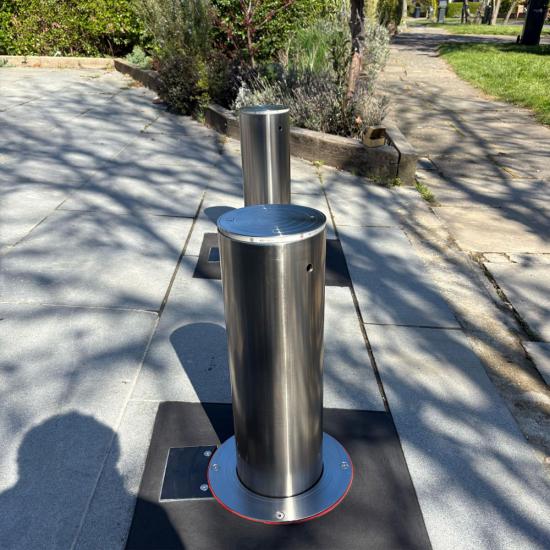
For Pirita coastal villas, 316 marine-grade brushed stainless steel with a satin finish provides understated presence consistent with contemporary Baltic architectural aesthetics. The clean lines complement the modernist villa styles common in Estonia's luxury residential construction.
For Nõmme and Viimsi properties, GSM and IP-based control modules allow integration with the property's existing smart home infrastructure. The bollard operates as part of a unified home automation environment alongside lighting, climate, and security systems.
The hydraulic drive operates from minus 35 to plus 60 degrees Celsius — fully covering Estonian winter conditions, including the extreme lows occasionally recorded during cold snaps.
Frequently Asked Questions
Do automatic bollards require permits in Estonia?
On private residential land within the cadastral boundary, a bollard typically does not require ehitusluba if it does not affect structural elements or public rights of way. Heritage zone properties in Tallinn may be subject to Muinsuskaitseamet review. Consult your architect and local omavalitsus.
What is the installed cost of residential automatic bollards in Estonia?
Single bollard installed costs typically range from 7,000 to 14,000 EUR, depending on model, finish, and site conditions. Two-bollard driveway installations range from 14,000 to 28,000 EUR.
Can automatic bollards integrate with KNX smart home systems?
Yes. UPARK bollards use dry contact inputs directly compatible with KNX relay modules. For seasonal island properties, GSM and IP control modules allow remote operation from the mainland.
Are automatic bollards suitable for Estonian winter conditions?
Yes. The hydraulic mechanism operates at temperatures down to minus 35 degrees Celsius, and the sealed overlap design prevents spring meltwater infiltration.
call us :
+86 18206096507 e-mail : [email protected]




 ipv6 network supported