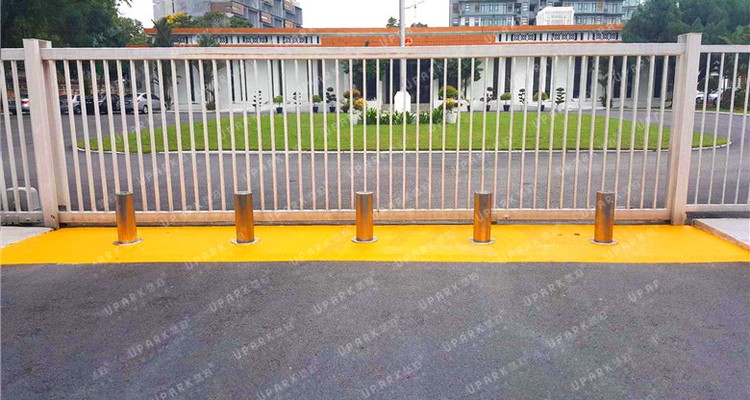
Romania's luxury residential market has transformed dramatically over the past decade, concentrated in three distinct zones: Bucharest's northern corridor (Pipera, Ștefănești, and Corbeanca), the Carpathian mountain resort towns of Sinaia and Predeal, and the emerging luxury estate market in the Transylvanian countryside around Brașov and Sibiu. As Romanian property values rise and high-net-worth households invest in physical security, automatic bollards are becoming a standard specification.
The Security Calculus for Romanian Luxury Properties
Romania's economic growth — driven by IT services, automotive manufacturing, and real estate development — has created a substantial class of entrepreneurs and professionals investing in high-value residential property. The National Institute of Statistics reports that residential property values in premium Bucharest districts have more than doubled since 2015.
This wealth concentration has attracted organized property crime. Romanian security consultants note that luxury villa districts in northern Bucharest experience regular surveillance activity — vehicles mapping access points, testing gate response times, and documenting security measures. A property with only electronic security presents a different risk profile from one with physical vehicle barriers.
Three Distinct Property Markets
1. Bucharest Northern Corridor. The Pipera-Voluntari-Ștefănești corridor hosts Romania's highest concentration of luxury single-family homes. Properties in developments like Pipera Park and the surrounding villa districts represent investments ranging from 500,000 to over 2 million EUR. Many feature extended driveways and multiple vehicle access points, making automatic bollards an efficient security solution.
2. Carpathian Mountain Estates. The Prahova Valley — Sinaia, Bușteni, and Predeal — contains luxury chalets and mountain estates used as weekend retreats by Bucharest-based owners. These properties are typically unoccupied five days per week, creating an extended opportunity window that makes physical perimeter security essential. Remote-controlled bollards allow owners in Bucharest to manage property access from the capital.
3. Transylvanian Country Estates. The countryside around Brașov, Sibiu, and the Saxon villages of Transylvania has attracted investment in restored manor houses and contemporary country estates. These properties often sit on large plots with multiple access routes — formal driveways, service roads, and agricultural tracks — requiring physical access control at multiple points.
Installation Considerations for Romanian Properties
Romanian residential architecture and geography present specific installation requirements:
- Extreme temperature range. Romanian winters, particularly in the Carpathians and Transylvania, bring sustained sub-zero temperatures and heavy snowfall. The hydraulic bollard mechanism must be rated for reliable operation at temperatures well below minus 20 degrees Celsius.
- Groundwater and drainage. The Bucharest region sits on the Dâmbovița River plain with a seasonally high water table. Underground bollard installations require proper drainage measures and sealed mechanisms to prevent water accumulation.
- Heritage considerations. Transylvanian Saxon villages and Brașov historic districts fall under heritage protection regulations. Bollard installation in these areas must respect historic driveway surfaces and architectural character.
- Smart home compatibility. Romanian luxury residential construction increasingly specifies KNX-based home automation. UPARK bollards accept standard dry contact inputs compatible with KNX relay modules.
Why Romanian Homeowners Choose 36V
Romania's electrical installation regulations, governed by the Normativ I7-2011 standard, impose certification and documentation requirements on high-voltage residential work. The 36V DC system operates below the voltage threshold that triggers these requirements, allowing standard electrical contractors to manage the installation.
The 20-centimeter overlap between the rising shaft and the ground sleeve addresses a specific Romanian concern: the combination of heavy snow accumulation and rapid spring thaw. During the March-April transition, melting snow saturates the ground, creating conditions where water can infiltrate underground installations. The overlap seal prevents this from affecting the bollard mechanism.
UPARK Automatic Bollards for Romanian Properties
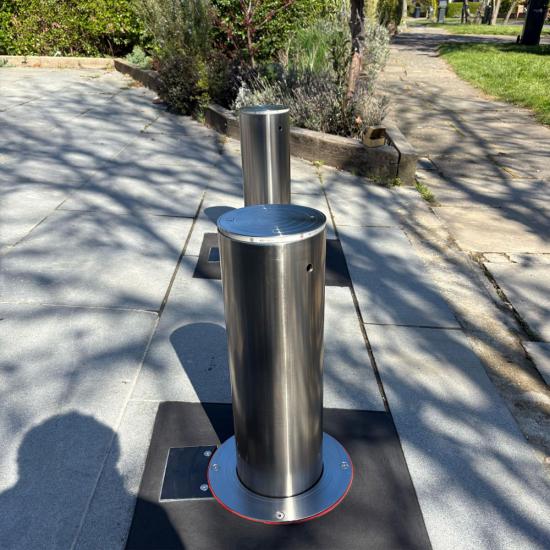
For Bucharest villa properties, 316 brushed stainless steel in a satin finish provides visual restraint consistent with contemporary Romanian luxury architecture. The material withstands the city's seasonal temperature swings without surface degradation.
For Carpathian mountain properties, the same material specification applies, with particular attention to the freeze-thaw resilience of the hydraulic mechanism. The 20-centimeter overlap and corrosion-resistant ground sleeve ensure reliable operation through the full mountain winter season.
For Transylvanian country estates with multiple access points, GSM and IP-based control modules allow the owner to operate all bollards from a single smartphone interface. Scheduled access windows can be programmed for gardeners, maintenance staff, or agricultural contractors.
The hydraulic drive operates from minus 35 to plus 60 degrees Celsius — more than adequate for Romanian conditions, including the extreme lows recorded in the Carpathian mountain region.
Frequently Asked Questions
Do automatic bollards require building permits in Romania?
On private residential land within the cadastral boundary, a bollard typically does not require autorizație de construire if it does not affect structural elements or public rights of way. Heritage zone properties may require approval from the local Direcția Județeană pentru Cultură. Consult your architect before proceeding.
What is the installed cost of residential automatic bollards in Romania?
Single bollard installed costs typically range from 8,000 to 16,000 EUR, depending on model, finish, and site conditions. Two-bollard driveway installations range from 16,000 to 32,000 EUR.
Can automatic bollards integrate with KNX smart home systems?
Yes. UPARK bollards use dry contact inputs directly compatible with KNX relay modules and other platforms common in Romanian luxury residential automation.
Are automatic bollards suitable for Carpathian mountain properties?
Yes, with correct specification. The hydraulic mechanism operates at temperatures down to minus 35 degrees Celsius, and the sealed overlap design prevents meltwater infiltration during the spring thaw season.
call us :
+86 18206096507 e-mail : [email protected]




 ipv6 network supported