Malta represents a unique market for luxury residential security: the most densely populated country in the European Union, with a property market driven by international investment, iGaming sector wealth, and the Malta Individual Investor Programme. Three zones define Malta's luxury residential landscape: Valletta's restored palazzos and luxury apartments, the villa estates of Mdina, St. Julian's, and Sliema, and the Gozo island retreats.
Malta's Distinct Security Profile
Malta's luxury property market has been transformed by two decades of EU membership and the growth of the iGaming and financial services sectors. Property values in prime locations — particularly Valletta, the Three Cities, and the St. Julian's-Sliema corridor — have appreciated dramatically, creating concentrated wealth that attracts organized property crime.
Malta's compact geography — just 316 square kilometers — creates a specific security dynamic. Every luxury property on the main island is within thirty minutes' drive of every other location. There is no remote countryside where distance provides natural security. In this environment, physical perimeter barriers are not a luxury specification — they are the practical foundation of residential security.
Three Maltese Property Markets
1. Valletta and the Three Cities. Valletta's UNESCO World Heritage status and the restoration of historic palazzos have created a market for ultra-luxury urban residences. While many are apartments, ground-floor properties and palazzos with private vehicle entrances require discreet physical security that does not compromise the heritage streetscape.
2. Mdina and Rabat Villa Estates. Mdina, Malta's ancient silent city, and the surrounding Rabat area host exclusive villa properties that combine historic architecture with contemporary luxury finishes. These properties typically feature walled gardens and private vehicle entrances that benefit from automatic bollard installation.
3. St. Julian's, Sliema, and Gozo Retreats. The St. Julian's-Sliema coastal corridor hosts contemporary luxury apartments and penthouses with dedicated underground parking. Gozo, Malta's sister island, features larger villa estates and converted farmhouses (houses of character) used as weekend retreats by Malta-based owners. Gozo properties, separated from the main island by a twenty-five-minute ferry, require remote access control that functions reliably across the channel.
Installation Considerations for Maltese Properties
- Extreme density. Malta's urban density creates space constraints for underground installations. Bollard foundations must be designed for minimal footprint while maintaining structural integrity.
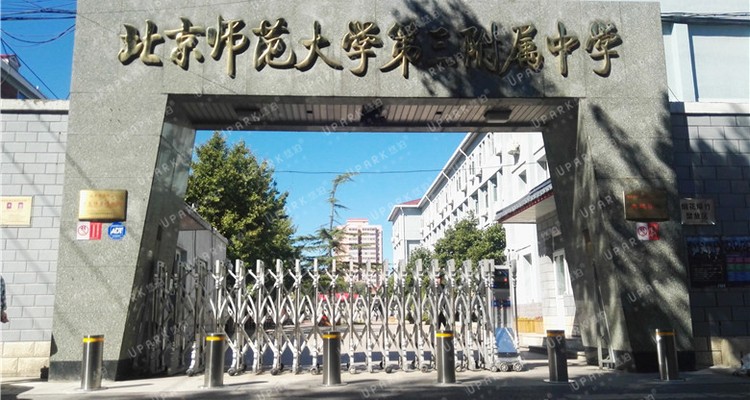
- Marine environment. Every property in Malta sits within three kilometers of the Mediterranean. 316 marine-grade stainless steel is the minimum acceptable specification for all installations, with no exceptions for inland locations — Malta has no true inland.
- Heritage protection. Valletta and Mdina are UNESCO World Heritage sites with strict aesthetic regulations enforced by the Planning Authority and the Superintendence of Cultural Heritage. Bollard installations must be visually discreet and compatible with heritage streetscapes.
- Limestone bedrock. Malta sits on globigerina limestone, which presents specific challenges for underground excavation. Pre-installation site assessment is essential to confirm foundation depth requirements.
Why Maltese Homeowners Choose 36V
Malta's electrical installation regulations follow British-derived standards with EU harmonization. The 36V DC system simplifies compliance by operating below the voltage threshold that triggers the most demanding certification requirements. In Malta's dense urban environment, where installation disruption must be minimized, this simplification translates directly to shorter installation timelines.
The 20-centimeter overlap addresses a Malta-specific concern: the combination of limestone terrain and seasonal heavy rainfall. Malta's autumn and winter months bring intense rainfall events that saturate the porous limestone, creating conditions where underground installations are exposed to standing water. The overlap seal prevents water ingress into the bollard mechanism.
UPARK Automatic Bollards for Maltese Properties
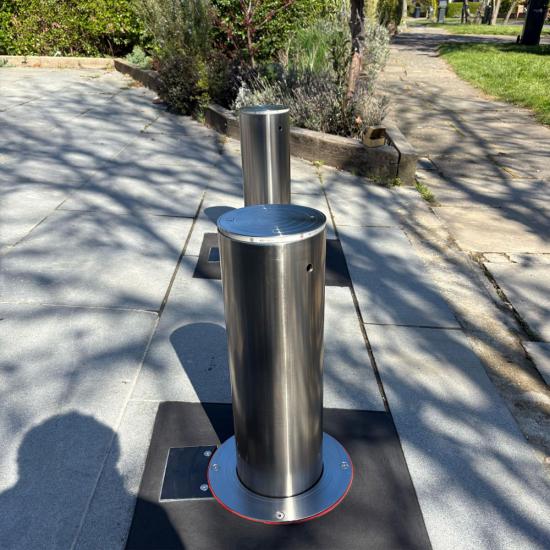
For Valletta and Mdina properties, 316 marine-grade brushed stainless steel with a satin finish provides visual discretion essential to heritage contexts. The material resists the Mediterranean salt-air environment and maintains appearance through decades of exposure. Custom powder-coating to match property metalwork and color schemes is available for projects requiring specific aesthetic integration.
For Gozo retreats, GSM and IP-based control modules allow owners on Malta's main island to operate bollards remotely, grant time-limited access to maintenance contractors, and receive notifications of unauthorized access attempts. The bollard operates as part of a unified property management system.
The hydraulic drive operates from minus 35 to plus 60 degrees Celsius. Malta's Mediterranean climate never approaches the lower extreme, but the mechanism's full temperature range ensures reliable operation without seasonal performance variation.
Frequently Asked Questions
Do automatic bollards require permits in Malta?
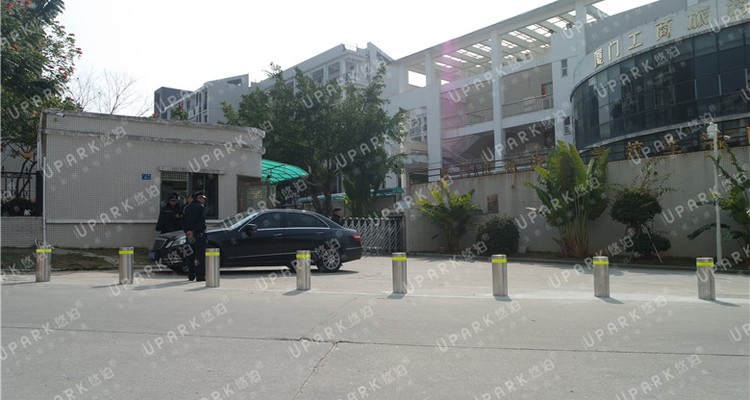
All exterior installations in Malta are subject to Planning Authority approval. Bollards within Valletta or Mdina Urban Conservation Areas require additional review by the Superintendence of Cultural Heritage. Installations that are flush-mounted when retracted and finished to match property aesthetics typically receive approval. Consult your architect before proceeding.
What is the installed cost of residential automatic bollards in Malta?
Due to Malta's premium construction costs and marine-grade material requirements, single bollard installed costs typically range from 9,000 to 18,000 EUR. Two-bollard driveway installations range from 18,000 to 36,000 EUR. Heritage zone approvals may add to project timelines.
Can automatic bollards integrate with building access control systems?
Yes. UPARK bollards use dry contact inputs compatible with all major access control platforms. For Gozo properties, GSM and IP modules allow remote operation from Malta's main island.
Are automatic bollards suitable for Malta's limestone terrain?
Yes, with pre-installation site assessment. Globigerina limestone may require adjusted foundation depth, but the bollard mechanism itself is fully compatible with Malta's geological conditions. The sealed overlap design prevents water ingress during Malta's intense autumn rainfall events.
call us :
+86 18206096507 e-mail : [email protected]




 ipv6 network supported