Slovakia's luxury residential market is concentrated in three zones: Bratislava's hillside villa districts (Koliba, Slavín, and the Horský Park area), the High Tatras mountain resort region, and the Danube riverfront estates between Bratislava and Komárno. As Slovak property values rise and high-net-worth households invest in physical security, automatic bollards are becoming a standard specification.
Bratislava's Unique Security Profile
Bratislava occupies a distinctive position in Central European residential security. Located just 60 kilometers from Vienna — making it the closest pair of European capitals — the city attracts cross-border wealth and cross-border property crime. Slovak security consultants note that Bratislava's villa districts experience reconnaissance activity from organized networks operating across the Slovak-Austrian and Slovak-Czech borders.
The city's hillside topography creates a specific security challenge. Koliba and Slavín villas sit on the slopes of the Little Carpathians, with driveways that descend steeply from the street or climb from lower access roads. In both configurations, the main residence often has limited visibility of the driveway entrance, making remote-operated physical barriers particularly valuable.
Three Slovak Property Markets
1. Bratislava Hillside Villas. Koliba, the area around Slavín war memorial, and the diplomatic quarter near Horský Park host Bratislava's most valuable residential real estate. Properties here feature architect-designed contemporary villas and renovated early twentieth-century houses on large plots with mature landscaping. Extended driveways and limited street visibility make automatic bollards the natural security choice.
2. High Tatras Mountain Chalets. The High Tatras — Slovakia's premier mountain resort region centered on Štrbské Pleso, Tatranská Lomnica, and Starý Smokovec — host luxury chalets used as weekend retreats by Bratislava-based owners. These properties face extreme winter conditions, extended vacancy during weekdays, and mountain road access that makes vehicle-borne intrusion a practical concern.
3. Danube Riverfront Estates. The Danube corridor between Bratislava and the Hungarian border features riverfront estates and contemporary luxury homes. These properties combine scenic location with the security challenge of river access — a vulnerability that driveway-level physical barriers are specifically designed to close.
Installation Considerations for Slovak Properties
- Mountain winter extremes. High Tatras properties experience some of Central Europe's most severe winter conditions, with temperatures regularly dropping below minus 20 degrees Celsius and snow accumulation exceeding one meter. Bollard mechanisms must be rated for extreme cold operation.
- Hillside drainage. Bratislava's hillside villa districts require attention to surface water drainage around bollard foundations. The Little Carpathians' clay-rich soils retain water during wet periods, creating conditions where underground installations must be properly sealed.
- Heritage protection. Bratislava's Slavín and Horský Park areas fall within protected zones. Bollard installation must respect heritage driveway materials and architectural character.
- Smart home integration. Loxone, the Austrian-developed smart home platform, has significant market penetration in Slovak luxury residential construction — a natural result of geographic and cultural proximity to Austria. UPARK bollards accept dry contact inputs directly compatible with Loxone.
Why Slovak Homeowners Choose 36V
Slovakia's electrical installation regulations, governed by STN standards harmonized with EU norms, impose certification requirements on high-voltage residential work. The 36V DC system operates below the threshold that triggers these requirements, allowing standard electrical contractors to manage installation.
The 20-centimeter overlap addresses a specific Slovak concern: the freeze-thaw cycle that characterizes Central European winters. Slovak winters alternate between heavy snow accumulation and rapid thaw, creating conditions where water penetrates underground installations and freezes, expanding and damaging mechanisms. The overlap seal prevents this cycle from affecting the bollard mechanism.
UPARK Automatic Bollards for Slovak Properties
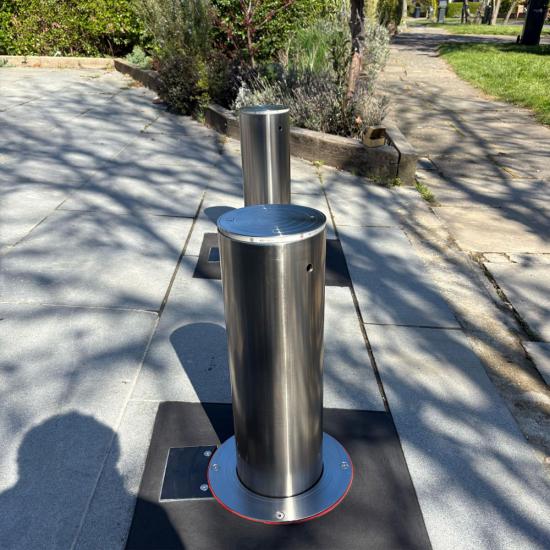
For Bratislava villa properties, 316 brushed stainless steel with a satin finish provides visual restraint appropriate to the architectural context. The material withstands Bratislava's continental climate without surface degradation.
For High Tatras chalets, the same material specification applies, with particular attention to the hydraulic mechanism's cold-weather rating. GSM and IP-based control modules allow owners in Bratislava — a three-hour drive away — to manage property access remotely, grant entry to maintenance staff, and monitor perimeter status.
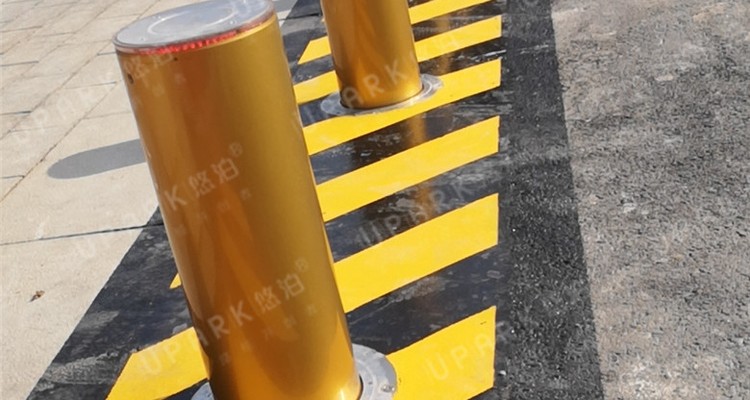
The hydraulic drive operates from minus 35 to plus 60 degrees Celsius, fully covering Slovak conditions including the extreme lows recorded in the High Tatras during winter.
Frequently Asked Questions
Do automatic bollards require permits in Slovakia?
On private residential land, a bollard typically does not require stavebné povolenie if it remains within the cadastral boundary. Heritage zone properties may require approval from the Regional Monument Board (KPÚ). Mountain-region properties in protected landscape areas may be subject to additional environmental review. Consult your architect and local stavebný úrad.
What is the installed cost of residential automatic bollards in Slovakia?
Single bollard installed costs typically range from 7,000 to 15,000 EUR. Two-bollard driveway installations range from 14,000 to 30,000 EUR. Mountain-region installations may incur additional logistics costs.
Can automatic bollards integrate with Loxone smart home systems?
Yes. UPARK bollards use dry contact inputs directly compatible with Loxone relay modules and other platforms common in Slovak luxury residential automation.
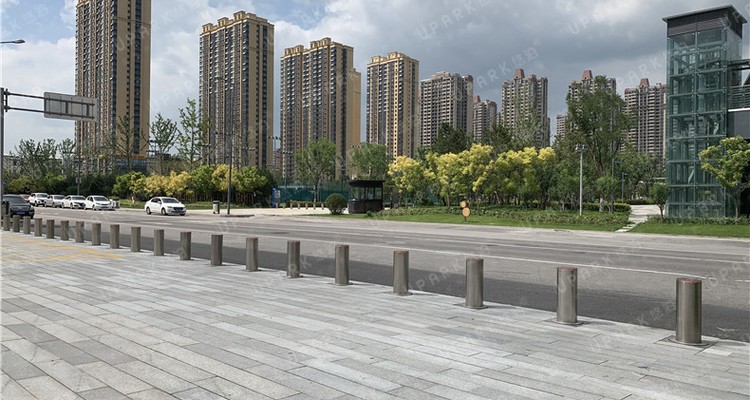
Are automatic bollards suitable for High Tatras mountain properties?
Yes. The hydraulic mechanism operates at temperatures down to minus 35 degrees Celsius, and the sealed overlap design prevents freeze-thaw damage through the full mountain winter season.
call us :
+86 18206096507 e-mail : [email protected]




 ipv6 network supported