An entrance is only as reliable as its worst day. Power goes out, and suddenly the bollards that control your site have to behave predictably: either they keep running, or someone has to intervene. How a bollard handles a blackout is one of the most overlooked specs in a purchase, and it divides drive systems sharply.
The manual-override approach
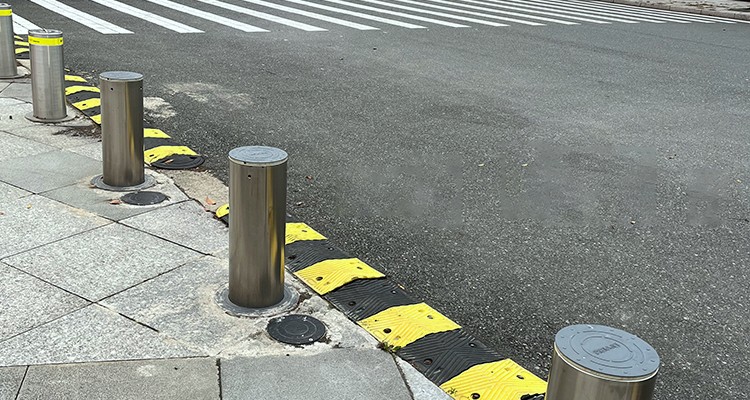
Some bollard systems fall back to manual operation during an outage. An operator opens a valve, releases the stored drive, and the bollard lowers by hand. It works, and it needs no battery. But it is a person-dependent process. Someone has to be on site, know the procedure, and physically walk each unit. On a multi-bollard entrance at 2 a.m., that is a slow and fragile way to keep a site open or secure.
The battery-backup approach
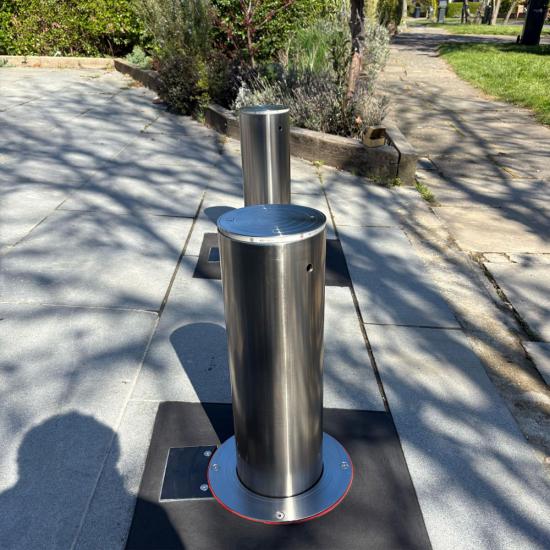
A battery-backed electromechanical bollard keeps its automatic behavior through the outage. The drive runs on stored power, raises and lowers on the same schedule or command as before, and restores to grid power when the outage ends. No manual valve, no site visit, no learned procedure. For entrances that never really close, a hospital, a 24-hour facility, or a busy civic forecourt, that automatic continuity is the whole point of the system.
Safety cuts both ways
Manual override has one virtue: a person decides. In a true emergency where you must lower every bollard immediately, a manual release can be deliberate and verifiable. Battery backup answers that with automatic fail-safe logic: on loss of mains, the bollard can be set to rise (secure the perimeter) or lower (clear the route for responders) according to your site plan, without waiting for staff. The choice is configured in advance, not discovered during the incident.
Maintenance and lifespan
Batteries are a consumable, and they should be on a replacement schedule like any backup system. The upside is that the rest of the drive stays simple and self-contained, with no compressor to leak or air lines to maintain. A pneumatic plant, by contrast, still needs its compressor and treatment system serviced whether the power is on or off. Over a ten-year horizon, the self-contained battery design usually wins on total service burden.
Making the call
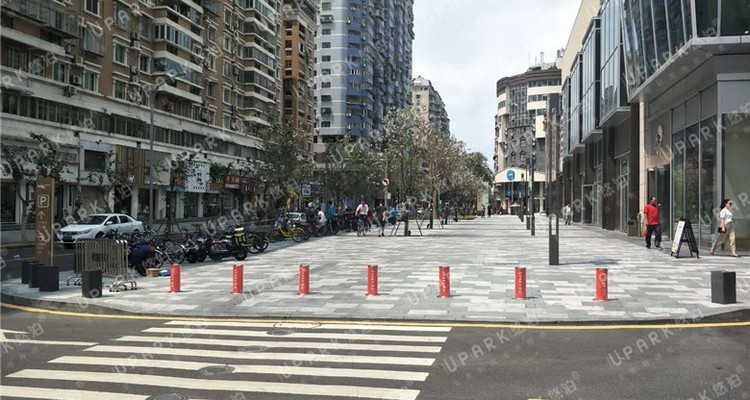
If your site is staffed around the clock and the entrance is low-traffic, a manual-override system can be acceptable. For anything busier, or any site where an unattended blackout must not become a security gap, battery backup is the safer default. Combine it with a low-voltage drive and a drainage-free foundation and the entire installation stays simple to run and easy to service. Explore Automatic Bollards, add Removable Bollards for event access, or read About Us for how we build for resilience.
call us :
+86 18206096507 e-mail : [email protected]




 ipv6 network supported