Bollard marketing loves a big number. A system that stops a 4,500 lb vehicle at 20 mph sounds impressive, and for the right site it is exactly what you need. But the rating that protects a government perimeter is not the rating that belongs in front of a neighborhood clinic or a riverside promenade. Matching the threat to the product is how you control cost without giving up safety.
What a barrier rating actually measures
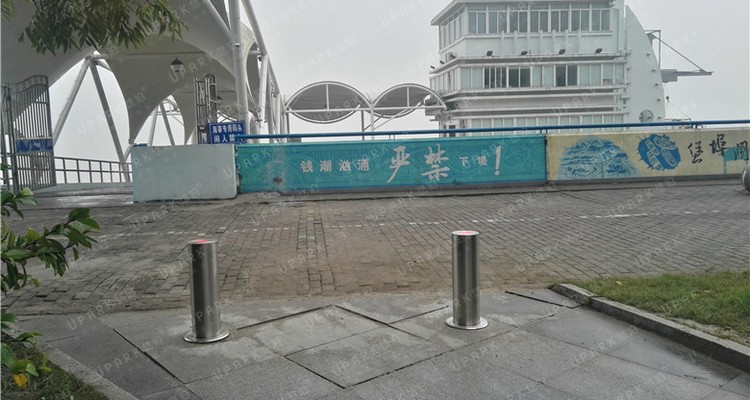
Crash-rated bollards are tested against a defined vehicle weight and speed, then assigned a rating that reflects how completely they stop the threat. Higher ratings mean the bollard can absorb and transfer more impact energy into its foundation. That performance is real and valuable where a deliberate vehicle attack is a credible risk: government facilities, embassies, utilities, and critical infrastructure. The trade-off is weight, foundation depth, and cost that scale with the rating.
Most sites face a different problem
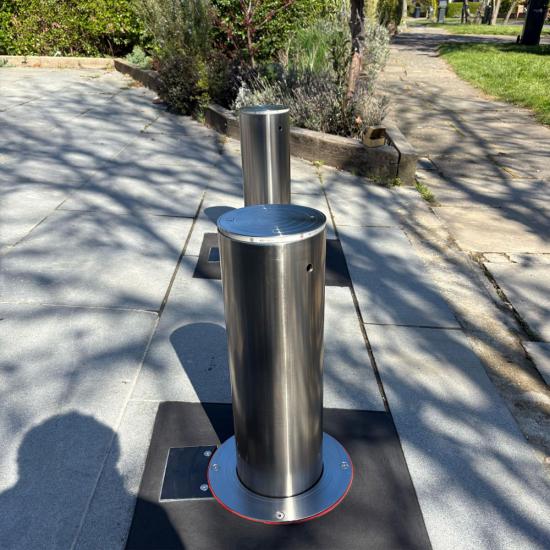
Walk through a typical commercial or civic entrance and the daily risk is not a ramming attack. It is unauthorized vehicles drifting into a pedestrian zone, delivery trucks using a forecourt as a shortcut, or a perimeter that simply needs to open and close on command. For those sites, the priority is dependable access control, not certified anti-ram performance. A well-specified automatic bollard handles all of it: rise on schedule, drop for authorized vehicles, and physically block everything else.
The cost of over-specifying

Choosing a top-tier crash rating for a low-threat site means paying for foundation depth, heavy steel, and complex drive systems you will never use. Worse, it can push the project toward a deeper excavation and a drainage plan the site does not need. A drainage-free foundation and a low-voltage drive keep civil works light and the electrical side simple, which is exactly what everyday access control should look like. You get a robust, weatherproof barrier without the premium of a perimeter built for ballistic-level threats.
How to decide
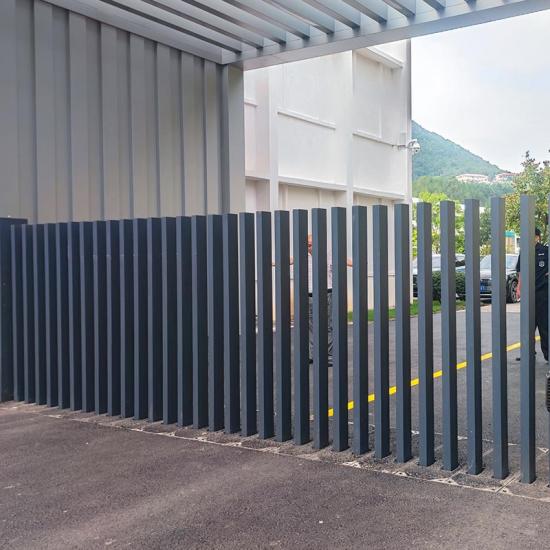
Start with the threat assessment. If a vehicle-borne attack is a documented risk for your facility, spec the certified rating and build the foundation to match. If the real need is controlling who drives where, an automatic bollard with solid intercept height, IP68 sealing, and a duty cycle suited to your traffic is the smarter spend. Mixing fixed and automatic units along one perimeter is common at transit and institutional sites, where some lines stay permanent and others open on command. See the Fixed Bollards and Automatic Bollards lines, or read About Us for the full picture.
call us :
+86 18206096507 e-mail : [email protected]




 ipv6 network supported