Home security has changed. Years ago, hydraulic bollards were standard for commercial properties, but homes need something different: safety first, simple installation, decent looks, and minimal upkeep. That's where DC36V electromechanical bollards come in. They've become the top choice for homeowners who want reliable security without the headaches.
The 36V difference: safer for families
Safety matters most when you're protecting your home. DC36V systems run at what's called Safety Extra Low Voltage (SELV), which basically eliminates the serious shock risk you get with 220V or 380V systems. For families with kids, pets, or regular visitors, that lower voltage means real peace of mind.
These systems also meet international safety rules like IEC 60364 and NEC standards for low-voltage gear. That makes getting permits simpler and ensures your installation follows global safety practices.
Built to last: sealed and waterproof
Traditional hydraulic bollards have seals that can fail and fluid reservoirs that can leak. DC36V bollards use fully sealed housings rated IP68, which means they're completely protected against dust and can handle being underwater up to 1.5 meters for 30 minutes. That's important if you get heavy rain, have sprinklers, or deal with occasional flooding.
The construction uses marine-grade 304 stainless steel with special coatings that fight corrosion. That's crucial if you live near the coast or in areas where roads get salted in winter. The materials are chosen to last decades without looking worn out.
No messy drainage needed
Hydraulic bollards often need drainage trenches and sump pits in case fluid leaks – messy, expensive, and bad for the environment. DC36V electromechanical systems skip all that. The installation footprint is smaller, and you don't need special drainage setups.
Without hydraulic fluid, there's zero chance of soil or groundwater contamination. That appeals to environmentally conscious homeowners and helps meet tightening environmental regulations.
Simpler installation, less disruption
DC36V bollards arrive ready to install as complete units with built-in controls. Installation usually follows four steps:
1. Prepare a concrete base
2. Place and align the unit
3. Connect the basic wiring
4. Set up the control system
The simpler design means installations need 30-50% less labor than hydraulic systems. Most home installations finish in 2-3 days with a two-person crew, minimizing disruption to your daily life.
Maintenance? Basically none
Hydraulic systems need regular fluid checks, filter changes, and sometimes fluid replacement. DC36V systems avoid all that. The electromechanical design uses solid-state components without fluids that can degrade, leak, or need changing.
Better DC36V systems include smart control units that monitor themselves. They track how things are running, spot potential problems before they cause failures, and can send maintenance alerts to your phone or control panel.
Saves energy, works with solar
DC36V bollards only use power when they're actually moving (usually 3-6 seconds to go up or down). On standby, power use drops to minimal levels, often under 5 watts. That's very different from hydraulic systems that maintain pressure constantly, using energy 24/7.
The low voltage makes DC36V systems perfect for solar power. Many makers offer solar-ready setups that let the system run completely on its own, cutting grid dependence and bringing operating costs close to zero.
DC36V vs Traditional Systems Comparison
Looks that fit your home
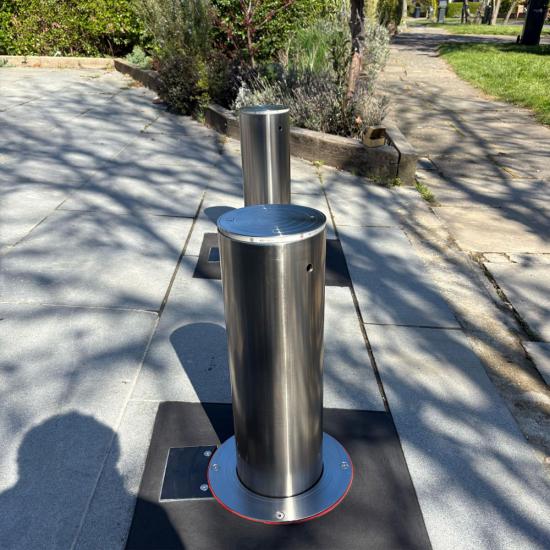
Modern DC36V bollards have clean, simple designs that work with home architecture instead of looking like industrial equipment. You can choose from brushed stainless steel finishes to powder-coated colors that match your home's exterior or landscaping. Unlike hydraulic systems with their pump noise, electromechanical operation is almost silent. That keeps your home peaceful while still providing solid security.
Grows with your needs
Home security needs change. DC36V systems let you expand easily – add more bollards, connect to gate systems, or include surveillance cameras using the same low-voltage setup.
These systems work smoothly with modern smart home setups. Control options include smartphone apps, voice commands (works with Amazon Alexa and Google Assistant), RFID cards, license plate recognition, and traditional remotes. For a complete security solution, consider integrating with our fence gates or parking barriers.
Technical Specifications
Where they work best
Driveway security: Perfect for controlling vehicle access to private driveways, especially useful for homes with multiple drivers, expensive vehicles needing protection, remote properties requiring access control, or vacation homes needing security when empty.
Property perimeter control: For larger properties, DC36V systems offer scalable protection that can be divided into zones, combined with existing security systems, controlled remotely when you're away, or turned off temporarily for events or maintenance.
Multi-generational homes: Increasingly useful for homes with elderly residents or caregivers, offering emergency vehicle access plans, caregiver access that doesn't weaken security, connection to medical alert systems, and remote monitoring for family members.
Cost breakdown
While DC36V systems might cost a bit more initially than basic hydraulic options, the total cost tells a different story:
5-year cost for typical home installation:
• DC36V Electromechanical: $8,000-12,000 (includes installation, little maintenance)
• Traditional Hydraulic: $6,000-9,000 + $2,000-4,000 maintenance = $8,000-13,000
• 220V Electromechanical: $7,000-10,000 + possibly higher insurance
Many insurance companies give 5-15% discounts for properties with certified low-voltage security systems, recognizing their better safety record and lower electrical risk.
Real examples
Suburban family home: The Johnson family in Chicago suburbs replaced their old hydraulic gate with DC36V bollards. They saw 40% less energy use, no more $800 yearly maintenance costs, easy connection to their smart home system, and better safety for kids playing near the driveway.
Coastal property: A Florida beach house switched to DC36V systems and got complete corrosion resistance in salt air, no drainage worries despite high water table, solar power keeps it running during outages, and better looks that fit the coastal style.
What's coming next
Technology keeps improving: AI-based maintenance prediction systems learn your patterns and optimize performance, better connections work with more smart home standards, improved materials offer even tougher, more corrosion-resistant parts, and energy harvesting systems pull power from surroundings.
Market trends helping adoption: Homeowners care more about electrical safety, environmental concerns favor fluid-free systems, smart home growth drives integrated security demand, and insurance companies recognize low-voltage system benefits.
The bottom line
DC36V electromechanical bollards aren't just another option – they represent a real change in how homeowners think about security. They put safety first with low-voltage operation, support sustainability with sealed no-drainage design, and keep things simple with minimal maintenance.
For homeowners choosing security, the benefits are clear: better safety through SELV operation, environmental care with no fluid contamination risk, cost savings from less maintenance and energy use, better looks that work with home design, and room to grow as security needs change.
As home security moves toward smarter, safer, more sustainable solutions, DC36V electromechanical bollards aren't just an alternative – they're becoming the obvious choice for homeowners who want good protection without giving up safety, sustainability, or simplicity. Explore our range of automatic bollards, fixed bollards, and removable bollards to find the perfect solution for your property.
call us :
+86 18206096507 e-mail : [email protected]




 ipv6 network supported