Fixed Bollards vs Portable Barriers: A 10-Year Cost Comparison
Security procurement is often dominated by upfront price. A set of portable barriers appears cheaper than the excavation, concrete work, and wiring required for permanent bollards. But security assets are not a one-time purchase. They are a multi-year operational commitment. A true comparison requires looking at total cost of ownership over a decade. When you run those numbers, the economics often flip in favor of permanent bollards.
Upfront Costs: The Misleading Headline Number
A single mobile barrier unit like an Archer 1200 costs roughly USD 15,000 to USD 25,000 depending on configuration. A high-quality automatic bollard with crash certification costs roughly USD 4,000 to USD 8,000 per unit, plus installation. A four-bollard entry point might cost USD 25,000 to USD 40,000 fully installed. On the surface, the mobile barrier looks cheaper per entry point. But this comparison misses three critical cost categories: deployment labor, storage, and replacement cycles.
Year 1: Installation vs Deployment
Bollard cost Year 1: Equipment (4 units at USD 6,000) equals USD 24,000. Excavation, concrete foundation, electrical wiring, and commissioning equals USD 12,000. Total Year 1 equals USD 36,000. This is a one-time cost. The bollards then operate for the next decade with only routine maintenance.
Mobile barrier cost Year 1: Equipment (4 units at USD 18,000) equals USD 72,000. Transport trailer equals USD 15,000. Staff training on deployment equals USD 3,000. Storage facility lease or construction equals USD 6,000. Total Year 1 equals USD 96,000. The mobile solution already costs 2.6 times more in Year 1.
Years 2-10: The Ongoing Operational Drain
For bollards, the main ongoing cost is preventive maintenance: approximately USD 500 to USD 1,000 per year for a four-unit installation. Add electricity cost for motor operation, roughly USD 100 per year. Over 9 years (Year 2 through Year 10), this adds approximately USD 6,000 to USD 10,000. Cumulative 10-year bollard TCO: approximately USD 42,000 to USD 46,000.
For mobile barriers, the operational costs are substantially higher. Each deployment requires at least two trained staff at 2-3 hours of labor. For a site that needs barriers deployed 50 times per year (weekly events or construction phase changes), labor cost at USD 40/hour is approximately USD 12,000 per year. Nine years of this equals USD 108,000. Storage lease at USD 6,000 per year for 9 years equals USD 54,000. Trailer maintenance, fuel, and insurance: approximately USD 3,000 per year for 9 years equals USD 27,000. Cumulative 10-year mobile barrier TCO: approximately USD 285,000.
At 50 deployments per year, the bollard solution is roughly 6 times cheaper over a decade. Even at just 10 deployments per year, mobile barrier TCO still reaches approximately USD 150,000 — over triple the bollard cost.
The Replacement Factor
Mobile barriers experience wear from transport, deployment, and handling. Straps fray. Anchors corrode. Surface coatings chip from road debris during transport. A realistic replacement cycle for heavily used mobile barriers is 5 to 7 years. Bollards, by contrast, are stationary. The column may need replacement if impacted, but the foundation and underground infrastructure typically last 20 to 30 years.
When you factor in a mid-life barrier fleet replacement at Year 6 (approximately USD 72,000), the mobile TCO jumps to USD 357,000. The bollard at Year 10 may need a column refresh (approximately USD 8,000 for four units), bringing its TCO to roughly USD 54,000. The gap widens to nearly 7-to-1.
What the TCO Math Tells Us
Permanent bollards dominate the TCO comparison under any realistic deployment frequency. The break-even point — where mobile barriers become cheaper than bollards — occurs at roughly 1 to 2 deployments per year. Below that, you are paying for a mobile fleet that spends 363 days in storage.
For any site that needs barriers deployed weekly, monthly, or even quarterly, the permanent solution is cheaper over any reasonable planning horizon. This is why airports, government buildings, and corporate campuses install bollards. It is not because they enjoy digging holes. It is because the lifetime cost equation strongly favors permanent installation.
Hidden Costs That Favor Bollards
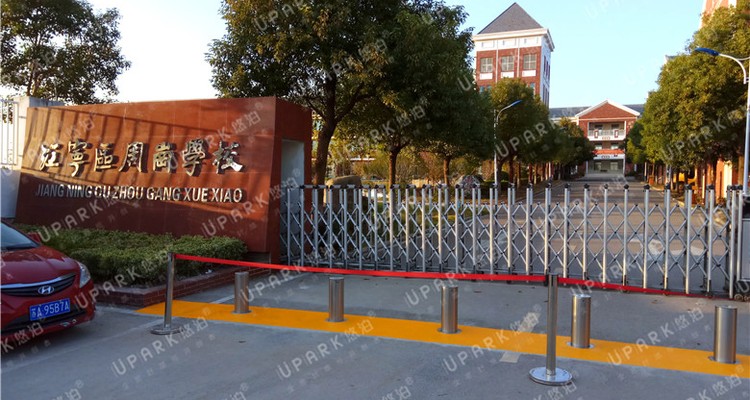
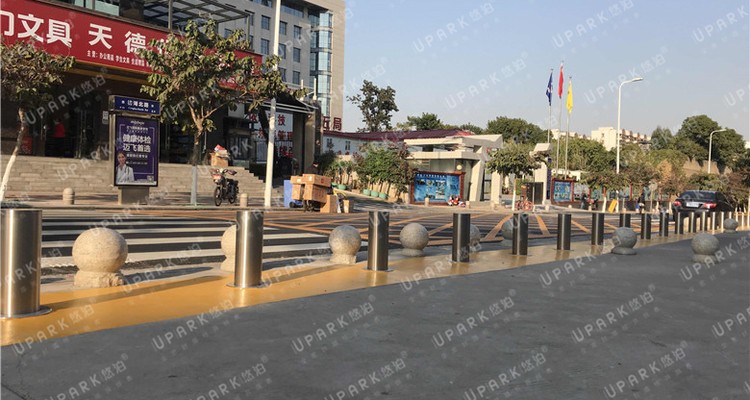
Beyond direct financial numbers, permanent bollards eliminate operational risks that carry real costs. No deployment delays caused by staff shortages or vehicle breakdowns. No security gaps between needing a barrier and having it in place. No liability exposure if a barrier is not deployed in time. No weather restrictions — bollards work in rain, snow, and extreme heat without human intervention.
These are not soft benefits. They are hard cost avoidances. A single incident where a mobile barrier was late or absent can result in liability damages that dwarf the entire bollard installation budget. The cheaper upfront option can become the most expensive mistake a security manager ever makes.
call us :
+86 18206096507 e-mail : [email protected]




 ipv6 network supported