Always-On vs On-Demand: Why Bollards Win for Daily Access Control
Security solutions fall into two broad categories: always-on and on-demand. Always-on means the system is protecting the site every second of every day. On-demand means it needs to be activated, deployed, or positioned before it provides any protection. For any facility that handles vehicle traffic on a daily basis, the always-on approach of automatic bollards is the operationally superior choice. Here is why.
The Cost of Every Deployment
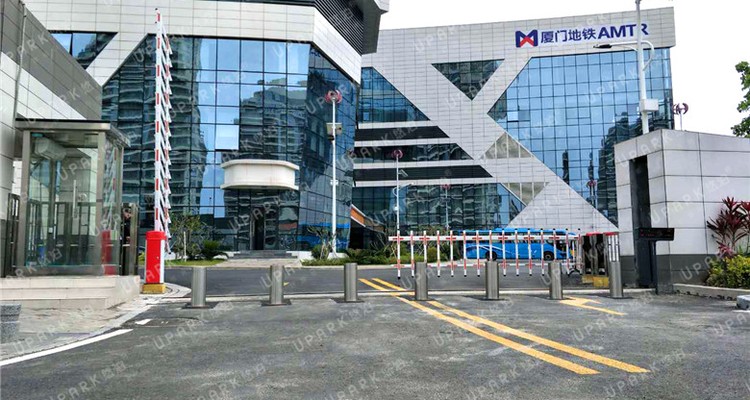
A portable barrier system that must be deployed for each use case is not a security system. It is an event logistics system that also provides security. Every deployment consumes labor hours. Every retrieval consumes more. Over the course of a month at a busy commercial site — a loading dock, an office parking lot, a shopping mall service road — those hours add up to full-time equivalent staff whose only job is moving barriers.
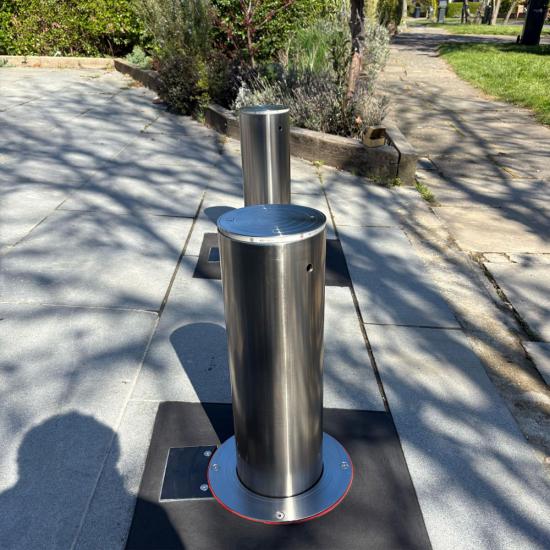
An automatic bollard has zero deployment cost. It is already in position. The motor raises or lowers the column in seconds. No staff are dispatched. No trailer is hooked up. No storage inventory is checked. The system just works.
Throughput: The Hidden Bottleneck
A modern automatic bollard pair can cycle — lower, allow vehicle through, raise — in under 10 seconds. At a busy commercial entry with 200 vehicle movements per day, that is roughly 33 minutes of total cycle time. Spread across operating hours, it is invisible to users.
A portable barrier at the same location, if deployed and removed for each vehicle, would take 2 to 5 minutes per cycle. For 200 movements, that is 400 to 1,000 minutes of labor per day. The site would need a dedicated barrier operator working an entire shift just to manage vehicle access. This is not a viable operational model for any facility with more than a handful of daily entries.
Integration with Access Control Systems
Automatic bollards integrate directly with standard access control infrastructure. An RFID reader detects an authorized vehicle tag and lowers the bollard. A license plate recognition camera identifies an approved plate and triggers the same action. A security guard at a remote monitoring station presses a button on a tablet. The response is instant, logged, and auditable.
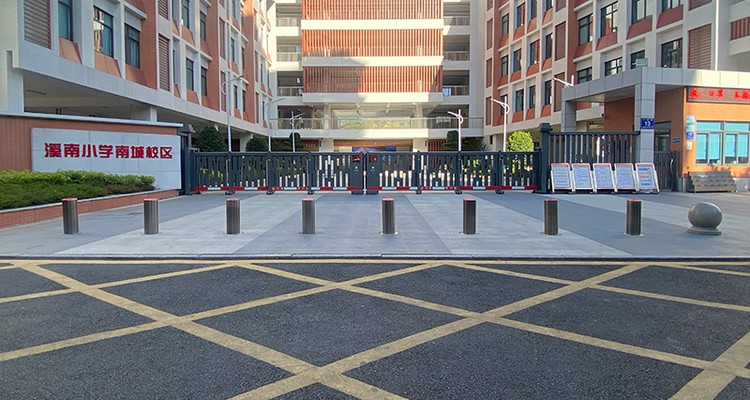
Portable barriers do not integrate with any electronic access control system. They rely entirely on human operators making decisions. This introduces latency, error potential, and a complete lack of access log data. In an era where every building entry is tracked digitally, unprotected vehicle entries are a security blind spot.
The 3 AM Test
A simple test for any security solution: is it protecting the site at 3 AM on a holiday weekend? An automatic bollard passes this test effortlessly. It is in the raised position, blocking the entry, waiting for nothing. A portable barrier fails this test unless someone specifically deployed it for that overnight period, which almost never happens for routine daily-use sites.
The 3 AM test reveals a fundamental truth about security architecture: the best protection is the one that does not need to be remembered. Bollards are always remembered because they are always there. Portable barriers rely on human memory, scheduling, and compliance — all of which fail predictably over time.
The Conclusion
For sites with daily vehicle traffic, the choice between always-on bollards and on-demand barriers is not a close call. Bollards deliver faster throughput, zero staffing cost, seamless access control integration, and 24/7 protection without human intervention. Portable barriers serve a different mission entirely — temporary events, not permanent operations. Match the solution to the operational tempo. If the tempo is daily, the answer is underground.
call us :
+86 18206096507 e-mail : [email protected]




 ipv6 network supported