After-Impact Recovery: Bollard Repair vs Replacement Explained
One argument frequently made by mobile barrier manufacturers is that bollards require complete replacement after a vehicle impact while portable barriers are simply repositioned and reused. Like many competitive talking points, this contains a grain of truth wrapped in significant exaggeration. The reality of post-impact bollard recovery is more nuanced, and good bollard design makes recovery faster and cheaper than critics suggest.
What Actually Happens When a Vehicle Hits a Bollard
When a crash-rated bollard stops a vehicle, three things occur simultaneously. First, the bollard column absorbs the initial kinetic energy through elastic and plastic deformation. The column may bend or sustain surface damage. Second, the kinetic energy is transferred through the column into the deep concrete foundation, which distributes the force into the surrounding soil. Third, the vehicle is stopped, typically with significant front-end damage.
The critical question is what needs repair afterward. In most non-catastrophic impacts — a slow-speed collision in a parking lot, a delivery truck backing into a bollard at low speed — only the column is affected. The foundation, wiring, and control system remain intact. Repair means replacing the column, not rebuilding the entire installation.
The Modular Repair Advantage
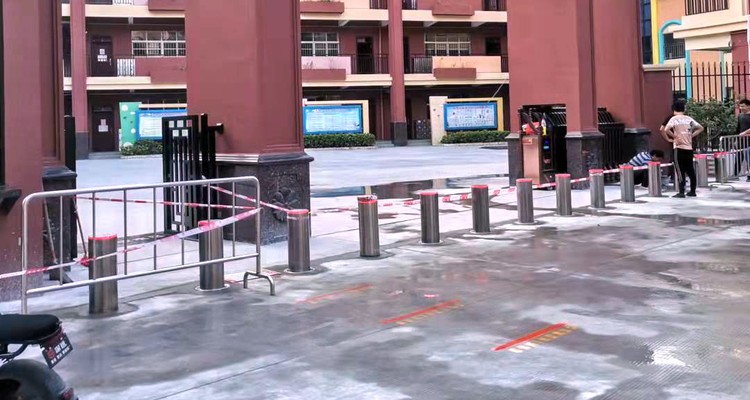
Modern bollard systems designed with modular architecture allow column replacement in hours rather than days. The procedure involves: disconnecting the drive mechanism from the control system, extracting the damaged column from its housing, inserting a new or refurbished column, reconnecting the drive and control connections, and running a functional test sequence.
This modular approach transforms post-impact repair from a civil engineering project into a maintenance task. The foundation is undisturbed. The wiring is untouched. The surrounding pavement is undamaged. Total downtime: typically 2 to 4 hours, not 2 to 4 days.
When Replacement Is Necessary
Full bollard replacement — including foundation — is required only when the impact exceeds the design rating. If a K4-rated bollard is struck by a 7.5-ton truck at 80 km/h (a K8-equivalent impact), the foundation may be compromised. This is not a bollard failure. It is a rating mismatch. The solution is proper threat assessment and rating selection during the procurement phase, not blaming the bollard technology.
Even in cases of foundation damage, the excavation zone is limited to the bollard footprint — typically 600 to 1,000 millimeters in diameter. This is a localized repair, not a perimeter-wide reconstruction. Compare this to crash barriers and guardrails, where vehicle impact often damages multiple connected sections, requiring much larger replacement zones.
The Mobile Barrier Counterpoint
Mobile barrier manufacturers claim their products suffer no damage from vehicle impact and can be immediately reused. This is partially true for their specialized designs but omits important context. A mobile barrier that stops a vehicle must be inspected, recertified if required by local regulations, and redeployed to its position. The inspection and recertification process can take days. During that time, the barrier is out of service, and the site is unprotected unless a backup unit is deployed.
Meanwhile, a modular bollard installation with a spare column on site can be repaired and back in service within the same workday. The speed of recovery depends not on the technology category but on the quality of the design and the readiness of spare parts.
Designing for Rapid Recovery
The best bollard installations plan for impact recovery before the first vehicle ever hits. Key design principles include: specifying modular column construction that allows above-ground replacement, maintaining a minimum of one spare column per site, training on-site maintenance staff in column swap procedures, establishing a supply contract with the manufacturer for 48-hour parts delivery, and conducting annual impact-recovery drills to verify procedures and timing.
These practices reduce the true cost of bollard ownership and directly address the replacement-cost critique. A well-designed bollard system is not a single-use asset that becomes scrap after an impact. It is a recoverable security platform designed for decades of service through modular repair cycles.
The Bottom Line
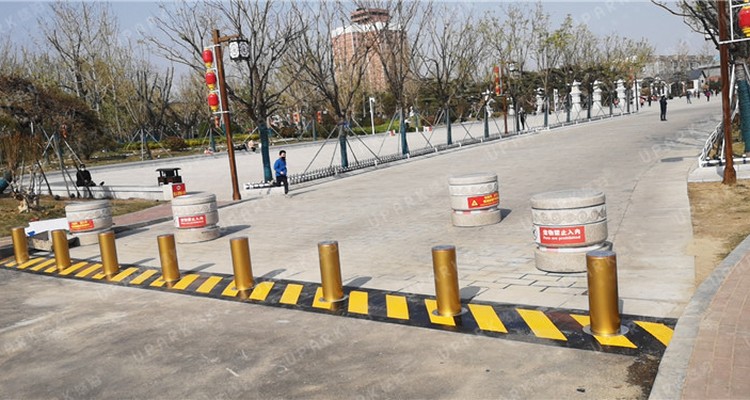
Yes, a bollard column absorbs damage when it stops a vehicle. That is its job. But a quality bollard system is engineered so that absorbing that damage does not destroy the installation. Modular column replacement, proper rating selection, and spare-parts readiness make post-impact recovery measured in hours, not weeks. Bollards are not disposable. They are recoverable. The difference matters.
call us :
+86 18206096507 e-mail : [email protected]




 ipv6 network supported