Choosing the right bollard starts with understanding what each type actually does. Fixed, removable, and automatic bollards serve different purposes. The best choice depends on your security level, budget, and how often you need vehicle access.
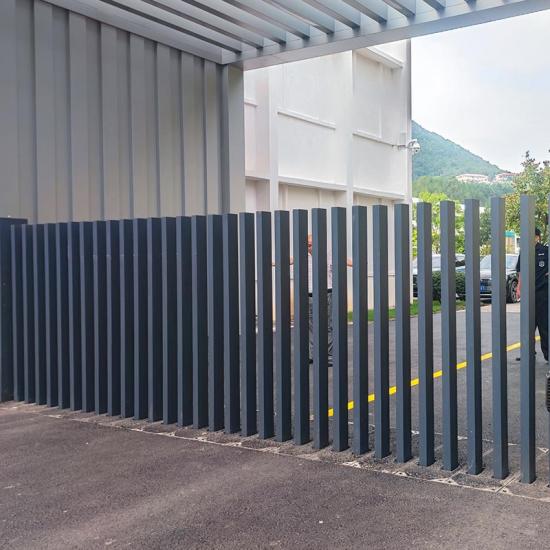
Fixed bollards stay in place permanently. They work best for areas that never need vehicle access. Government buildings, pedestrian zones, and high-security perimeters typically use fixed options. Installation requires concrete foundations, usually 24 to 36 inches deep. Once installed, they need zero maintenance beyond occasional cleaning. The upfront cost runs lower than removable or automatic options. But you lose all flexibility. Nothing moves.
Removable bollards pull out when you need access and go back in when you do not. They suit properties that need occasional vehicle entry. A restaurant might remove bollards for deliveries on Tuesday but keep them in place for the weekend market. These units thread into ground sockets with lifting handles on top. The installation needs a sleeve set in concrete, but the socket stays flush with the pavement when empty. Cost sits between fixed and automatic options. The main drawback is manual labor. Someone has to physically remove and reinstall each bollard every time.

Automatic bollards rise and lower with a button or card reader. They handle frequent access changes without any physical effort. Office buildings, hospitals, and retail centers benefit most from this flexibility. One operator can manage multiple entry points from a desk. Integration with access control systems means only authorized vehicles enter. The tradeoff is higher installation cost and more maintenance complexity. Hydraulic or electromechanical systems need periodic servicing.
Security ratings differ across types. Fixed bollards achieve the highest crash ratings because they have no moving parts to weaken the structure. Removable bollards can reach similar ratings when properly installed in their sockets. Automatic bollards require careful engineering to maintain crash resistance while allowing movement. Look for IWA 14-1 or ASTM F2656 certification regardless of type if you need rated protection.

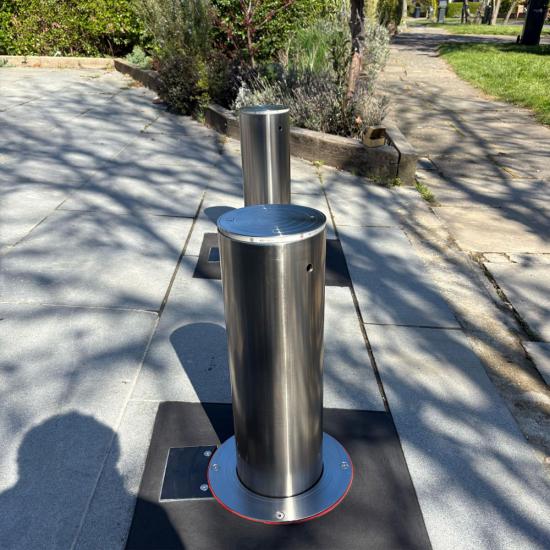
Aesthetics matter in most commercial settings. All three types come in various finishes. Stainless steel polished to a mirror finish looks modern and clean. Powder-coated options match building colors. Some automatic bollards hide completely underground when lowered, leaving no visible hardware. Fixed bollards offer the widest range of decorative covers.
Maintenance requirements increase with complexity. Fixed needs almost nothing. Removable requires periodic socket cleaning and bolt inspection. Automatic demands regular testing of hydraulic or electrical systems. Budget for annual maintenance when comparing costs.
Most properties actually need a combination. A hospital might use automatic bollards at the main entrance, fixed bollards around the emergency department, and removable units at a loading dock used twice weekly. One type rarely fits every location.
Think about frequency first. How often does vehicle access need to change at each location? Daily or hourly access changes point toward automatic. Weekly or monthly changes might justify removable. Never changing access means fixed bollards. Let the access pattern drive the decision, not the price tag.
call us :
+86 18206096507 e-mail : [email protected]




 ipv6 network supported