Government Facility Security: Bollards Procurement Guide
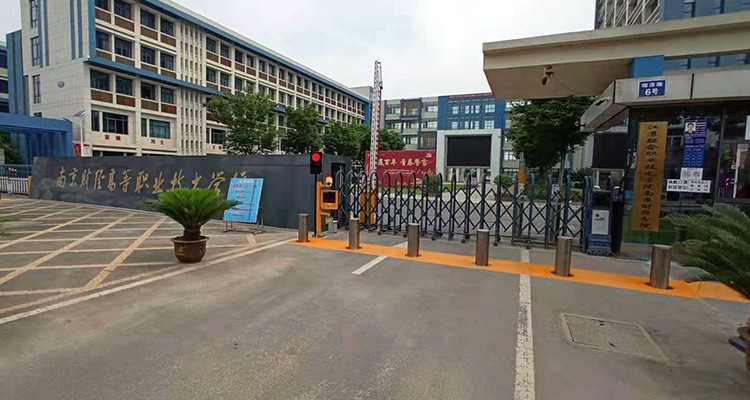
For government facility managers and procurement officers, selecting perimeter security solutions is not just about protection—it's about compliance, certification, and public safety. Automatic bollards, when properly specified and installed, deliver all three while maintaining operational flexibility.
This guide covers the procurement essentials for government-grade automatic bollards.
Certification Requirements for Government Facilities
# K12/L3 Crash Rating (ASTM F2656-20)
Most federal and state government facilities require K12/L3-certified barriers. This rating means the bollard can stop a 6,500kg vehicle traveling at 80km/h, with the vehicle not penetrating more than 1 meter beyond the barrier.
**Why it matters**: In 2018, the US Department of Homeland Security made K12 rating mandatory for all Tier 1 and Tier 2 federal facilities. Similar standards apply in the UK (PED), Canada (CAC), and Australia (AS/NZS 1170).
# GSA Schedule Compliance (US Federal)
For US federal purchases, bollards must be available through GSA Schedule 84 (Total Solutions for Law Enforcement Requirements). This ensures:
• Competitive pricing (pre-negotiated)
• Compliance with Buy American Act (if applicable)
• Environmental compliance (EPAct, RoHS)
UPARK's government series is GSA Schedule-eligible, with full documentation for federal procurement.
# State and Local Standards
Many state and municipal governments have adopted standards based on federal guidelines:
• **California**: Requires DGS-approved vehicle barriers for state buildings
• **New York**: Follows NYS OGS security design standards
• **Texas**: DPS-certified barriers for state facilities
Vendor Selection for Government Contracts
When evaluating bollard vendors, government procurement officers should assess:
# 1. Certification Documentation
Require vendors to provide:
• Third-party crash test reports (not just manufacturer claims)
• Cycle test documentation (100,000+ cycles)
• Corrosion test reports (1,000+ hours salt spray)
# 2. Past Performance
Review vendor's project portfolio:
• Similar facility types (courthouses, embassies, federal buildings)
• Project scale (single building vs. campus-wide deployments)
• Client references (contact previous government clients)
# 3. Lifecycle Cost Analysis
Government procurement increasingly uses lifecycle costing (not just lowest bid). Evaluate:
• **Energy consumption**: 36V systems cost ~$50/year to operate vs. $200+/year for hydraulic
• **Maintenance**: Motor-driven units need annual lubrication only; hydraulic need annual fluid changes and filter replacements
• **Expected lifespan**: Quality units last 15-20 years vs. 7-10 for budget options
Installation Compliance for Government Projects
Government installations have stricter oversight than private sector projects.
# Security Clearances
For sensitive facilities (military bases, intelligence agencies), installers may need security clearances. UPARK's installation partners are cleared for work at:
• Unclassified facilities (standard installation)
• CUI (Controlled Unclassified Information) facilities (installer clearance required)
# Davis-Bacon Act (US Federal)
For federal projects, contractors must pay prevailing wages as determined by the Department of Labor. Ensure your installation contract specifies Davis-Bacon compliance.
# Accessibility Compliance (ADA)
Even security bollards must comply with accessibility standards:
• **When lowered**: Maximum 3mm above ground (ASTM F2788)
• **Detection**: Visual and tactile cues for visually impaired pedestrians
• **Operable parts**: Accessible to people with disabilities (if manual override provided)
Maintenance and Inspection Protocols
Government facilities often have mandated inspection schedules.
# Monthly Inspections (Facility Staff)
• Test rise/fall cycle (10 repetitions)
• Check for unusual noises or slow operation
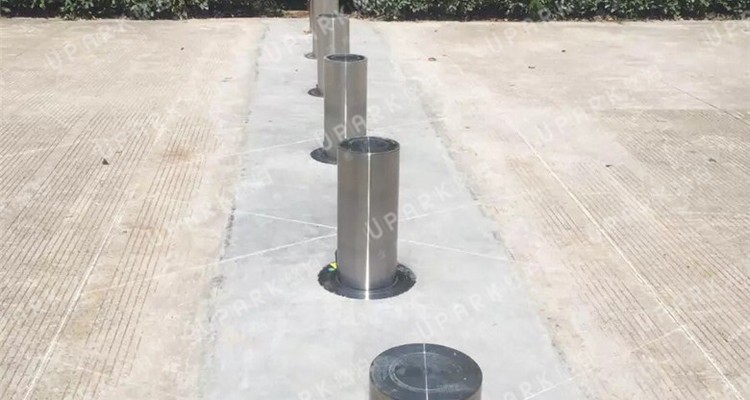
• Verify emergency override function
# Annual Inspections (Certified Technician)
• Full functional test (all operating modes)
• Lubrication of moving parts
• Electrical system test (voltage, current draw)
• Structural inspection (foundation, mounting bolts)
# Documentation Requirements
Keep maintenance records for:
• Warranty claims (typically 2-5 years for government contracts)
• Budget planning (lifecycle replacement forecasting)
• Security audits (demonstrate due diligence)
Funding Sources for Government Bollard Projects
Several funding mechanisms can support bollard installations:
• **FEMA Grant Programs**: Buffer Zone Protection Plan (BZPP) grants cover perimeter security for critical facilities
• **State Homeland Security Grants**: Many states fund local government security upgrades
• **Capital improvement bonds**: Long-term financing for public building upgrades
Conclusion
Procuring automatic bollards for government facilities is a multi-stakeholder process involving security, procurement, facilities, and legal teams. By focusing on certified products, qualified vendors, and lifecycle value, government agencies can enhance security while meeting compliance requirements.
UPARK's government-grade automatic bollards combine K12 crash certification, 36V safe operation, and 15+ year lifespan—the ideal choice for demanding government applications.
call us :
+86 18206096507 e-mail : [email protected]




 ipv6 network supported