The Unique Security Challenge at Airports
Airports operate in a strange middle ground. They need to be open and welcoming to millions of passengers each year, yet they also sit near runways full of jet fuel and aircraft worth hundreds of millions of dollars. A single vehicle breach at the wrong location can shut down an entire terminal for hours, disrupt hundreds of flights, and create the kind of headline that no airport authority wants to see.
Major international airports can have perimeters stretching 30 kilometers or more, with dozens of entry points for staff vehicles, delivery trucks, emergency services, and ground handling equipment. Each of these points is a potential vulnerability. Unlike a corporate campus where you can funnel everyone through a single gate, airports have to manage access across multiple zones with different security requirements.
Bollards built for aviation security are a different breed from the decorative posts you see on shopping streets. They need high crash ratings, fast operation cycles, integration with surveillance and access control systems, and the ability to handle the constant flow of authorized vehicles that keeps an airport running around the clock.
Different Zones, Different Bollard Requirements
An airport is not one security zone. It is a patchwork of areas, each with its own threat level and operational needs. Put the wrong bollard in the wrong zone and you either waste money on over-specced equipment or leave a gap that matters.
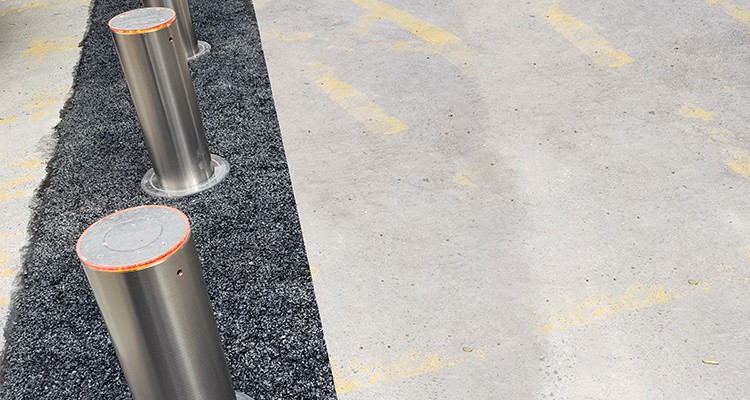
The terminal forecourt, where passengers are dropped off and picked up, is probably the most visible zone. Here, foot traffic is heavy, and vehicles move slowly but constantly. Fixed stainless steel bollards work well along pedestrian pathways, while removable or automatic bollards at vehicle entry points allow authorized taxis, buses, and shuttle vehicles to pass through. The threat here is mostly from accidental vehicle incursions, confused drivers, or impaired individuals.
Moving inward, the airside perimeter around runways and taxiways demands the highest level of protection. This is where crash-rated bollards tested to IWA 14-1 or ASTM F2656 standards come into play. A vehicle breaching the airside perimeter can collide with aircraft, damage fueling infrastructure, or trigger a chain reaction of safety violations that halts all operations. Hydraulic automatic bollards rated to stop a 7,500 kg vehicle at 50 km/h are commonly used at restricted access gates.
Cargo and maintenance areas have a different problem. Heavy trucks and ground support equipment need frequent access, so bollards here must handle high impact resistance with a fast duty cycle. Electromechanical bollards often work best here, since they offer reliable operation without the hydraulic maintenance overhead, even if they cannot match the highest crash ratings of hydraulic units.
Integration with Airport Security Systems
Bollards at a modern airport rarely work in isolation. They are part of a layered security setup that includes CCTV, license plate recognition, and centralized access control. When a vehicle approaches a controlled gate, the system checks its credentials against a database. Authorized vehicles trigger the bollards to lower automatically. Unauthorized vehicles are denied entry, and the event is logged and flagged for security staff to review.
This integration matters because airport operations cannot afford bottlenecks. If every vehicle had to stop, show ID, and wait for a manual gate opening, the logistics chain would grind to a halt. Automated bollard systems paired with smart access control keep things moving while maintaining a tight security net.
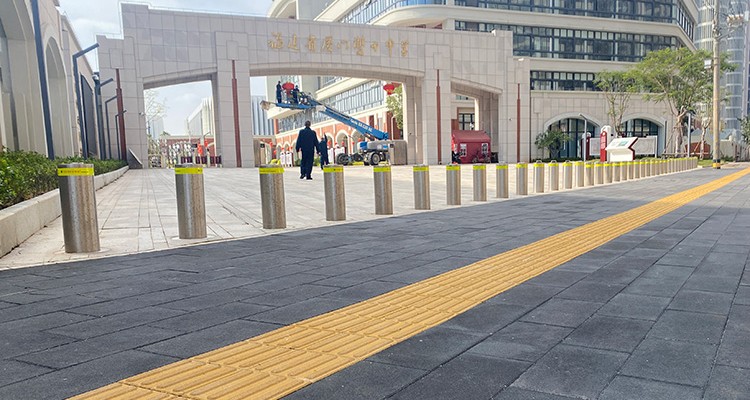
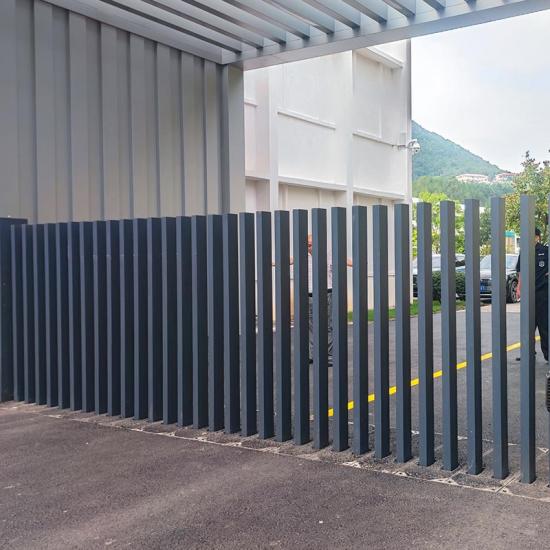
Some airports also use bollards in conjunction with fence gates for secondary perimeter lines. The fence provides a visible deterrent and delays any intruder, while bollards at key crossing points handle the controlled passage of vehicles through that perimeter.
Environmental and Operational Considerations
Airports are tough environments. Runway areas face extreme temperature swings, de-icing chemicals, jet fuel exposure, and constant vibration from aircraft movements. Bollards installed in these zones need corrosion-resistant finishes, typically 304 or 316 stainless steel, and sealed electronics that can handle temperature extremes from minus 30 to plus 60 degrees Celsius.
For terminal areas, aesthetics matter more. Passengers should see clean, well-maintained security infrastructure that reinforces confidence rather than creating a fortress-like atmosphere. Bollards with powder-coated finishes in neutral colors blend into the architectural landscape while still providing the required level of protection.
Maintenance access is another practical consideration. Bollards in remote areas of the airport perimeter need to be reliable and easy to service. Many airports now specify bollards with remote diagnostics that can report their status back to a central control room, reducing the need for physical inspections across a sprawling facility.
For airports evaluating their perimeter security, automatic bollards are a proven and well-understood technology. Standards are clear, the range of products on the market is wide, and most airports can find a solution that fits their specific zone requirements without reinventing the wheel.
call us :
+86 18206096507 e-mail : [email protected]




 ipv6 network supported