/How Automated Bollards Keep Streets and Pedestrians Safe
How Automated Bollards Keep Streets and Pedestrians Safe
Jan 23 , 2026
On the afternoon of January 11, 2026, a crowd was preparing for a rally on a narrow street in Los Angeles, California. Suddenly, a light truck accelerated into the crowd, causing chaos and panic as people ran for cover, ultimately injuring at least two people. Similar incidents are not alone, for example, on the National Day in Nice, France in 2016 and on the Ramblas in Barcelona, Spain in 2017, vehicles were used as weapons to attack crowds, resulting in serious injuries and deaths.
These tragedies have left cities across the globe pondering the same question: how to keep the streets open while ensuring the safety of crowds? The traditional solution is to install fixed metal bollards or concrete piers. But this brings new trouble: fire engines, ambulances and other emergency vehicles can not pass when needed, the daily distribution of goods has also become a problem, the flexibility of the street is greatly reduced, but also can not talk about the flexible management of vehicles in and out.
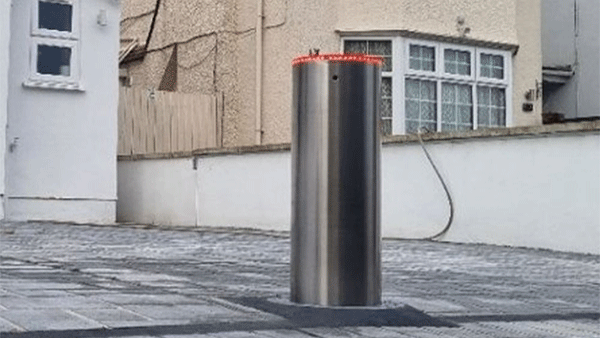
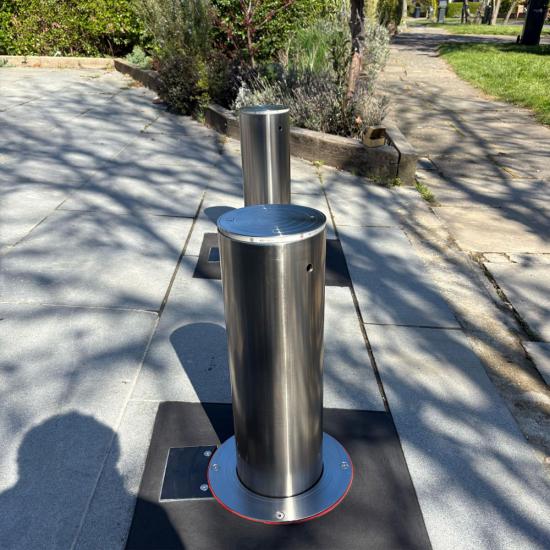
As a result, a smarter and more flexible means of protection, the Automatic Lifting Bollard, came into being and has become the choice of many cosmopolitan cities. Its core advantage is “on-demand protection” .
Imagine this scenario: a lively event is about to open in a square on a weekend morning. The administrator, holding a remote control similar to a car key, presses it gently from fifty meters away, and a row of columns, originally flush with the ground and unobtrusive, rises smoothly and firmly in a few seconds to form a solid line of defense, safely isolating the entire market area. When the event is over and the crowds have dispersed, the janitor presses the button again and the bollards are quietly lowered, restoring the street to its original state for night-time cleaning and the next morning's vehicular traffic.
This simple and direct control gives great flexibility and certainty to city management. From the shopping streets of London's West End to Sydney's Circular Quay, this manually-controlled elevated bollard already guards a wide range of spaces that require time-sharing.
It acts as a powerful “physical security switch” . Sometimes the most effective solution is a solid, reliable mechanical barrier that is remotely controlled by hand, allowing our streets to be quickly transformed into safe havens when the need arises.






 ipv6 network supported