/Advantages of Screw-Driven Automatic Bollards in North American Winter Conditions
Advantages of Screw-Driven Automatic Bollards in North American Winter Conditions
Jan 28 , 2026
In the blizzards of the Great Lakes region of North America and the extreme cold snaps of Canada's Prairie Provinces, the winter reliability of infrastructure is put to the test. When temperatures fall below -30°C, traditional hydraulic lifting columns are often paralyzed by oil solidification and seal failure. The **pure electro-mechanical screw drive technology** used by brands such as UPARK has become the preferred solution for critical protective facilities due to its unique cold weather characteristics.
Traditional hydraulic bollards rely on oil to transmit power, which exposes some serious flaws in extreme low temperatures: - The viscosity index of hydraulic oil increases dramatically and the fluidity deteriorates, leading to a reduction in lifting speed of more than 70%. - Cold hardening of seals leads to systematic leakage, which increases the maintenance rate by 300% compared to normal temperature environment. - The need for expensive thermal management systems, which increase energy consumption by 40% and still have start-up delays.
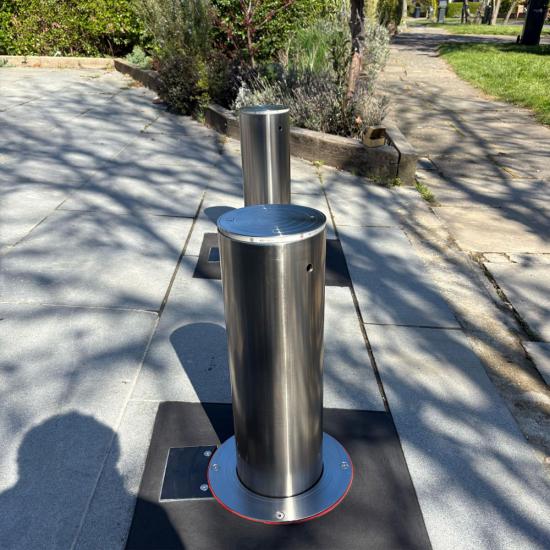
Mechanical screw-driven electric bollard fundamentally avoids the low-temperature defects of hydraulic system through the innovation of physical transmission structure:
A high torque motor is used to drive the screw directly, maintaining a power transmission efficiency of over 92% at -40℃. The fully enclosed transmission structure avoids external water vapor intrusion and prevents internal icing and stalling.
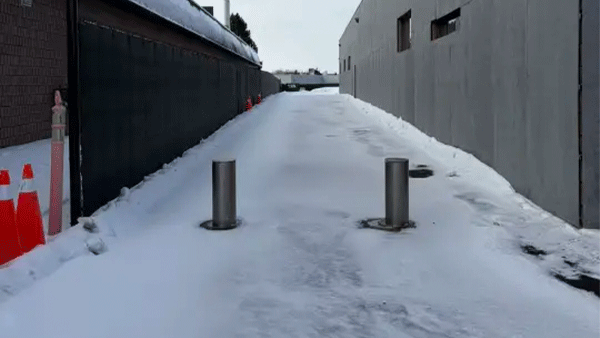
In the comparison test at Montreal's Municipal Plaza, the performance of the screw-driven lifting column under the extreme cold conditions of -35°C was impressive: - Average response time: 1.8 seconds (9.5 seconds for hydraulic system) - Annual failure rate: 0.7 failures/column (3.2 failures/column for hydraulic systems) - Winter maintenance costs: 82% lower
From the shores of Lake Ontario to the Alaska Highway, the Mechanical Screw Drive design is reshaping winter safety standards. Its maintenance-free cycle of 50,000 lifts, modular quick-change construction, and 60% reduction in carbon emissions compared to hydraulics make it a solution to the challenges of climate extremes.
When the Arctic air mass heads south again, these screw-driven steel bollards will rise steadily through the blizzard, guarding public safety with mechanical certainty, proving that the most reliable technology is often the most elegant physical solution.





 ipv6 network supported