Electric bollards are one of the most flexible ways to control vehicle access, but their price range can be wide. A basic automatic bollard for a residential driveway may cost a few thousand dollars, while a crash-rated system for a high-security facility can reach tens of thousands per unit. Understanding what drives the price helps buyers budget accurately and avoid surprises.
Unit price range
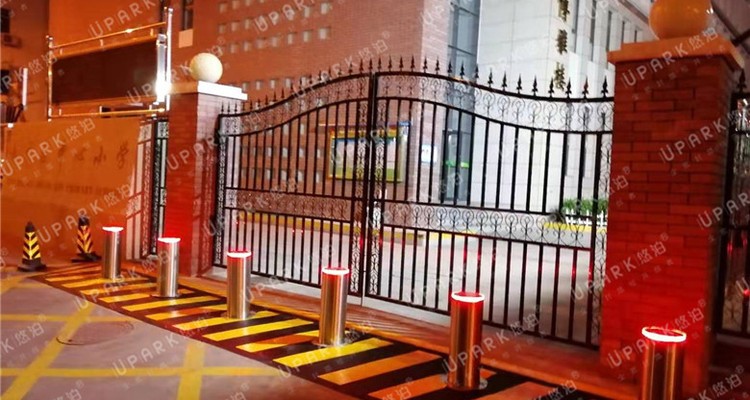
In 2026, a standard electromechanical automatic bollard for commercial or residential use typically ranges from $2,000 to $6,000 per unit. This covers the bollard body, the internal drive mechanism, the control cabinet and basic accessories such as remote controls or key switches.
Lower-cost models in this range often use simpler motors, lighter casings and shorter warranty periods. They are suitable for low-traffic residential or small commercial applications where the bollard rises and falls a few times per day. Higher-end models in the same range offer better seals, stainless steel finishes, faster cycle times and longer rated lifespans.
Crash-rated bollards cost more. A K-rated or PAS-tested bollard designed to stop a heavy vehicle can start around $8,000 to $15,000 per unit and climb higher depending on the rating and finish. These are not typical electric bollards for parking access; they are engineered security devices.
Installation and foundation costs
The bollard itself is only part of the total cost. Installation includes excavation, a concrete foundation, electrical connection, control cabinet mounting and commissioning. For a single bollard in an easy-access location, installation can add $1,000 to $3,000. For multiple bollards in a busy city center or a site with underground utilities, costs can be significantly higher.
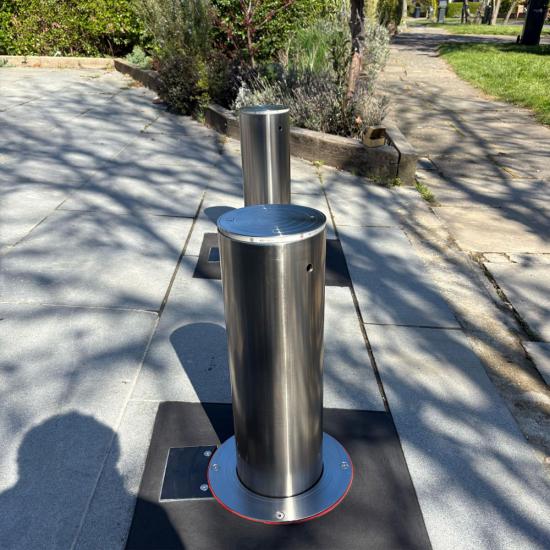
Shallow-mount bollards reduce excavation and can lower installation costs. They are useful where deep foundations are difficult due to utilities, tunnels or archaeological restrictions. However, shallow-mount systems may have a higher unit price, so the total savings depend on the site.
Electrical connection costs
If the site already has power nearby, running cable to the bollard foundation is relatively cheap. If the nearest electrical supply is far away, trenching and cable runs can become a major cost. Some buyers choose battery or solar bollards to avoid this entirely.
Low-voltage 36V DC bollards can also reduce electrical costs. They often use smaller cables, avoid high-voltage permits and do not require the same drainage precautions as high-voltage systems. This can lower both installation and ongoing compliance costs.
Control and access options
Basic controls include key switches, remote fobs and push buttons. More advanced options include RFID readers, loop detectors, ANPR cameras, intercoms and mobile app integration. Each upgrade adds to the cost. A full smart-city integration with centralized control, data logging and remote diagnostics can add thousands of dollars per site.
Buyers should choose controls based on actual use. A small office building may only need a remote fob and key switch. A corporate campus or government facility may benefit from badge readers and networked control.
Maintenance and lifecycle costs
Electric bollards are mechanical devices exposed to weather, dirt, road salt and vehicle impact. Over a 10-year period, maintenance costs should be factored in. Budget for periodic seal checks, hydraulic or electromechanical inspections, control cabinet cleaning and eventual motor replacement.

Bollards with IP67 or IP68 ratings and stainless steel housings usually have lower maintenance costs because they resist corrosion and water ingress. Cheaper models with lower IP ratings may need more frequent repairs in harsh climates.
Total project cost examples
A single residential driveway bollard with basic remote control and a local power supply might cost $3,000 to $5,000 all in. A commercial parking entrance with two automatic bollards, loop detectors and RFID readers might range from $12,000 to $25,000. A high-security installation with crash-rated bollards, anti-ram foundations and central control can exceed $50,000 per lane.
How to get an accurate quote
To get a meaningful price, provide the supplier with site details: number of bollards, daily cycle estimate, power availability, access control preferences, crash-rating requirement and climate conditions. A detailed site plan and photos will help the supplier recommend the right model and avoid hidden costs.
Explore UPARK electric bollard options and request project guidance at Automatic Bollards and learn more about our company at About UPARK.
call us :
+86 18206096507 e-mail : [email protected]




 ipv6 network supported