On April 19, 2026, a white sedan in Shuitou Town, Fujian Province, crossed a road divider and drove into pedestrians on the sidewalk. Two people died. One was injured. The driver had a medical emergency, according to local authorities.
That same day, a rally car in Argentina crashed into spectators during a competition, killing one person and injuring two others. The car flipped multiple times before hitting the crowd.
These incidents happened thousands of miles apart, but they share the same uncomfortable truth: when vehicles enter pedestrian spaces, the results are catastrophic.
What the Numbers Show
The bollard market tells its own story. Global sales reached USD 3.21 billion in 2025 and are expected to hit USD 3.47 billion this year. The growth rate sits around 8.2% annually. That's not speculation. That's actual money flowing into physical security infrastructure.
About 70% of cities worldwide have added bollards to their planning guidelines. In commercial districts, that number climbs to 55%. The driving factor is straightforward: vehicle ramming incidents keep happening, and people are spending money to stop them.
Demand for high-security bollards specifically has jumped roughly 50% over recent years.

The Gap in Traditional Protection
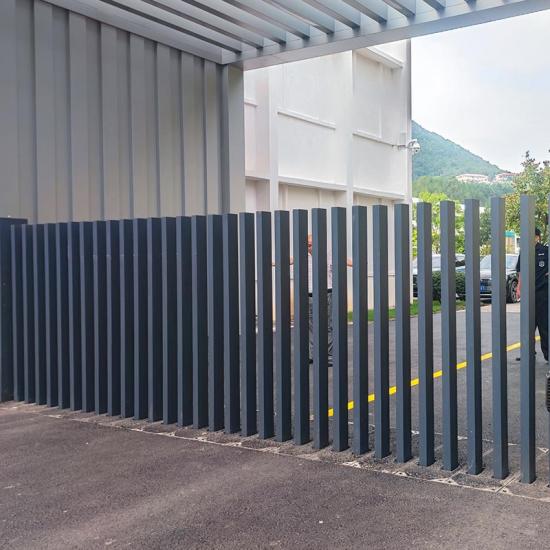
The Fujian incident is telling. The road had standard metal dividers, the kind you see on any six-lane street. Those dividers separated traffic, but they could not stop a vehicle that crossed over at speed.
Regular traffic barriers serve their purpose for normal vehicle flow. They are not designed to resist impact. Once a car is through, pedestrians have nowhere to go.
This is the gap that purpose-built security bollards are meant to fill.
Automatic Bollards: The Practical Option

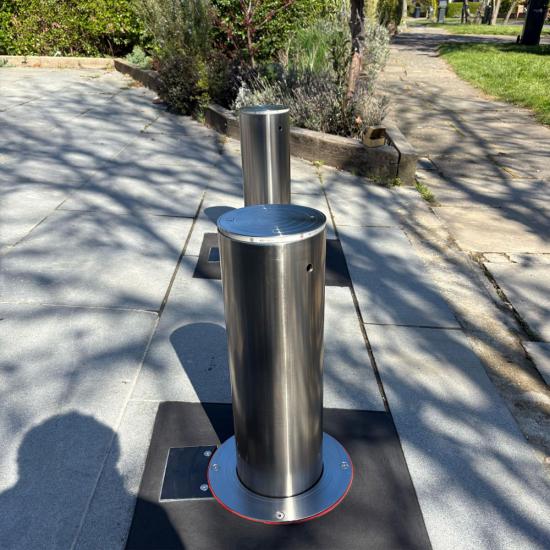
Automatic bollards work by combining impact-rated steel columns with motorized raising and lowering. Authorized vehicles can pass through when needed. Unauthorized vehicles cannot.
The technology has shifted away from hydraulic systems toward electromagnetic designs. The result is quieter operation, easier maintenance, and cleaner installation. Modern units connect with access control systems, ANPR cameras, and smart city networks.
The market for automated bollards specifically is growing faster than the broader bollard market, around 9% per year.
UPARK offers automatic bollard systems that meet international impact standards including IWA 14-1 and PAS 68. These ratings matter. They mean the equipment has been tested against actual vehicle impacts at specified speeds and weights.
For shopping districts, commercial streets, and public gathering areas, automatic bollards provide a practical way to control vehicle access without sacrificing pedestrian space.
Contact us to discuss your project's security requirements.
UPARK Product Links: Automatic Bollards
Explore our range of automatic bollard solutions designed for commercial and public applications.
call us :
+86 18206096507 e-mail : [email protected]




 ipv6 network supported