Automatic bollards spend their entire lives outdoors. Parking lots, shopping streets, office parks, government buildings. Rain, sun, snow, heat. They are built to take it. But heavy rain is different from the usual weather cycle. When a big storm rolls through, water finds its way into places it normally would not reach, and that is when problems start.
Most rain damage to bollards is preventable. The trick is knowing what to check before the storm arrives and what to clean up afterward. This is not complicated. It is mostly common sense and a few minutes of your time.
Before the rain: what to check
Look at the seals
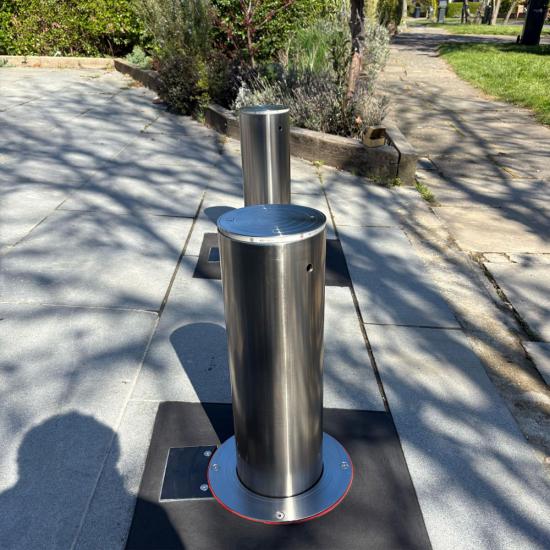
The rubber seals around each bollard body keep water out. UV exposure and temperature swings degrade them over time. Cracks appear, edges shrink, gaps form. Before a storm, walk the line and inspect every seal visually. If something looks off, order replacements from your supplier. A ten-dollar seal now beats a thousand-dollar repair later.
Check drainage around the base
Each bollard sits in a foundation pit, and that pit has to drain. Leaves, dirt, gravel, plastic bags, whatever. If the drainage points are blocked, water fills the pit and sits there. Clear anything you see around the base. If the area floods regularly, think about adding a gravel bed around the pit to help water move away faster.
Run a full cycle test
Raise each bollard, lower it, raise it again. Listen carefully. Grinding, stuttering, or slow movement means something is already wearing out. Rain will make it worse. Better to catch it now on a dry day than find out during a storm when you actually need the barrier working.
Check power connections
Make sure the control cabinet is sealed tight. Look for any exposed wiring or loose cable glands. If your system uses 24V or 36V low voltage, the shock risk is minimal, but water on bare terminals still causes shorts and corrosion. If you have battery backup, test it. Storms knock out power, and that is exactly when you want your bollards to still work.

After the rain: cleanup and inspection
Pump out standing water
Once the rain stops, walk the installation again. Some water in the pit is normal. It drains out on its own. But if water is sitting above the housing after a few hours, your drainage is not working right. Pump it out or vacuum it, then figure out why it is not draining.
Wipe down the bollard surface
Rain washes mud, sand, and road grit onto the bollard body. That grit rubs against the telescopic shaft every time the bollard moves. Over time it damages the seals and the shaft coating. Clean each unit with a soft cloth and water. Skip the pressure washer, though. High pressure forces water right past the seals you just inspected.
Run the bollards again
Operate each unit through several cycles after cleaning. This clears water from inside the shaft and confirms everything still works. If one bollard is sluggish or noisy, do not wait. Get a technician to look at it before the next storm.
Inspect the control cabinet
Open the cabinet. Check for condensation on the circuit board, water stains on wiring terminals, or white corrosion spots on connectors. Even IP67-rated and IP68-rated units can develop leaks through damaged cable entries. Clean any corrosion you find. If it looks bad, replace the part.

Why UPARK bollards are built for wet conditions
UPARK automatic bollards ship with a fully sealed housing rated IP67 or IP68. That means the unit can sit submerged in water temporarily without damage. The electronics live in a separate waterproof control box, isolated from the main housing. The drive system runs on 24V DC low voltage, so there is no shock hazard for anyone doing maintenance in wet weather. The powder-coated finish handles salt air well, which matters in coastal installations.
These are not fancy extras. They are standard features that directly reduce how much maintenance you need after rain events and how long the equipment lasts in wet climates. If you are specifying bollards for an area with heavy rainfall or frequent flooding, these details make a real difference over a five or ten-year service life.
Maintenance schedule at a glance
You do not need to babysit your bollards. A simple routine covers it:
Once a month, walk the installation and check that seals look intact and drainage is clear. Run one full cycle.
Before the rainy season each year, replace any worn gaskets and test all electrical connections.
After every major storm, clean the bollard surfaces, remove standing water from pits, and run function tests on every unit.
Once a year, have a technician open the housings, inspect internal components, and relubricate moving parts.
That is it. Ten minutes before a storm and ten minutes after. The difference between maintained and neglected bollards shows up fast, especially in places that get a lot of rain.
For more information about weather-resistant bollard solutions, visit UPARK's range of automatic bollards designed for reliable performance in all conditions.
call us :
+86 18206096507 e-mail : [email protected]




 ipv6 network supported