Integrated Entry Solutions: Bollards + Turnstiles + Access Control as One System
Walk into any modern stadium, corporate headquarters, or government building, and you will pass through multiple layers of security before reaching your destination. Your vehicle is stopped by a bollard at the gate. Your body is screened by a turnstile at the door. Your credential is verified by an access control reader. Each of these systems works, but too often they work in isolation — separate vendors, separate software, separate management consoles.
The future of perimeter security is not a better bollard or a smarter turnstile. It is the integration of these components into a single, coordinated entry system. When bollards, turnstiles, access control, and monitoring software communicate with each other, the entire security posture improves dramatically. This is not a theoretical benefit. It is the architecture that companies like dormakaba and its subsidiary Alvarado have been building for major venues worldwide for over 25 years.
The Problem with Siloed Security
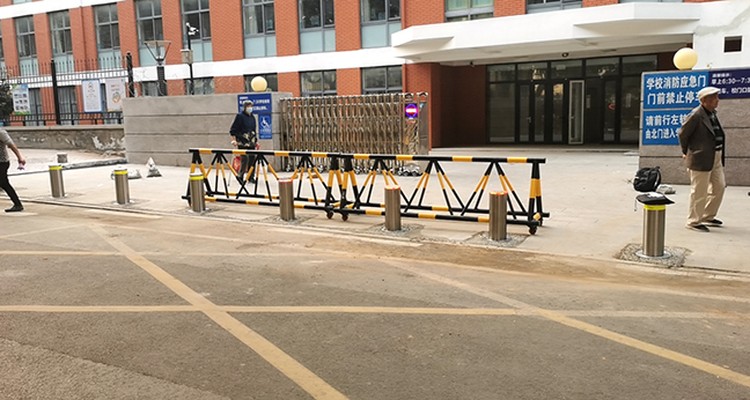
Consider a typical corporate campus entry. A guard booth controls vehicle access with a bollard. A separate turnstile system controls pedestrian access at the lobby. A third system — maybe a card reader on a glass door — handles employee entry. Three systems, three vendors, three training requirements, three maintenance contracts, and zero communication between them.
Now imagine an incident. A vehicle approaches the bollard at speed. The guard lowers the bollard to let it through because it displays a delivery company logo. The driver then bypasses the turnstile by tailgating a group of employees. The access control system logs the card swipe but has no idea that a suspicious vehicle just entered the property. Each system worked as designed. The security failure happened in the gaps between them.
What an Integrated Entry System Looks Like
An integrated entry solution connects every component of the perimeter into a single command and control architecture. Here is how the layers work together:
Layer 1 — Vehicle barrier (bollards): Automatic bollards at the vehicle entry point are controlled by the same system that manages pedestrian turnstiles. When an authorized vehicle is confirmed via license plate recognition or RFID, the bollard lowers and simultaneously triggers the turnstile to allow pedestrian passage for the vehicle's occupants. No separate action required.
Layer 2 — Pedestrian control (turnstiles): Optical turnstiles or full-height rotors verify identity through card readers, biometric scanners, or mobile credentials. The turnstile data feeds into the same monitoring platform that tracks bollard status. If a turnstile is forced or tailgated, the system can automatically raise the bollard to prevent additional vehicle entries.
Layer 3 — Access control and logging: Every event — bollard raise, bollard lower, turnstile entry, denied access, alarm trigger — is logged in a single database with timestamps. Security operators see the complete picture on one dashboard instead of toggling between three screens.
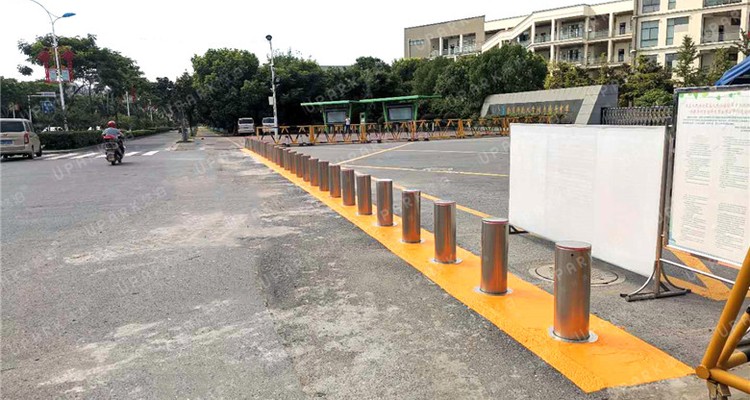
Layer 4 — Software orchestration: The integration layer, often called a PSIM (Physical Security Information Management) platform, ties everything together. It can enforce business rules: for example, a visitor may only enter if their host has pre-registered them, the bollard lowers for their vehicle, and the turnstile opens for their entry — all from a single approval action.
Real-World Integration: Stadium Entry
Consider how a modern stadium handles 60,000 fans arriving within a two-hour window. Integrated systems like Alvarado's GateLink platform manage the entire flow: parking bollards control vehicle access to VIP lots, ticketing turnstiles process fans at gate entries, and the same software dashboard shows security staff exactly which gates are congested and where to redirect foot traffic.
When a threat is identified — say, a vehicle behaving erratically near the stadium entrance — the integrated system allows a single command to raise all bollards, lock all turnstiles, and alert all security personnel simultaneously. This is not a feature available in any standalone bollard system. It requires the kind of platform-level thinking that integrated entry providers have been developing for decades.
The Bollard's Role in the Ecosystem
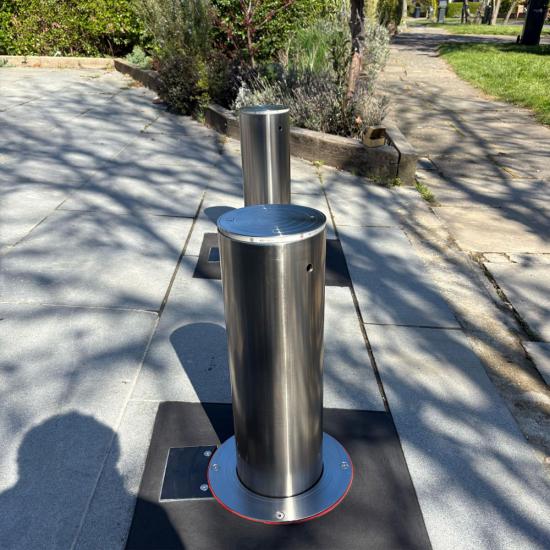
In an integrated system, the bollard is not just a physical barrier. It is a sensor and an actuator. A smart bollard reports its status (raised, lowered, fault, maintenance mode) to the central system. It receives commands (lower for authorized vehicle, raise for lockdown, enter maintenance mode). It can trigger downstream events (when bollard lowers, activate CCTV camera at the entry point; when bollard is forced, sound alarm and lock down turnstiles).
This is why specifying a bollard that supports open communication protocols — Modbus, BACnet, or dry-contact relays at minimum — is critical for any site planning future integration. A bollard that only operates via a standalone remote control cannot participate in an integrated entry system. It becomes a silo, no matter how strong its crash rating.
Benefits Beyond Security
Integrated entry systems deliver operational benefits that pure security systems cannot. Visitor management becomes seamless — a visitor is pre-registered, their vehicle is authorized at the bollard, their credential is active at the turnstile, and their host is notified of arrival, all from a single workflow. Data analytics become possible — you can correlate vehicle entry patterns with pedestrian traffic to optimize staffing. Compliance reporting becomes trivial — one system, one log, one audit trail.
For facility managers, the maintenance advantage is significant. Instead of managing three vendor relationships and three service contracts, an integrated approach can be supported by a single provider or a coordinated dealer network. When something breaks, there is one number to call.
Building Toward Integration
If your site currently has standalone bollards, turnstiles, and access control, you do not need to rip everything out and start over. Integration can be phased in. Start by ensuring your bollard controller supports dry-contact inputs and outputs — this allows it to be triggered by an external system. Add a simple relay interface between the bollard controller and the access control panel. Then migrate monitoring to a unified dashboard.
The key is to specify integration-ready equipment from the start. When procuring bollards, ask the manufacturer: does the controller support external trigger inputs? Can it report status via relay or digital protocol? Is there a documented API for third-party integration? If the answer to any of these is no, you are buying a silo.
The Bottom Line
The security industry is moving from standalone products to integrated platforms. Bollard manufacturers who think only about stopping vehicles will find themselves displaced by solution providers who think about the entire entry experience. UPARK's bollards are designed to integrate with access control systems, turnstiles, and monitoring platforms — not just to stop a truck, but to participate in a coordinated security architecture. For any site serious about perimeter protection, the question is no longer 'which bollard should I buy?' but 'how does this bollard fit into my integrated entry system?'
call us :
+86 18206096507 e-mail : [email protected]




 ipv6 network supported