Japan's two biggest rail operators are pouring money into platform safety. The scale of their plans says a lot about where the industry is headed.
JR East announced its 2026 plan in March: 29 stations, 60 platforms getting platform doors this year. Their long-term target is 330 stations and 758 platforms by the end of fiscal year 2031. Stations on the Yamanote Line like Osaki, the Keihin-Tohoku Line like Hamamatsucho and Kamata, and the Chuo Line from Ochanomizu to Nishi-Kokubunji are all on the list. Two door types are being deployed: the heavier slit frame doors and a newer smart home door that is lighter and presumably cheaper.
JR West released their own plan shortly after. The numbers: 20 stations across 53 platforms getting roof-mounted sensor safety screens, and 8 locations getting platform fences. Yasu, Yamazaki, Omihachiman, Kansai Airport, Takarazuka, Tofukuji. Suita Station and Shin-Fukushima Station are the priority projects, scheduled for full completion within the fiscal year.
What makes the JR West plan interesting is the split. They are not copying JR East's screen door rollout. They are trying something different.
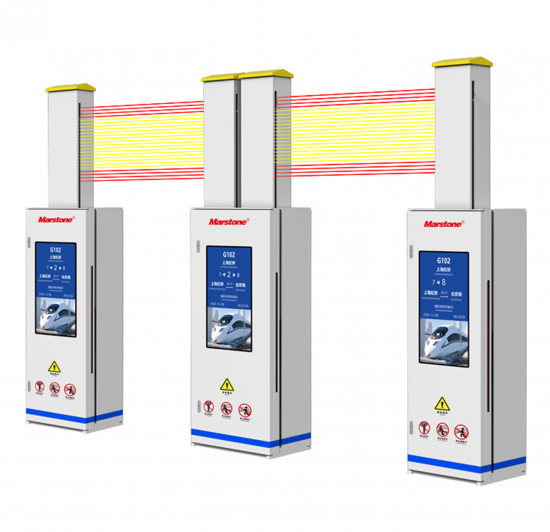
The sensor safety screens take an approach that is not widely discussed outside Japan. Instead of building physical doors that open and close with train arrivals, roof-mounted sensors detect if a person falls onto the track and signal approaching trains to stop. It is a detection-and-response model rather than a prevention model.
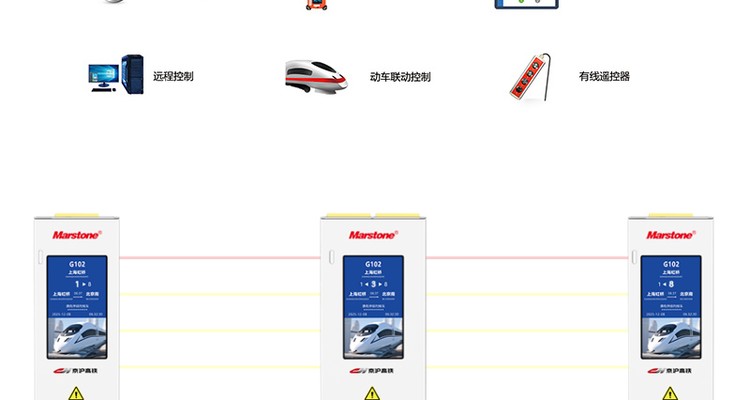
The platform fences at the 8 designated stations serve a different purpose: physical separation between passenger waiting areas and the track edge. These are not full-height doors. They are barriers, waist to chest height, designed to stop accidental falls and guide passengers toward designated boarding points.
The two systems together create layered protection: barriers handle the everyday stumble-and-trip scenarios, while sensors catch the rare but catastrophic fall. The cost is substantially lower than full-height door installation across the entire network.
This matters beyond Japan. Rail operators in Southeast Asia, India, the Middle East, and South America watch what Japanese railways do. When JR West validates a mixed approach of barriers plus sensors, it gives operators everywhere permission to stop feeling like they need to go all-in on screen doors.
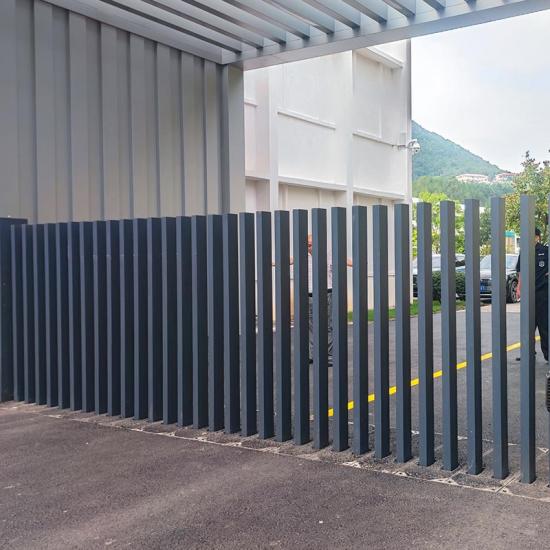
The 20cm Overlap design used in UPARK platform barriers addresses the same core use case. Waist-height continuous railing that prevents accidental entry onto tracks while leaving the platform visually open. No motors, no sensors, no control systems to maintain. For operators managing hundreds of platforms on constrained budgets, this simplicity is the point.
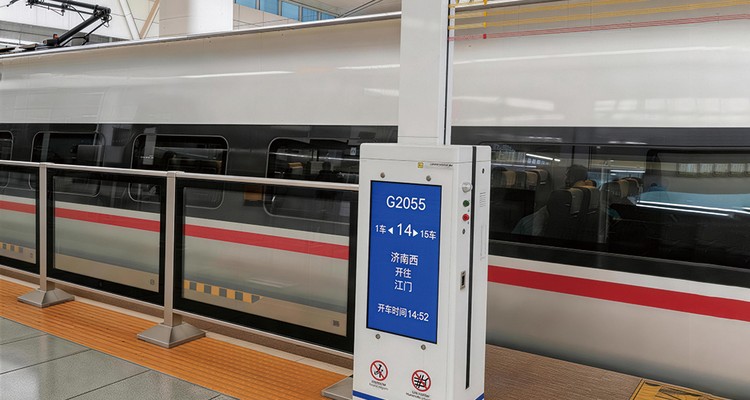
JR East's 2031 target of 330 stations is genuinely ambitious. At current build rates, they need to complete roughly 40 stations per year. Even with Japan's construction efficiency, full-height doors at that pace strain budgets and contractor availability. The smart home door is their attempt to speed things up by reducing weight and complexity, but it is still a powered door system with all the maintenance that implies.
A note on the unglamorous side of this: humidity. The Nabtesco team's experience installing full-height doors underground at Osaka Station is instructive. The site had 99% humidity during construction. Water pooled everywhere. They needed to borrow industrial fans from across the JR network just to dry things out enough to work. That is one station. Scaling that challenge to 330 stations is not trivial.
For station operators outside Japan, the lesson from JR West is that safety spending does not have to mean full-height doors. Barriers cover the actual accident statistics. Sensors add fall detection. Together, they deliver most of the safety outcome for a fraction of the cost.
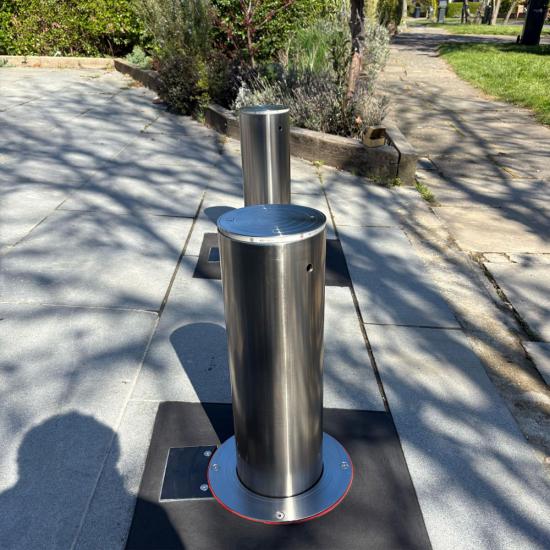
Many rail agencies operate bus depots, maintenance yards, and parking lots alongside their stations. These sites need access control that works at ground level too. Products like <a href="https://www.uparkbollards.com/security-fixed-bollards_p37.html">fixed bollards</a> for permanent perimeters and <a href="https://www.uparkbollards.com/security-removable-bollards_p36.html">removable bollards</a> for service access points are standard at transport infrastructure worldwide. The barrier-plus-sensor logic applies to vehicle security the same way it applies to pedestrian safety: layered protection at realistic cost.
call us :
+86 18206096507 e-mail : [email protected]




 ipv6 network supported