When railway operators sit down to plan station safety upgrades, one question keeps coming up: full-height screen doors or platform barriers?
It sounds like a technical decision. In practice, it is a budget decision, a timeline decision, and sometimes a political one.
The argument for full-height screen doors is straightforward. They create a sealed wall between passengers and tracks. No one falls in, no one jumps, no objects end up on the rails. Nabtesco dominates this space in Japan with roughly 95% market share for full-height doors. Their Osaka Station installation, a world-first all-glass adjustable unit developed with JR West, looks impressive. Black glass panels, 65-inch digital signage, 2D laser sensors that stop doors when someone gets too close. It took five years of prototyping, 300 rounds of test feedback, and a construction phase where underground humidity hit 99% and the entire team scrambled to dry out the site before trains could run.
The thing most operators notice, however, is not the technology. It is the price tag.
Full-height screen doors cost around $1.5 to $2 million per platform. Installation takes months, often requiring structural reinforcement of the platform edge. Older stations, especially those built decades ago, frequently cannot support the weight without major civil works. Then there is the problem of mixed rolling stock. Different trains have different door positions. Nabtesco solved this with a "parent-child" door system where openings adjust based on arriving trains, but that adds cost and complexity.
Platform barriers take a different approach. Instead of sealing the entire platform edge, barriers like UPARK's 20cm Overlap design create a continuous safety rail at waist height. They do not stop someone determined to jump, but they do stop the accidents that actually happen most often: trips, stumbles, and passengers backing up too close to the edge while looking at their phones.
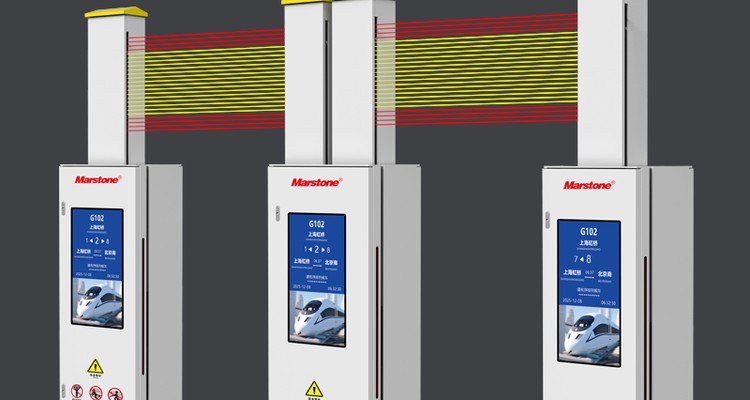
The numbers matter here. A platform barrier installation runs about 60-70% less than a full-height setup. Installation happens in weeks, not months. Most existing platforms need zero structural modification. For a regional rail operator managing 20 or 30 stations, the math is not complicated. You can protect five platforms with barriers for the cost of one with full-height doors.
JR West seems to get this. Their 2026 fiscal year plan splits the budget: 20 stations get sensor-based safety screens, but 8 locations get platform fences. Suita Station and Shin-Fukushima Station are scheduled to complete all-platform construction this year. They are not going all-in on full-height doors. They are mixing approaches based on station conditions, passenger volumes, and available money.
The sensor approach JR West is testing also deserves attention. Roof-mounted sensors detect if someone falls onto the tracks and automatically stop approaching trains. Combined with waist-height barriers, this creates a layered safety system that costs a fraction of what full-height doors cost.
For station operators outside Japan, in Southeast Asia, the Middle East, or Latin America, the barrier approach often makes more sense. These markets tend to have older infrastructure, tighter budgets, and less tolerance for extended construction closures. A product that bolts onto existing platforms and starts working within days is just more practical.
There is an honest downside. Barriers do not provide climate control or prevent litter from blowing onto tracks. In enclosed underground stations, full-height doors still win for ventilation control and passenger comfort. But for the vast majority of above-ground and elevated stations, barriers cover the actual safety basics without the overkill.
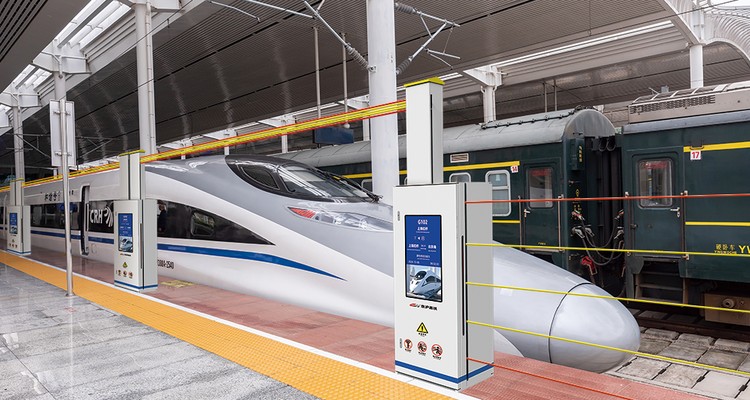
What tips the balance for most operators is not the safety comparison but the maintenance comparison. Full-height doors have motors, sensors, control systems, and glass panels that crack. When a Nabtesco door unit fails, you need a trained technician and potentially a track closure. When a barrier rail needs replacement, it is a bolt-on job done between trains.
The railway industry talks a lot about innovation. But the real decisions happen in spreadsheets. Platform barriers win the spreadsheet more often than not.
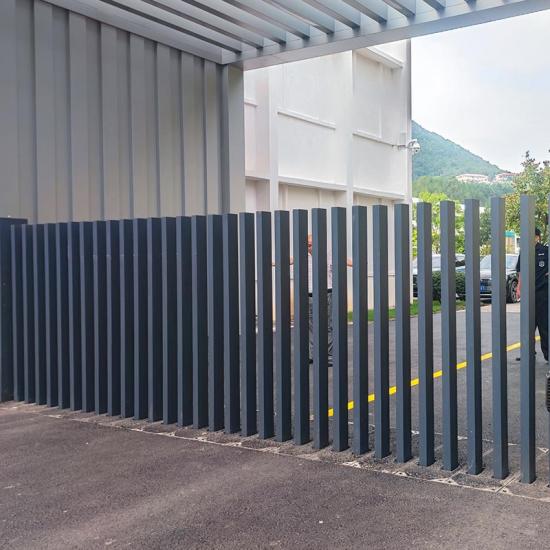
For station operators who also need perimeter security at depot yards and maintenance facilities, the same cost logic applies. A well-designed <a href="https://www.uparkbollards.com/automatic-bollards_p34.html">automatic bollard</a> system protects access roads and service entrances for a fraction of what a staffed gatehouse costs over five years. The industry trend toward layered security works at every scale.
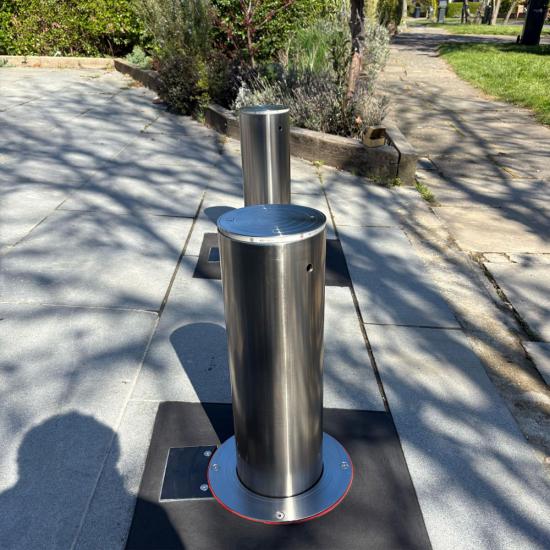
UPARK's 120mm diameter automatic bollard, designed to replace traditional manual bollards, follows this philosophy. Hydraulic drive, 304 stainless steel construction, IP68 weather sealing. No over-engineering. Just the spec that gets the job done without the price tag that kills the budget.
call us :
+86 18206096507 e-mail : [email protected]




 ipv6 network supported