On November 7, six people were killed and fifteen injured in Krakow's Main Market Square. A week later, Mayor Lukasz Gibala said the city would install retractable bollards to keep cars out of the pedestrian zone, and add police patrols. The announcement was reported by Xinhua and by Statement. It is being read in security circles less as news than as a repeated pattern.
A district councillor named Mikolaj Kasiej told Statement he had called for barriers before the attack. Other councillors had worried about a backlash from drivers. The request went nowhere. That detail matters more than the announcement. The warning was on the table. What was missing was a decision.
Nine Sites Out of Ten Had Nothing
The UK National Protective Security Authority keeps a blunt set of figures. Since 2014, vehicles have been used as weapons in more than 140 attacks worldwide. About a quarter killed people. Two thirds caused serious injuries. And nine out of ten attack locations had no significant security barrier. That last number is the one I keep coming back to. Intelligence matters, patrols matter, but at some point a crowd needs something physical between it and a moving car.
Most of the Danger Is Not Political
Newcastle, October 3. Fans were lining the road to send off the Knights before the NRL grand final when a car went into them. Ten people were hurt, including a five-year-old. The mayor described a young driver, overcome with excitement, losing control. In Bangkok, a 67-year-old driver appears to have pressed the wrong pedal and went through the glass door of a Big C supermarket. Six women were injured. In Los Angeles, a 59-year-old drove onto the sidewalk outside a grocery store; eight people went to hospital. None of these were attacks. The injuries did not care.
When the Posts Are There, They Work
Leipzig is the cleanest proof. On May 4, a man drove an SUV across Augustusplatz and into the market. Two people died and twenty-two were injured. The vehicle was finally stopped by bollards and bystanders, including a taxi driver and refugees who helped hold the suspect until police arrived. By September he faced two murder counts and eighty-five counts of attempted murder. It is a brutal case. It also settles one practical argument: a barrier in the right place can end the run.
Magdeburg went the other way. Ahead of the 2026 Christmas market, the city completed a ring of 500 heavy bollards, two years after a vehicle attack killed six and hurt around 300. Police said the posts were not just barriers but a message that the city would not give in. Some shopkeepers worry the market now feels like a fortress, and they have a point. Good HVM is not about turning a square into a bunker. It is about deciding where a vehicle stops before the stalls go up.
Assess First, Specify Second
That decision starts with a Vehicle Dynamics Assessment. NPSA and CTSA both say the same thing: look at the approach speed, the vehicle size, the gradient, the escape route, then choose the barrier. Standards help, though they are often quoted carelessly. PAS 68 was withdrawn by BSI in 2023, yet products tested to it are still written into tenders. ISO 22343-1:2023 is the current international reference and NPSA has treated it as the default since 2024. IWA 14 and PAS 68 numbers are not interchangeable, because one measures penetration from the front face of the barrier and the other from the rear. If a supplier hands you one number without the test report, ask again.
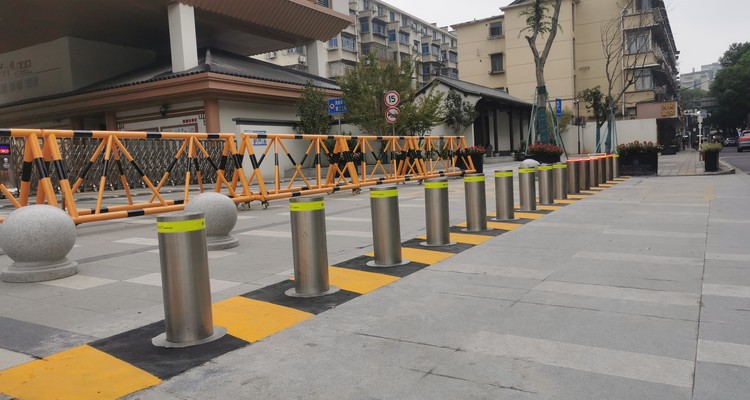
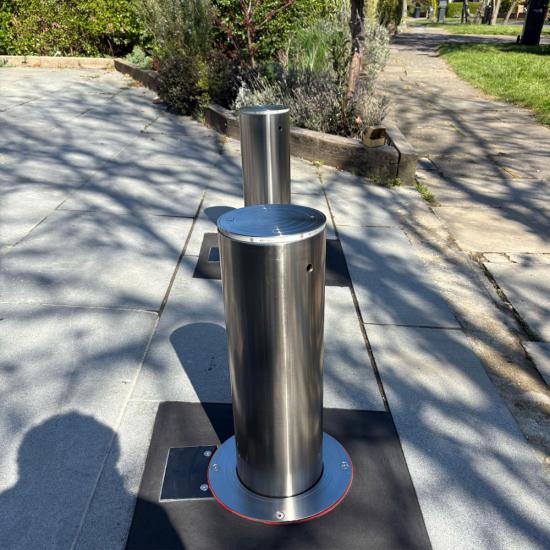
This is where automatic bollards earn their place. A pedestrian square still has deliveries, refuse trucks and emergency vehicles. Fixed posts close the street completely, which solves one problem and creates two others. Retractable units let the space stay open to people and close to vehicles on command. UPARK's fixed bollards still belong at the hard edge where no access is wanted. The choice is not about which post looks tougher. It is about how the square is actually used.
Krakow will get its bollards now. That is better than nothing. The harder task, and the cheaper one, is to make that decision while the square is still quiet. The data is there. So are the standards and the methods. What runs out first is usually the will to act before the headline.
call us :
+86 18206096507 e-mail : [email protected]




 ipv6 network supported