Manual Bollards Cost More Than You Think: 5-Year Labor Math
The sticker price of a manual retractable or removable bollard is genuinely low, often $400 to $900 per unit. But a bollard that a person must physically lift, lock, and unlock every day carries a second price that never appears on the quote: labor. Run the numbers over five years and the cheap manual post frequently costs more than an automatic one.
The operation nobody prices
Consider a site that opens and closes its access twice a day, 250 days a year: a retail forecourt, a campus side gate, a marina entrance. That is 500 manual operations annually. Each one costs a walk to the post, a key or tool, the lift or lock action, and a return, call it two to four minutes of paid time. At a loaded labor rate of $18 to $30 an hour, 500 operations a year adds up to meaningful annual cost, and it compounds every year the bollard stays in service.
Five-year math
Over five years, 2,500 manual operations at even a conservative two minutes each is more than 80 hours of labor, roughly two full work weeks spent purely on moving posts. At $20 an hour that is $1,600, before you count the manager who checks whether it was done, the delay to vehicles waiting, and the occasional post left open because someone was in a hurry.
The costs manual bollards hide
Forgotten posts: a manual bollard left down lets a vehicle through, left up blocks a customer.
Damage: posts not deployed in time get struck, bending the shaft.
Keys and locks: lost keys, frozen locks, and worn threads add service calls.
Inconsistency: human operation is uneven, so security policy is uneven.
What automatic removes
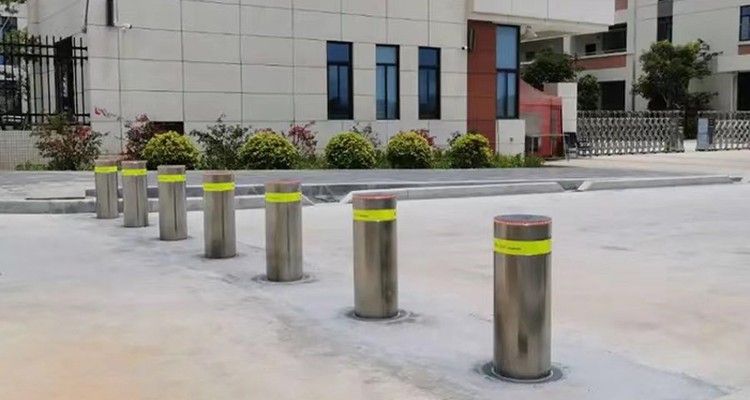
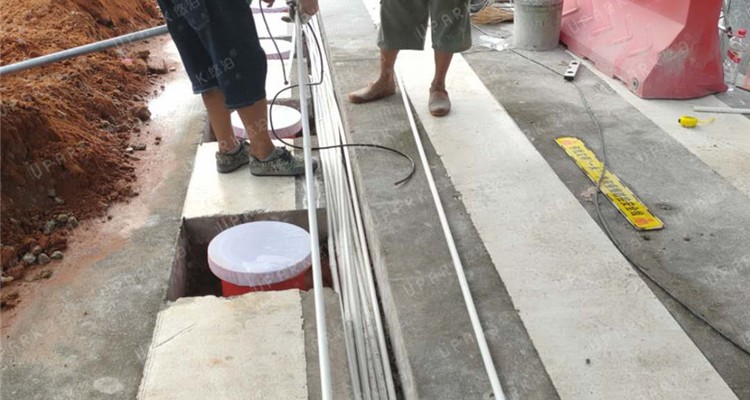
An automatic bollard deletes the labor line entirely. Open and close happen on a schedule or a signal, with no one on site. UPARK's 36V automatic bollards add a no-drainage foundation that also trims civil install cost, and the battery-backup model keeps working through a power outage, something a manual post cannot claim. On total cost of ownership, the automatic unit often pays back its small premium within a few years.
A worked example
Take a 6-post forecourt opened and closed twice a day, 250 days a year: 3,000 operations over five years. At a conservative two minutes and $20 an hour, that is 100 hours and about $2,000 of labor, before any manager oversight or delay cost. The table below shows how the labor bill scales with operation frequency.
| Opens/day | 5-yr operations | Labor hours | Labor cost @$20/h |
|---|---|---|---|
| 2 | 3,000 | 100 | $2,000 |
| 4 | 6,000 | 200 | $4,000 |
| 6 | 9,000 | 300 | $6,000 |
Where automatic pays back fastest
High-frequency gates: any access opened and closed several times a day.
Unstaffed sites: no one on hand to lift posts, so manual simply fails to happen.
Security-critical entries: a missed manual post is a real breach, not an inconvenience.
Sites with power: battery-backup models keep working through outages manual posts never address.
The better specification
When you compare bollards, ask for the five-year number, not just the unit price. Sites that do almost always find the automatic bollard is the cheaper one once labor is counted. Our engineering approach is described on the About Us page, and the full automatic bollards range covers both battery and control-cabinet versions.
call us :
+86 18206096507 e-mail : [email protected]




 ipv6 network supported