When railway operators sit down to budget platform safety upgrades, one number dominates the conversation: total cost of ownership. Not the brochure price. Not the per-unit quote. The real number that appears on spreadsheets three years, five years, and ten years after installation.
Platform screen doors (PSDs) have been the default safety solution for decades. The global PSD market reached approximately $2.12 billion in 2024, with roughly 52,000 units produced at an average price of $16,800 per unit. These numbers tell one story. The TCO tells a different one.
Upfront Installation: The Gap Nobody Talks About
A full-height PSD installation on a standard metro platform typically runs between $1.5 million and $2 million per platform. This covers the door modules, structural reinforcement (older stations often cannot support the weight without major civil works), power and data infrastructure, and the sensor and interlock systems that synchronize doors with arriving trains.
A retractable cable barrier system costs 60 to 70 percent less. The drive units are compact, the stainless-steel cables are pre-assembled in sections, and most existing platforms need no structural modification. Concrete grade C30 and a platform slab thickness of just 150mm is sufficient. For a regional rail operator managing 20 stations, the math is stark: five platforms protected with barriers for the price of one with full-height doors.
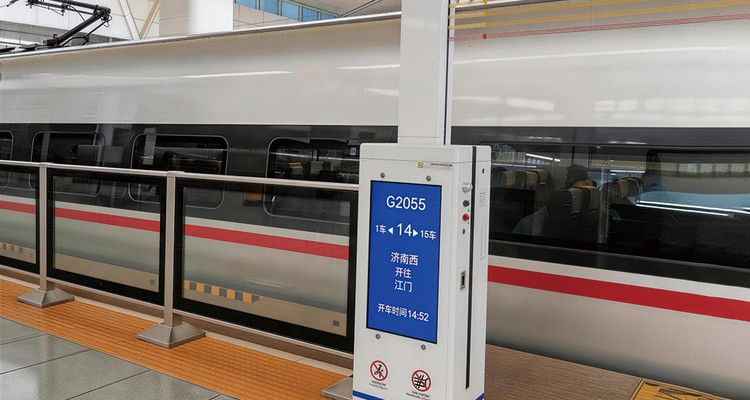
Installation timelines widen the gap further. PSD projects require station closures measured in months. Cable barrier installations complete in days or during overnight maintenance windows, without disrupting passenger service. The difference is not marginal; it is existential for operators who cannot afford to shut down stations.
Maintenance: Where the Spreadsheet Gets Ugly
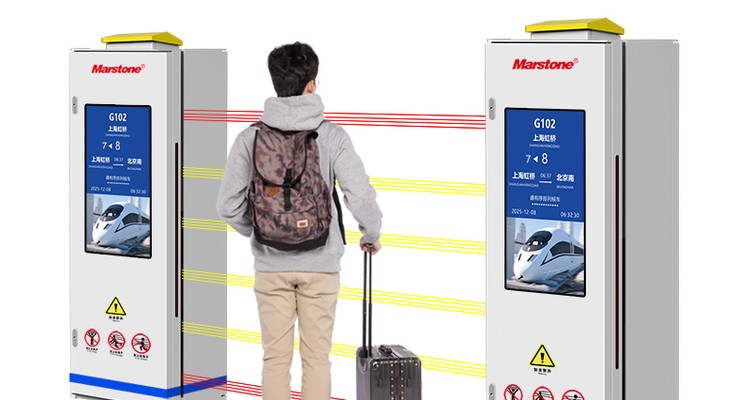
PSDs have many moving parts: motors, door leaves, glass panels, infrared sensors, emergency release mechanisms, and complex interlock systems. Every one of these components is exposed to constant passenger contact, platform dust, and temperature fluctuations. Glass panels crack. Sensors drift out of alignment. Emergency releases jam. When a Nabtesco door unit fails, the repair typically requires a trained technician and potentially a track closure.
Lifecycle studies on metro PSD systems show that maintenance costs accumulate significantly over a 30-year service period. The most common failure modes, door mechanism wear, sensor misalignment, and glass panel damage, drive up annual maintenance budgets. A cable barrier, by contrast, has fewer than half the moving parts. The cables are marine-grade 304 stainless steel, rated for one million lift cycles. When a barrier rail needs replacement, it is a bolt-on job done between trains. No track closure. No specialized technician.
Mixed Fleets: The Hidden Cost Driver
PSDs require precise alignment between door openings and train doors. This works well for metro systems with standardized rolling stock. It fails badly for commuter rail, heritage lines, and stations serving mixed fleets. Different train models have different door positions. Nabtesco addressed this with a "parent-child" door system where openings adjust to the arriving train, but that solution adds cost and complexity for every additional train type.
Cable barriers run the entire platform edge as a continuous safeguard. Passengers board and alight at any point. No alignment required. No customization per train type. This flexibility eliminates an entire category of costs that PSD operators must absorb.
What JR West's 2026 Budget Tells Us
JR West's fiscal year 2026 safety plan is instructive. They are not going all-in on full-height doors. Instead, they are splitting the budget: 20 stations get sensor-based safety screens, while 8 locations get platform fences. Suita Station and Shin-Fukushima Station are completing all-platform fence construction this year. They are matching the solution to the station, not forcing one approach everywhere.
This layered approach makes financial sense. Roof-mounted sensors that detect track intrusions and automatically stop approaching trains, combined with waist-height barriers, create a safety system that costs a fraction of full-height PSDs. For above-ground and elevated stations, where climate control is not a requirement, the barrier approach covers the actual safety basics without the overkill.
The Bottom Line: What TCO Actually Means
When you add up installation costs, infrastructure modifications, downtime during construction, annual maintenance, spare parts, technician training, and the flexibility penalty of mixed-fleet operations, the TCO gap between PSDs and cable barriers is not close. It is a factor of three to five over a 20-year lifecycle.
PSDs remain the right choice for enclosed underground stations with standardized fleets and capital budgets to match. For the vast majority of above-ground platforms, commuter rail stations, and retrofit projects, retractable cable barriers deliver equivalent safety outcomes at a fraction of the lifetime cost. The spreadsheet does not lie.
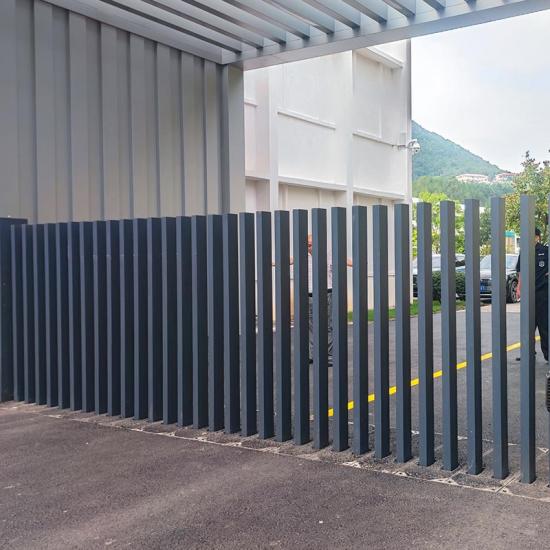
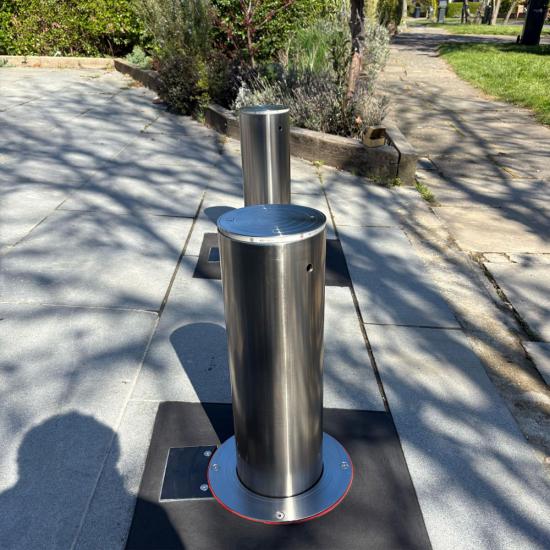
For station operators evaluating perimeter security alongside platform safety, the same cost logic extends to access control. A well-designed automatic bollard system protects depot entrances and service roads for significantly less than a staffed gatehouse over five years.
call us :
+86 18206096507 e-mail : [email protected]




 ipv6 network supported