Platform safety specifications are full of acronyms: ISO 18298, EN 17168, SIL2, SIL3. For procurement teams and railway operators evaluating safety systems, these are not optional reading. They determine whether a product can be deployed, whether an installation passes regulatory review, and ultimately whether passengers are protected to a verifiable standard.
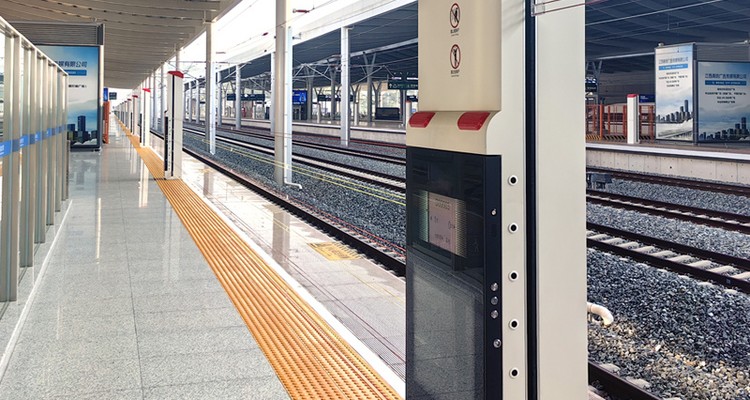
This guide explains the three most important standards in platform safety, what they mean in practical terms, and what to look for when evaluating supplier compliance.
ISO 18298: The Global Benchmark for Platform Barriers
ISO 18298 is the international standard that specifies requirements for platform screen door systems used in railway stations. It covers the full scope: structural design, mechanical performance, electrical safety, control system reliability, and integration with railway signalling. It also defines test methods for verifying that a system meets its safety claims.
The standard applies to all types of platform edge barriers, full-height doors, half-height gates, and cable barrier systems. For suppliers, compliance with ISO 18298 is the baseline credential. Without it, a product cannot credibly claim to meet international safety norms. For buyers, ISO 18298 certification provides a common language for comparing proposals from different manufacturers, eliminating the problem of suppliers using incompatible internal testing frameworks.
EN 17168: The European Railway Safety Specification
EN 17168 is the European standard for platform screen door systems, harmonized under the EU railway interoperability framework. It is more prescriptive than ISO 18298 in certain areas, particularly around electromagnetic compatibility, fire safety of materials, and accessibility requirements for passengers with reduced mobility.
For operators outside Europe, EN 17168 is still relevant. Many national railway authorities have adopted it as a reference standard, especially in markets where European rolling stock and signalling systems are in use. A product certified to EN 17168 carries weight in tenders across the Middle East, Southeast Asia, and Latin America, even where local regulations do not explicitly require it.
SIL2: What Safety Integrity Level Actually Means
SIL stands for Safety Integrity Level, defined by IEC 61508 and adapted for railways in EN 50126/50128/50129. It measures the reliability of a safety function on a scale from SIL1 (lowest) to SIL4 (highest). Each level represents an order-of-magnitude improvement in the probability of failure on demand.
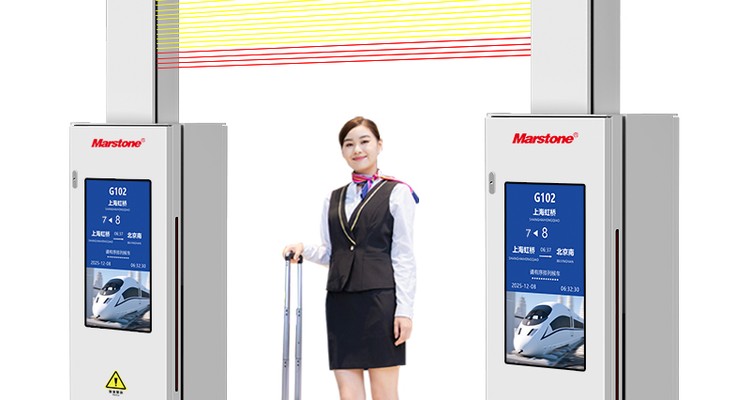
SIL2 is the sweet spot for platform barrier systems. It means the control system has been rigorously analyzed for failure modes, that redundant safety paths exist, and that the probability of a dangerous failure is below one in ten thousand operating hours. SIL3 and SIL4 systems exist for train control and signalling, where a failure could directly cause a collision. For platform barriers, SIL2 represents a proportionate level of safety assurance, high enough to satisfy regulatory requirements without the exponential cost increase of SIL3 certification.
The UPARK retractable cable barrier system achieves SIL2 certification through its dual-redundant CAN bus and Ethernet communication architecture, obstacle detection sensors, and fail-safe design principle that defaults to barrier-extended (protective) state on any system fault.
What to Check in a Supplier's Compliance Documentation
When evaluating platform barrier suppliers, three documents matter most: the ISO 18298 test report from an accredited laboratory, the SIL certification certificate with the assessed safety function clearly stated, and the installation and maintenance manual that demonstrates how the system maintains compliance throughout its service life. A supplier that cannot produce all three is either cutting corners or unaware of what regulatory compliance actually requires.
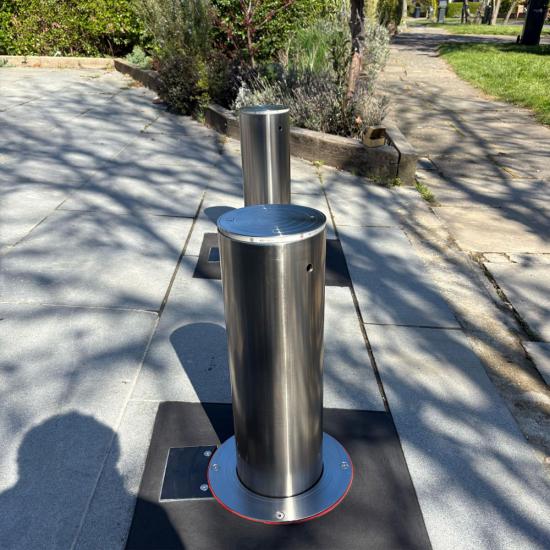
Standards compliance also extends to supporting infrastructure. For stations that need perimeter vehicle access control alongside platform safety, security fixed bollards should meet equivalent impact rating standards, ensuring that every layer of station protection is built to a verifiable specification.
call us :
+86 18206096507 e-mail : [email protected]




 ipv6 network supported