Platform barriers come in more forms than most procurement teams realize. When a tender calls for "platform edge protection," suppliers may respond with fundamentally different products, each with distinct trade-offs in safety profile, installation requirements, cost, and long-term maintenance. Understanding the three main types before writing specifications saves time, money, and the risk of selecting a product that does not match the station environment.
Rope Type Barriers: The Lightweight Option
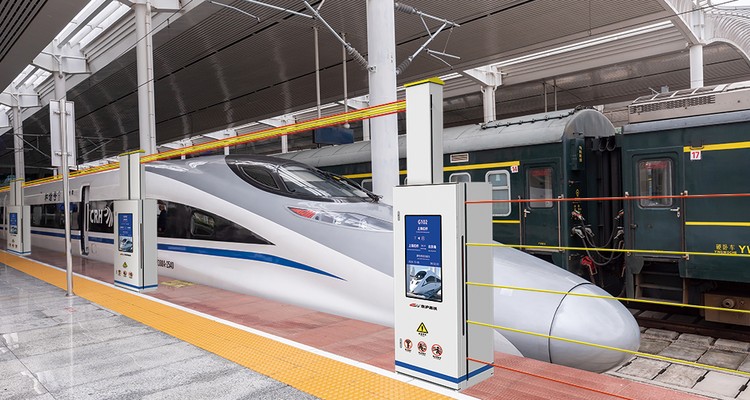
Rope type barriers use five to six strands of high-strength synthetic fiber rope tensioned between vertical posts. The ropes are typically made from low-temperature-resistant synthetic fiber with a tensile strength exceeding 15,000 Newtons. When extended, the bottom rope sits at approximately 110mm above the platform surface, and the top rope reaches at least 1,400mm, creating a visual and physical deterrent.
The primary advantage of rope type barriers is weight and cost. The posts are lightweight, the ropes are inexpensive, and installation is fast. The trade-off is durability. Synthetic ropes degrade faster than stainless-steel cables, particularly in outdoor environments with UV exposure, temperature extremes, and constant passenger contact. Rope type systems are best suited for indoor stations, low-to-medium traffic environments, and situations where budget is the primary constraint.
Board Type Barriers: The Rigid Alternative
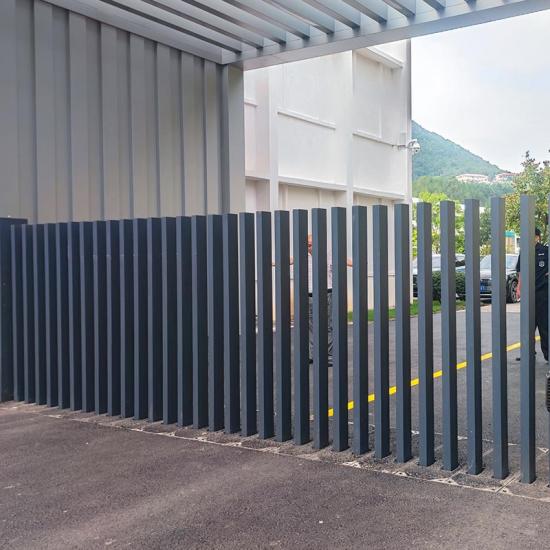
Board type barriers use a vertical panel that rises and falls along guide rails. The panel is typically aluminum or composite, providing a solid visual barrier that passengers cannot see through. This is both an advantage (privacy, wind protection) and a disadvantage (reduced visibility for station staff monitoring the platform).
Board type systems work well in specific niches: train crossings, industrial rail facilities, and locations where a solid visual barrier is desired for psychological deterrence. They are less suitable for high-passenger-volume stations because the solid panels create bottlenecks during boarding and restrict sightlines for CCTV coverage. Installation also requires guide rails embedded in the platform surface, which can complicate retrofits.
Cable Type Barriers: The Balanced Solution
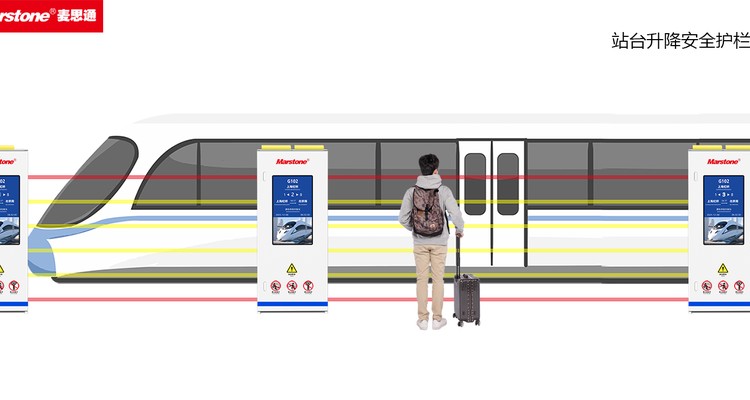
Cable type barriers represent the evolution from rope systems. Six strands of 5mm-diameter 304 stainless-steel cable replace synthetic rope, delivering dramatically better durability while retaining the low-profile, visually unobtrusive design. Each cable strand withstands over 10,000 Newtons of force. The system is rated for one million lift cycles, equivalent to approximately 30 years of operation on a busy commuter line.
The key differentiator of cable type systems is the drive mechanism. Pure electric servo motors with ball screw transmission eliminate the need for hydraulic or pneumatic systems. This means no fluid leaks, no compressed air infrastructure, and reliable operation from minus 30 to plus 65 degrees Celsius. For railway operators in cold regions, this is a decisive advantage over hydraulic alternatives.
How to Choose: A Decision Framework
Start with the station environment. Outdoor, exposed, high-UV? Eliminate rope type. Indoor, budget-constrained, low traffic? Rope type may work. Need to retrofit an existing platform without major civil works? Both rope and cable type outperform board type, which requires guide rail embedding. Operating in extreme temperatures? Cable type with pure electric drive beats both alternatives.
Then look at the numbers. Over a ten-year lifecycle, cable type barriers typically show the lowest TCO despite higher upfront cost, because stainless-steel cables outlast synthetic rope by a factor of three to five and require less frequent tension adjustment. Board type TCO depends heavily on the operating environment; in dusty or coastal locations, guide rail maintenance adds cost.
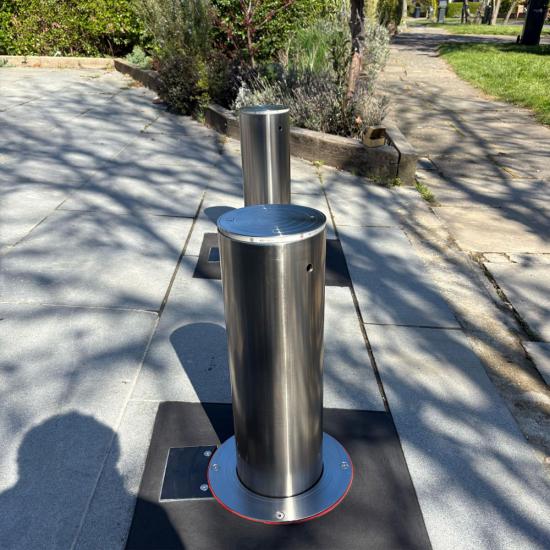
For operators who need platform safety plus perimeter security in one procurement, the logic extends to entry control. Automatic bollards with hydraulic drive and IP68 weather sealing protect station access roads with the same low-maintenance philosophy that makes cable barriers the preferred choice for platform edges.
Choosing the right barrier type is not about finding the best product in absolute terms. It is about finding the product that best fits your station conditions, your maintenance capabilities, and your budget cycle. Start with the environment. The rest follows.
call us :
+86 18206096507 e-mail : [email protected]




 ipv6 network supported