The part of a bollard project that blows the budget is rarely the post, it is the hole. Traditional installs mean a deep pit, a gravel drainage bed, a sump pump, and a maintenance headache for years. UPARK's electromechanical bollards are built to skip most of that. Here is what changes when drainage stops being part of the job.
The old way costs more than the bollard
A conventional automatic bollard sits in a pit that fills with water. You pour a sump, lay gravel, fit a pump, and hope it does not clog. Every service visit means wading in. Across a row of ten posts, that is ten pits, ten pumps, ten things to fail. The civil works alone can outcost the hardware.
Sealed drive, no oil, no sump
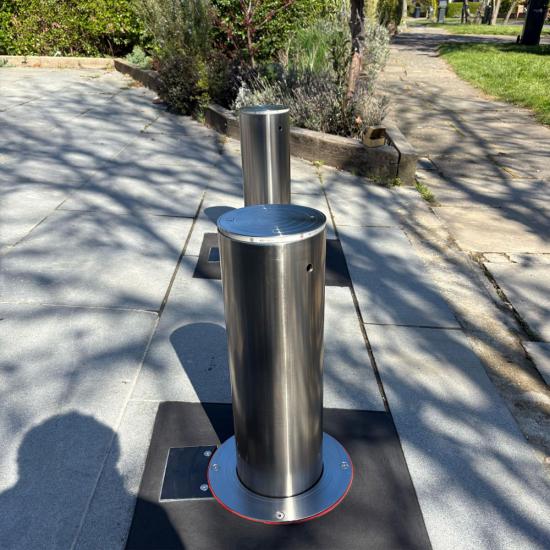
UPARK uses a sealed electromechanical screw drive rated to IP67/IP68. No oil, no open chamber, nothing that needs a dry pit to survive. Water can sit around the casing without hurting it. So the foundation becomes a straightforward concrete sleeve, drill, pour, set, done.
What the installer actually does
On a typical job the crew cores or excavates a single footing, drops in the pre-wired bollard cassette, levels it, and backfills. No soakaway, no French drain, no pump commissioning. A two-person team can set several units in a day. Compare that to the week a drained system can eat, and the scheduling difference is real.
Lower lifetime cost
Less to install is only half of it. With no pump to service and no gravel bed to clear, annual maintenance drops to a visual check and a lubrication pass. Sites that used to budget a specialist drain-clearing visit every year simply stop needing it.
Where this matters most
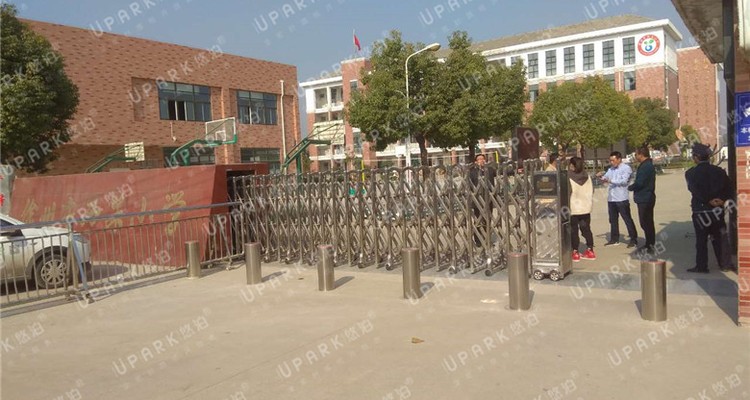
Flood-prone streets, coastal towns, and sites with a high water table gain the most, exactly the places a drainage pit would spend its life half-full. Car parks, school drives, and retail frontages all see faster install and quieter upkeep. Browse the automatic bollards range for models built this way.
What to tell your contractor
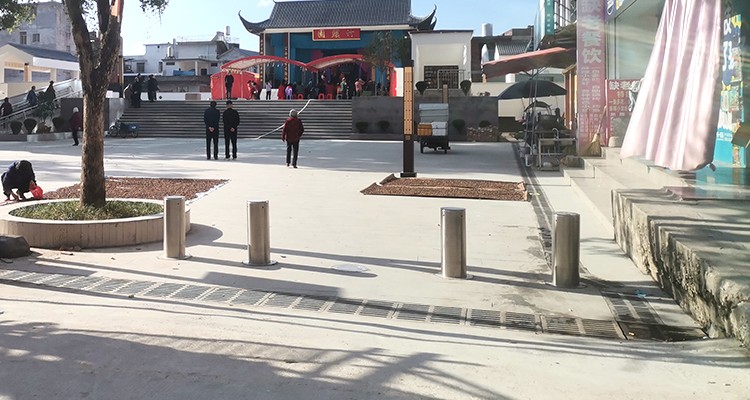
When you brief the groundworks team, ask for a cored or excavated sleeve, not a drained chamber. Confirm the bollard cassette arrives pre-wired so the electrician only lands a single low-voltage feed. That one change in the spec sheet is what keeps the install to a day instead of a week, and it is the detail most generic quotes get wrong. If the contractor insists a pump is required, they are thinking of the old style of unit, not a sealed electromechanical one.
The takeaway
Drainage was always the weak link in bollard installs. Removing it from the spec trims cost at install, cuts the failure points, and makes the whole system easier to live with. For most sites, a pit-free foundation is the smarter build.
call us :
+86 18206096507 e-mail : [email protected]




 ipv6 network supported