When bollards go into places where people actually walk, school drop-offs, market squares, hospital entrances, the last thing anyone wants is a high-voltage cable buried in the same ground. That is the main reason more installers now spec 36V DC low-voltage automatic bollards. The logic is simple: lower voltage means lower risk, and you give up none of the lifting power.
What low voltage actually means here
Most automatic bollards run on mains or 24V systems. UPARK's electromechanical units run on 36V DC, a level considered safe to touch in wet outdoor conditions under IEC guidance. If a cable is cut during digging or a unit is flooded, the chance of a serious shock stays low. For a device that lives half-buried in the rain, that matters more than people expect.
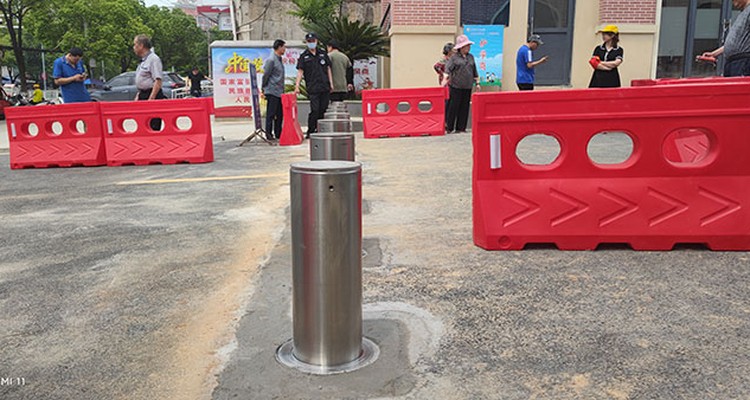
Screw-driven, not oil-driven
A quick note on the drive: these are electromechanical screw-driven bollards. There is no oil pump and no high-pressure line that can burst in freezing weather. The motor turns a lead screw that raises and lowers the post. Fewer moving parts, nothing to leak, and nothing to winterize before the first frost.
Waterproofing you can install without a drainage pit
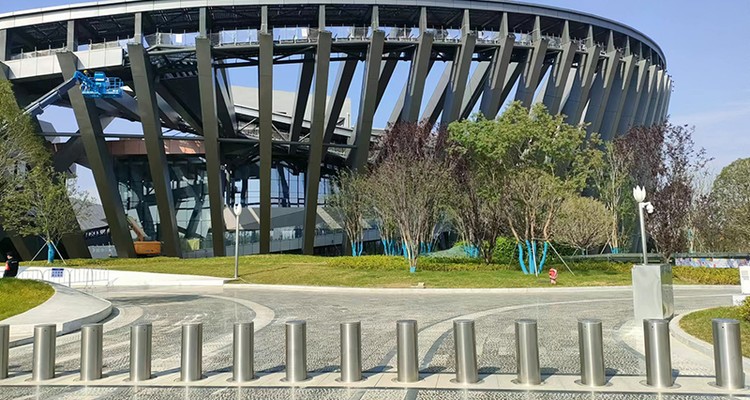
Because the drive is sealed and the control runs at low voltage, the whole unit is built to IP67/IP68. Rain, car washes, and the occasional flood do not stop it. More to the point, you usually do not need to pour a drainage sump under each bollard. That single detail removes a lot of civil works, no gravel bed, no soakaway, no pump to keep alive.
Where 36V bollards make the most sense
Pedestrian zones, school gates, clinic entrances, and mixed-use courtyards are the obvious fits. Anywhere children or crowds gather nearby, the low-voltage choice is the conservative, defensible one. Fleet yards and loading docks benefit too, since a 36V system shrugs off the grime and moisture of daily truck traffic.
Pairing with access control
Low voltage also gets along with the rest of your site. 36V bollards connect to card readers, loop detectors, and remote release without extra transformers scattered around the entrance. One small cabinet feeds a whole row of posts. If you want the full picture on the range, see our automatic bollards page.
Energy use and running cost
A sealed electromechanical post draws power only during the few seconds it moves, then sits idle. Over a year that is a modest line on the electricity bill, far less than you might assume for a motorised barrier. Combine that with no pump to service and no drainage to clear, and the lifetime cost lands well below a traditional pumped-and-sump install. For a council or facilities manager counting total cost of ownership, that gap widens every year.
The bottom line
You do not pick 36V because it is trendy. You pick it because a buried low-voltage line is safer to live with, easier to install, and cheaper to keep running. For public-facing sites, that is usually the right call.
call us :
+86 18206096507 e-mail : [email protected]




 ipv6 network supported