UPARK 120mm Automatic Bollards: Battery and Control-Cabinet Models for Flexible Vehicle Access
UPARK has added a 120mm-diameter automatic bollard to its range, built on the same 36V low-voltage platform as the rest of the line. It ships in two configurations - a battery version and a control-cabinet version - so specifiers can match the bollard to the site instead of forcing the site to fit the bollard. This article walks through both, the specs they share, and where each one earns its place.
One platform, 120mm of presence
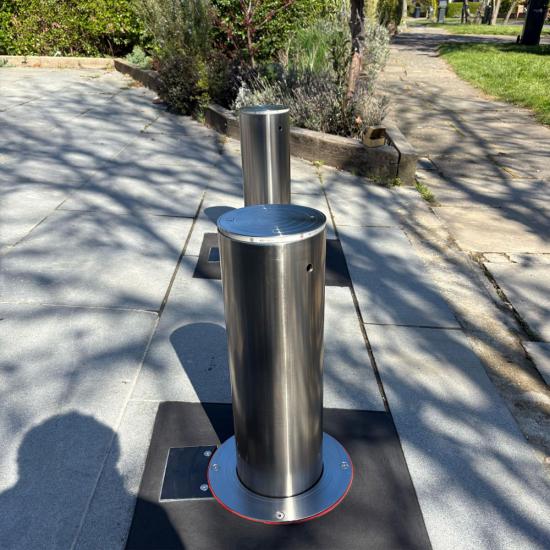
The 120mm shaft gives a visibly substantial post while staying within a compact footprint. Both versions share the core UPARK engineering: 36V DC operation at the post, a no-drainage installation that removes the need for a drained sump, and ingress protection of IP67 as standard with IP68 available for harsher conditions. Rise and fall typically complete in 2-4 seconds, and the duty cycle is rated for continuous (intensive) use rather than the semi-intensive class common on 230V electromechanical bollards. automatic bollards in this diameter give sites a consistent, low-risk specification across the entrance.
Battery version - power where the grid is awkward
The battery model carries an integrated battery backup, so the bollard still operates through a mains outage. That matters for sites that cannot afford a disabled entrance during a blackout - emergency accesses, data centers, and gated communities. It also simplifies retrofit jobs where running new high-voltage cable is expensive or impossible; the low-voltage 36V wiring keeps the electrical work in a lower-risk class, and the battery reduces dependence on a perfect supply. For remote or temporarily powered locations, the battery version is often the difference between a feasible project and a cancelled one.
Control-cabinet version - one brain for the whole lane
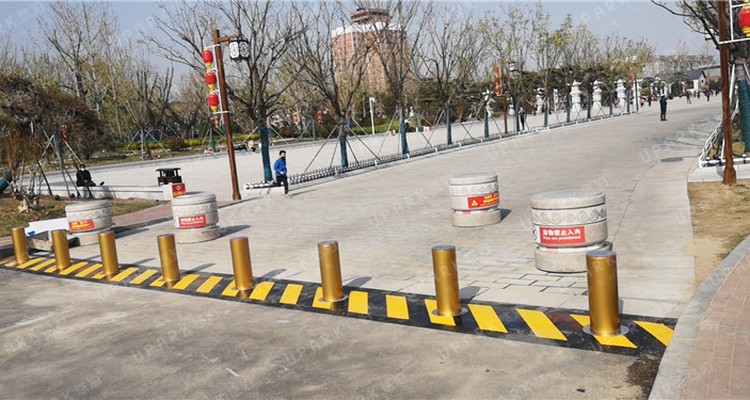
The control-cabinet model puts a central controller at the heart of the system, synchronizing multiple bollards across a wide entrance or a row of lanes. If you are securing a car park mouth, a campus gate, or a line of storefront bays, central control keeps every post moving together and gives staff a single point to manage schedules, interlocks, and access rules. It is the natural choice when the bollards are part of a larger access-control scheme rather than a standalone post.
Specifications at a glance
Shaft diameter: 120 mm.
Operating voltage: 36V DC at the post (low-voltage safe class).
Ingress protection: IP67 standard, IP68 optional.
Duty cycle: intensive / continuous.
Rise and fall time: typically 2-4 seconds.
Installation: no-drainage design, below-grade foundation.
Variants: battery-backup model and central control-cabinet model.
Warranty: per UPARK model line.
Where the 120mm size fits
The 120mm diameter sits in a practical middle ground: substantial enough to read clearly as a barrier and to resist casual impact, yet slim enough to sit comfortably at building entrances, retail frontages, and mixed-use civic spaces without dominating the street. Specifiers often choose it where a smaller post looks too light and a 168mm or 220mm post is heavier than the site needs.
Which version should you choose?
Pick the battery version when power reliability is uncertain, the site is hard to cable, or a single entrance must stay operational during outages. Pick the control-cabinet version when several bollards need to move as one system under centralized management. Both share the same 36V safety, no-drainage install, and waterproofing - so the decision is really about power architecture and control, not about compromising on performance. automatic bollards cover both needs from one engineered platform.
See the full range
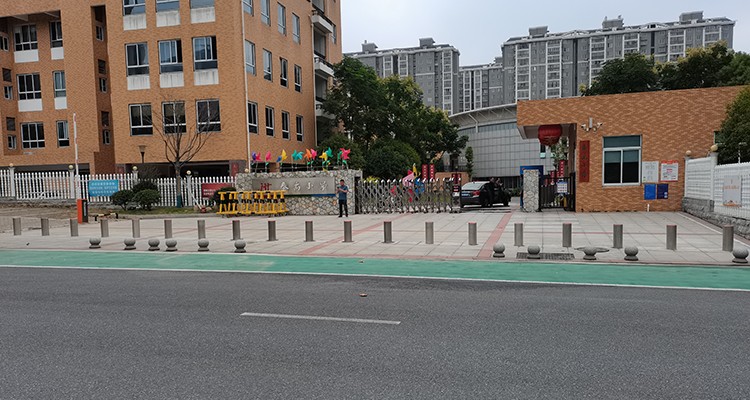
The 120mm bollard extends a platform already proven across airports, ports, banks, and residential developments. To review specifications or discuss a site, visit our automatic bollards page, or read about our engineering approach on the About Us page.
call us :
+86 18206096507 e-mail : [email protected]




 ipv6 network supported