Why 20cm Overlap Matters in Automatic Bollard Design
When evaluating automatic bollards, most buyers focus on crash rating, rise speed, and diameter. But one design detail that separates reliable bollards from failure-prone ones is the overlap between the rising post and the ground sleeve. UPARK uses a 20cm overlap, and this single specification does more for long-term reliability than many buyers realize.
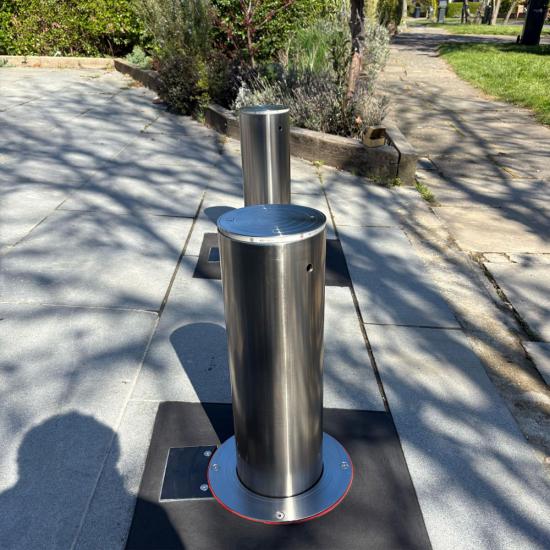
Overlap is the distance the moving post inserts into the fixed ground sleeve when the bollard is in the lowered position. A longer overlap means more structural engagement between the two components. This matters for three reasons.
First, water exclusion. A 20cm overlap creates a deep seal that prevents rainwater, melted snow, and groundwater from reaching the internal mechanism. Shorter overlaps allow water to seep into the housing, where it corrodes motors, freezes in winter, and short-circuits electronics.
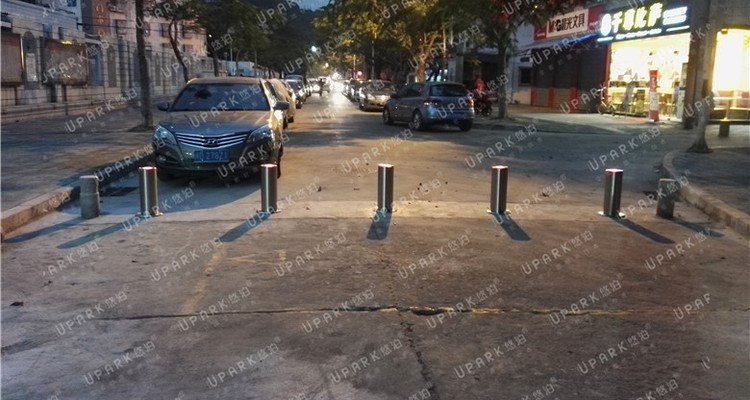
Second, debris protection. Sand, gravel, and organic matter constantly enter shallow bollard housings. The 20cm overlap creates a labyrinth effect that blocks debris before it reaches moving parts.
Third, impact distribution. When a vehicle strikes the bollard, the overlap transfers force into the reinforced ground sleeve rather than concentrating it on the internal motor. This is why UPARK bollards survive snowplow hits and accidental impacts that would destroy a poorly designed unit.
Combined with 6mm+ wall thickness and 36V safe voltage operation, the 20cm overlap is part of UPARK's engineering philosophy: build for decades of reliable service, not just for the first year.
call us :
+86 18206096507 e-mail : [email protected]




 ipv6 network supported