Most platform barriers take their cue from the signaling system. Train stopped at platform? Signaling says lower the barrier. Train leaving? Signaling says raise it. It is simple and it usually works. The problem is the word "usually."
The single point of failure
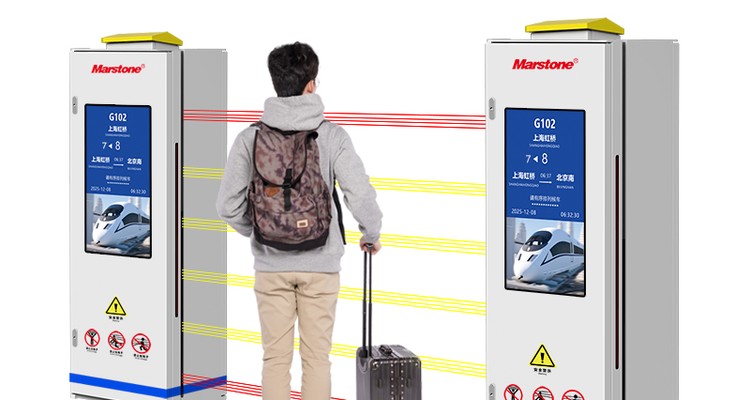
When barrier operation is wired to signaling, a signaling fault becomes a barrier fault. A software hang, a cabling break, a planned upgrade that overruns, any of these can leave the barrier unable to act. On a busy platform, that is not a theoretical risk; it is a scheduling reality.
Vision-based control removes that dependency. The barrier can read the platform for itself. If signaling goes dark, the cameras and the on-site controller still know whether a train is at the edge. The barrier keeps working.
A retrofit, not a rebuild
Adding vision control to an existing platform rarely means touching the signaling cables. It means mounting cameras, installing a local IPC, and connecting the barrier drive to the new controller. For many stations, that is an overnight job during a maintenance window, no station closure, no structural work, no negotiation with the signaling supplier.
That changes the economics of a safety upgrade. Operators who deferred barrier projects because signaling integration looked expensive now have a path that stays inside their own scope.
Fail-safe, and auditable
A vision layer is not a replacement for good engineering; it is a supplement with discipline. The system fails to a safe state on any fault. It suppresses movement when it sees a person or object too close to the edge. And it records everything: video plus a log of every command. After any incident, the sequence is reconstructable frame by frame.
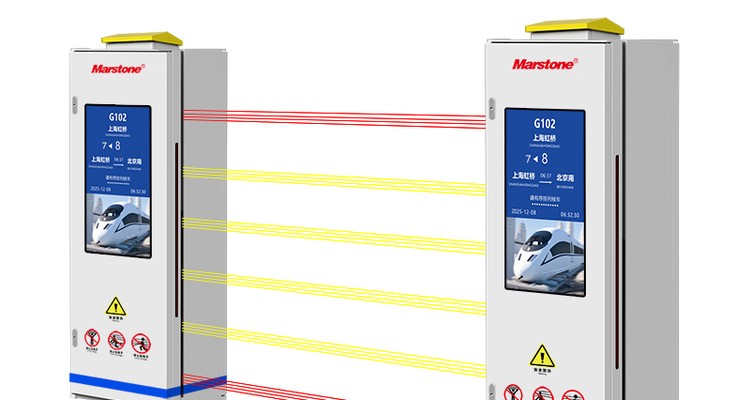
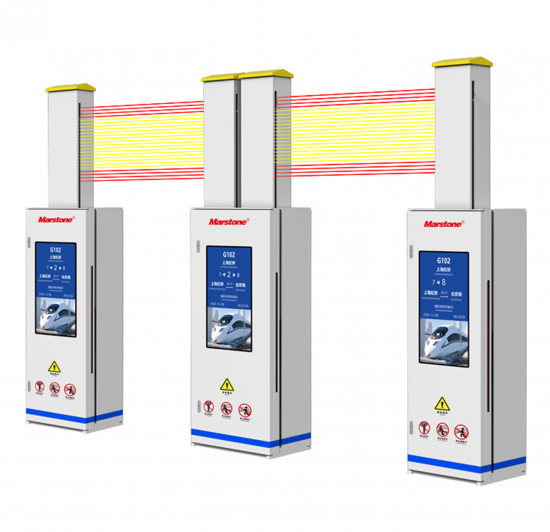
The UPARK Automatic Platform Guardrail already runs on an all-electric, 36V low-voltage drive with fail-safe design. Adding vision control builds on that rather than reworking it.
Beyond safety: a data source
Because the system already watches the platform, it can also report dwell times, crowding near the edge, and how often the barrier actually cycles. Operators get a low-cost sensor network for planning on top of the safety function, without adding separate hardware. The same cameras that protect passengers also help understand how the platform is used.
Proven in the factory
None of this asks operators to take a leap of faith. The camera-to-edge-AI-to-barrier chain has been run in factory testing with 100% availability on the automatic open and close function. The remaining work is environmental, proving the same result under real daylight, rain, and mixed fleets, and that is exactly what pilot deployments are for.
The practical takeaway
Signal dependency is fine until it isn't. Vision-based redundancy gives barriers a second pair of eyes that does not share signaling's failure modes. For stations that cannot afford a single point of failure at the platform edge, that is not an extra; it is the baseline.
call us :
+86 18206096507 e-mail : [email protected]




 ipv6 network supported