For years, platform barriers have taken their cue from the signaling system to know when a train is at the platform. That works until the signaling system does not. A newer approach decouples barrier operation from train control entirely, using cameras and on-site artificial intelligence to make the decision locally.
The idea is straightforward. Cameras watch the platform edge. A small computer in the station reads the video, works out where the train is and whether the edge is clear, and tells the barrier to rise or retract. There is no hard-wired link to the signal room and no waiting for a data feed that may not arrive.
How the system works
At the front end are ordinary high-definition cameras, not special AI cameras, just good-quality industrial models, mounted along the platform. They stream video to an industrial PC (IPC) on a private network. The IPC runs a vision model that detects train position, door state, and whether anyone or anything is too close to the edge.
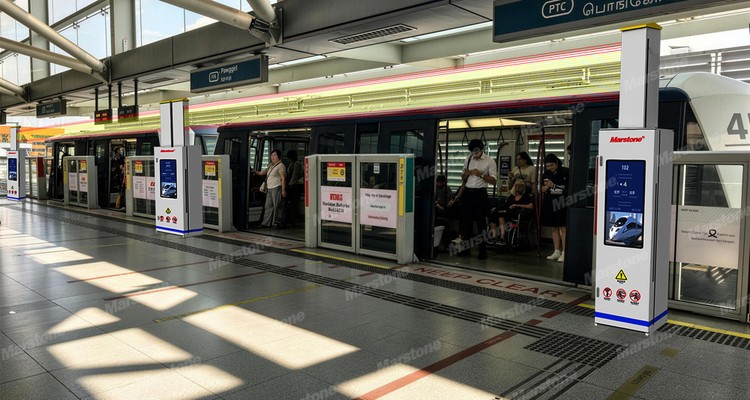
When the model confirms a train is docked and the edge is clear, it sends a command to the barrier drive unit. The UPARK Retractable Cable Barrier or Automatic Platform Guardrail retracts to let passengers board, then rises again once the train leaves and the edge is safe.
Tested in the factory, not just on paper
This is not a concept demo. In factory testing, the full chain of cameras, edge AI, and PRBS barrier ran the open and close cycle reliably, with 100% availability across the test. The function works. What remains is proving it under real platform conditions: changing light, weather, and mixed train fleets.
Where it fits: retrofit and new build
For new stations, the vision controller can be specified alongside the barrier from day one. For existing platforms, it is an add-on that leaves the signaling system untouched. Either way, the barrier, the cameras, and the controller ship as one package, so the operator deals with a single supplier instead of coordinating a camera vendor, a barrier vendor, and a signaling integrator. That single point of responsibility also makes acceptance testing simpler.
Why a private network matters
The vision network runs on its own switches and its own address space, completely separate from the signaling and train-control systems. It reads the platform; it does not write to the signal system. That separation is the whole point. If signaling fails, the barrier can still operate on what the cameras see. If the camera system fails, signaling still works. Neither takes the other down.
What this means for operators
For operators, the appeal is a safety layer that does not depend on a single source of truth. Retrofitting an existing platform becomes a camera-and-controller job, not a signaling-integration project. And every decision is recorded on video, so any incident can be reviewed afterward.
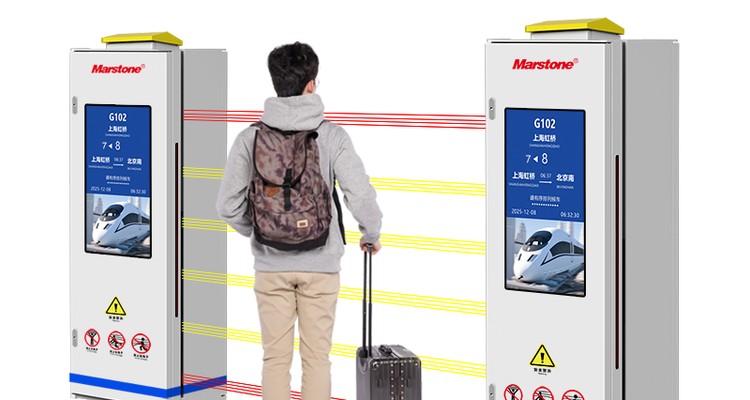
Platform safety is moving from fixed infrastructure to intelligent, local decision-making. Vision-controlled barriers are a practical step in that direction, and the factory results suggest the step is a short one.
call us :
+86 18206096507 e-mail : [email protected]




 ipv6 network supported