People hear "AI camera" and picture a smart lens doing the thinking. The barrier vision system does the opposite. The cameras are deliberately simple. All the intelligence sits in one industrial computer nearby. This choice shapes the entire design.
Cameras: simple on purpose
The system uses standard high-definition cameras, good ones, with infrared for night and wide dynamic range for glare, but nothing with a built-in processor doing detection. They only capture and send video. That keeps each camera cheap, easy to replace, and free of the heat and failure points that come with on-device compute.
More importantly, it keeps the brains in one place. A station can mix camera models and add coverage later without rewriting any AI logic. The cameras are a commodity; the inference is the product.
Edge inference on the IPC
All video streams land on an industrial PC (IPC) on the station's private network. There, a single vision model looks at every feed together and decides the barrier state. Centralizing inference has clear upsides: you upgrade one model, not dozens of cameras. You can cross-check views from multiple angles before acting. And the raw video never leaves the site, which matters for both latency and privacy.
Centralized inference also makes the fail-safe logic easier to reason about. One controller holds the full picture and applies one consistent rule set: train docked and edge clear means lower; anything uncertain means stay put or fail to the safe position.
An isolated network by design
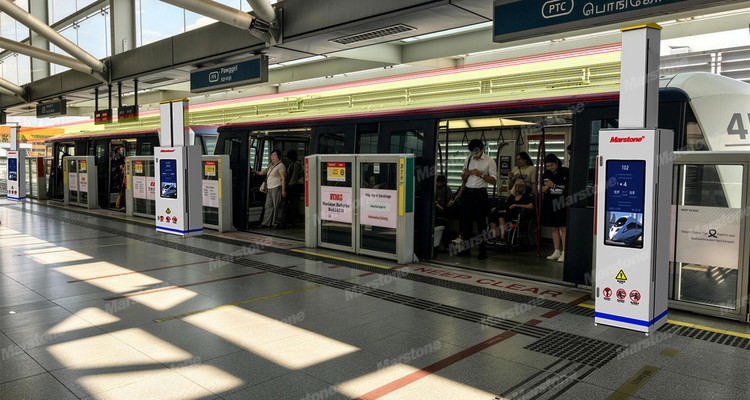
The IPC, cameras, and barrier drives share a dedicated network segment that does not touch the signaling system or the train-control network. Physically and logically, it is separate. The vision side reads the platform; it sends nothing back into railway control.
This removes the risk of common-cause failure. Signaling outages no longer disable the barrier, and a barrier-side fault cannot disturb signaling. Each system can be maintained, audited, and certified on its own terms.
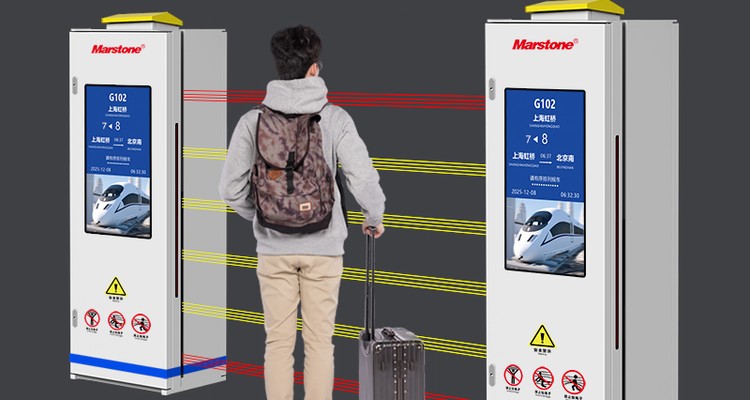
Fail-safe by default
If power drops, the network splits, or the IPC stops, the barrier goes to its defined safe state, typically raised, or held and locked, depending on the site's safety rules. If the vision model's confidence falls below threshold, it does not guess; it hands control back to the operator or the signal system. A station supervisor can also take over manually at any time.
Scaling across platforms
The same controller handles a short bay platform and a 200-meter island platform simply by adding camera views. Mixed fleets with different door positions are not a problem, because the barrier runs the full edge and passengers board anywhere. Curved or stepped platforms are handled by placing cameras to match the geometry. None of this requires changing the AI model, only the camera layout, which keeps rollout cost predictable.
Why this architecture wins
Ordinary cameras plus centralized edge inference plus an isolated network is not the flashiest design, but it is the one that deploys. Lower camera cost, one upgrade point, no dependence on signaling integration, and a clear fail-safe story. For the UPARK Retractable Cable Barrier and Automatic Platform Guardrail, it turns "AI barrier" from a buzzword into a field-ready system.
call us :
+86 18206096507 e-mail : [email protected]




 ipv6 network supported