The pattern repeats every year. A typhoon in the Western Pacific, a hurricane in the Atlantic, or a stalled monsoon front drops 200 mm of rain in a day. Drains cannot keep up, water sits where it has never sat before, and the equipment that fails first is the equipment nobody has looked at since last spring.
Perimeter gear gets forgotten in these reviews because it does not look like a drainage problem. It is a post in the ground. But a bollard is a motor, a control board, and a power supply sitting at the lowest point of your site, which is exactly where floodwater goes.
Here is what to check before the season starts.
Why wet weather produces low-speed, high-cost incidents
Rain does not usually cause high-speed crashes in car parks and forecourts. It causes expensive ones. Speed drops, but so does grip, sight distance, and the driver's ability to judge where the vehicle ends.
Standing water is the specific problem. A film of a few millimetres is enough to trigger aquaplaning at modest speed. A deeper puddle hides the physical cues drivers rely on: kerb lines, wheel stops, low bollards, painted hatching. At night, wet asphalt turns into a reflective sheet, and a low post with a faded reflector band simply disappears.
The result is a vehicle travelling slowly into something it should never have reached. Repairing a roller shutter or replacing glazing costs far more than the spec difference between a decorative post and a crash-tested one.
Standing water and live equipment: why voltage matters
This is the item most checklists miss. If a bollard housing floods and the unit runs on mains voltage, you now have live conductors in standing water at a pedestrian entrance. Even with earth leakage protection, that is a risk you do not want to defend after the fact.
Low voltage does not make a product indestructible, but it changes the consequence of water ingress. UPARK bollards run on a 36 V electromechanical drive with the power supply sited above ground and away from the pit. That arrangement means a flooded housing degrades into a maintenance call rather than a safety incident.
If you are reviewing existing installations, ask two questions. Where does the mains supply enter the pit? And what is the drive voltage at the unit itself? Sites running mains voltage down into below-ground housings deserve a second look before the next storm.
IP67 vs IP68: what the numbers actually cover
Both ratings get printed on datasheets, and they do not mean the same thing.
IP67 covers temporary immersion: 30 minutes at a depth of up to 1 metre, in laboratory conditions. IP68 covers continuous immersion under conditions the manufacturer specifies, which is usually deeper and longer. In practice, a bollard pit after a storm sits somewhere in between, holding water for hours or days rather than minutes.
The rating is only as good as the installation. Cable glands that were never torqued, a conduit entry sealed with silicone in a hurry, or a drain hole blocked with silt will defeat an IP68 housing. When you audit the site, check the sealing at the cable entries, not just the number on the spec sheet.
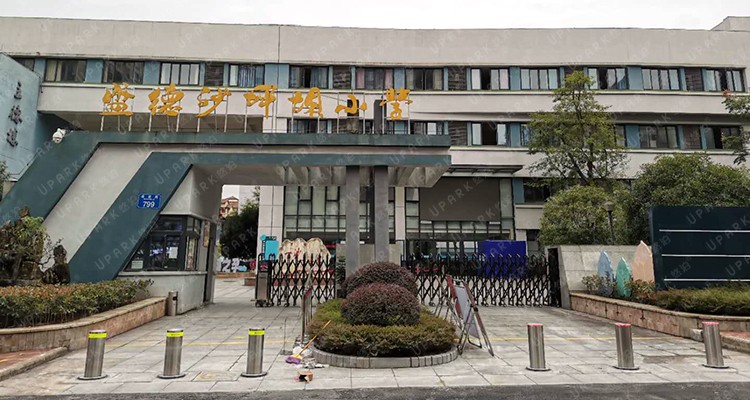
There is also a difference between surviving immersion and operating through it. Ask the supplier whether the unit is rated for operation while submerged, or only for survival by a service call.
Drainage: the cost that never appears on the quote
Conventional bollard installations often need a soakaway, a sump, or a pumped drain to keep the pit dry. That works until the surrounding ground is saturated, which is precisely when it is needed. A pump adds a mechanical failure point, a power draw, and a maintenance item that only gets noticed after it stops working.
A drainage-free design removes the dependency altogether. Because the drive unit is sealed and rated for immersion, there is no requirement to keep the pit dry and no pump to fail. Installation is simpler, you are not cutting into the site's stormwater system, and a saturated water table stops being a threat. UPARK covers this approach in detail on the about us page.
Power failure: can the bollard still move?
Storms take the grid down. When that happens, you have two opposing needs: authorised vehicles may still need to get through, and the site may need to stay secured.
Check what your installation does on power loss. Some units fail locked in the raised position, which is good for security and bad for emergency access. Others drop automatically, which is the right behaviour for a fire lane or an ambulance route and the wrong behaviour for a high-risk perimeter.
Battery backup resolves the conflict by giving you a controlled number of cycles after the mains goes down. Test it. A backup battery that has sat untested for two years will not deliver its rated cycles, and a storm is a bad moment to find that out.
Visibility in a downpour
A bollard that cannot be seen is a bollard that gets hit. In heavy rain, contrast matters more than brightness. Reflective bands work well at night because they return headlight output directly, but a dirty or oxidised band reflects very little.
LED collars are more consistent in fog and spray, since they do not depend on the driver's own headlights. If your site sees regular storms, specify both: a reflective band as the passive fallback and an LED indicator for the conditions where reflectors underperform. Whatever you fit, add band condition to the cleaning schedule.
A practical pre-season checklist
Walk the site during or just after heavy rain, not on a dry day. Pooling only shows up when water is actually moving.
- Note every location where water stands more than a few hours
- Open the housings and check for silt, rust staining, or water marks above the cable entry
- Confirm the cable glands are tight and the conduit seals are intact
- Cycle every unit and time the raise and lower stroke against its specification
- Trigger a power cut and count how many cycles the backup actually delivers
- Clean reflective bands and test LED indicators
- Confirm the emergency lowering procedure and that staff know where the release is
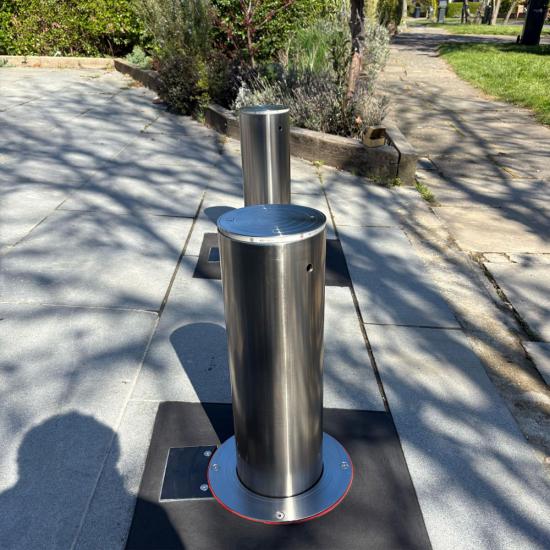
The full product range, including automatic bollards and parking barriers, is specified for wet-climate sites without a pumped drainage requirement.
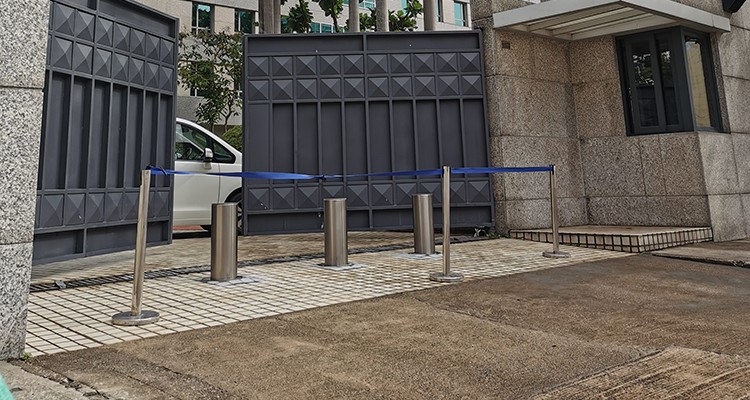
Half a day of checks in spring costs less than one flooded housing in August.
call us :
+86 18206096507 e-mail : [email protected]




 ipv6 network supported