Railway platform safety has become a priority for operators worldwide. For years, the default solution was the platform screen door (PSD), a full-height glass wall that separates passengers from the track. But as more rail networks evaluate their options, a different approach is catching on: the retractable cable safety barrier.
This system uses six stainless steel cables driven by a dual-stage telescopic mechanism. When a train is not at the station, the cables rise to form a physical barrier at least 2 meters high. When the train arrives and doors open, the cables retract below 1.4 meters, allowing passengers to board. It is a simple concept, but it solves problems that PSDs cannot.

The biggest limitation of platform screen doors is their demand for precision. PSDs require trains to stop within a tolerance of roughly 5 centimeters. If the train is off by even a small margin, the doors on the platform and the train do not line up. This works for metro systems with automated train operation, but it rules out many light rail and conventional railway lines where stopping accuracy ranges from 20 to 30 centimeters.
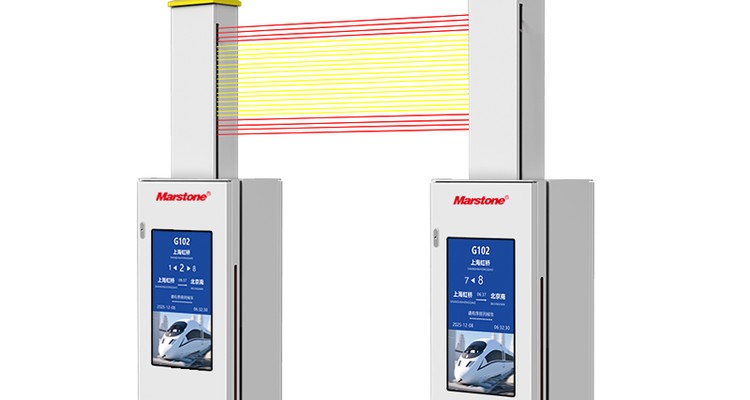
Retractable cable barriers do not have this problem. The cables span the entire length of the platform without rigid door frames aligned to specific train doors, so they accommodate a wider range of stopping positions. A train can stop anywhere within the normal range, and passengers can still board safely once the cables retract. This is why cable barriers are now being specified for LRT networks, regional rail, and high-speed platforms that do not use fully automated driving.
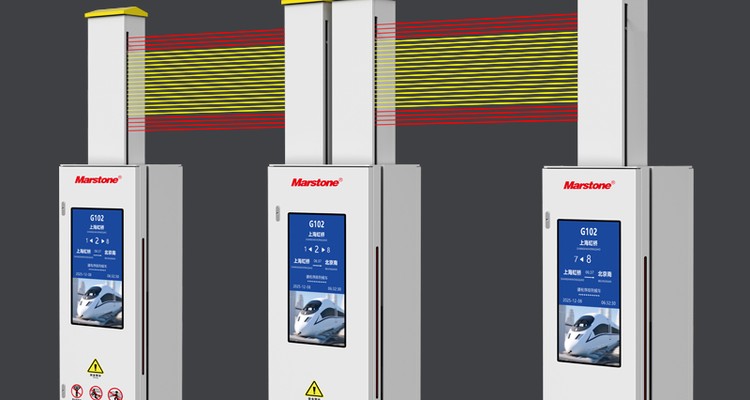
Cost is another factor. Installing PSDs on an existing platform involves major civil work: structural reinforcement, ventilation redesign, and often a full rebuild of the platform edge. The price per platform can run into millions. Cable barriers, by comparison, require only a concrete foundation rated at C30 or above, with a minimum platform slab thickness of 150 millimeters. The posts are bolted into place, the cables are tensioned, and the system is ready. Installation time and cost are a fraction of what PSDs demand.

Ventilation is an underrated concern. Full-height PSDs seal the platform from the track tunnel, which means the tunnel ventilation system has to be redesigned to handle air pressure changes from passing trains. In many older stations, this is either impractical or prohibitively expensive. Cable barriers leave the platform open, so existing ventilation systems continue to work without modification. For retrofit projects on aging rail networks, this alone can tip the decision.
The technical specifications of modern cable barrier systems have also closed the gap that once existed between them and PSDs. UPARK's retractable cable barrier, for instance, operates at SIL2 safety integrity, the same level required for railway signaling equipment. Each cable is made of 304 stainless steel with a tensile strength exceeding 10 kilonewtons, and the system can endure over one million raising and lowering cycles. The entire mechanism raises or lowers in 5 to 8 seconds, synchronized with the train's arrival and departure schedule.
Control flexibility is another advantage. The system supports five levels of control: local manual override at each unit (LCB), platform-level control via the PSL panel, remote emergency operation, system-wide DCU management, and wireless remote control. If power fails, the barrier stays in the raised position, a fail-safe design that prevents accidental access to the track. Each barrier section also integrates a 32-inch PIS display showing train arrival times, car numbers, and platform information at 2000 candelas per square meter brightness, readable even in direct sunlight.
Singapore's LRT system provides a real-world case study. The network's stopping accuracy is around 30 centimeters, far beyond what PSDs can handle. Rather than accepting the risk of an open platform, the operator installed retractable cable barriers. The system has been running reliably, giving passengers the safety of a physical barrier without the rigid alignment requirements of glass doors.
Environmental adaptability is worth noting as well. Cable barrier systems operate reliably in temperatures from minus 30 to plus 65 degrees Celsius, making them suitable for railways in cold northern climates and tropical regions alike. The 304 stainless steel cables resist corrosion from rain, humidity, and salt air, which matters for coastal rail lines and island transit networks where glass panels would need frequent cleaning and maintenance.
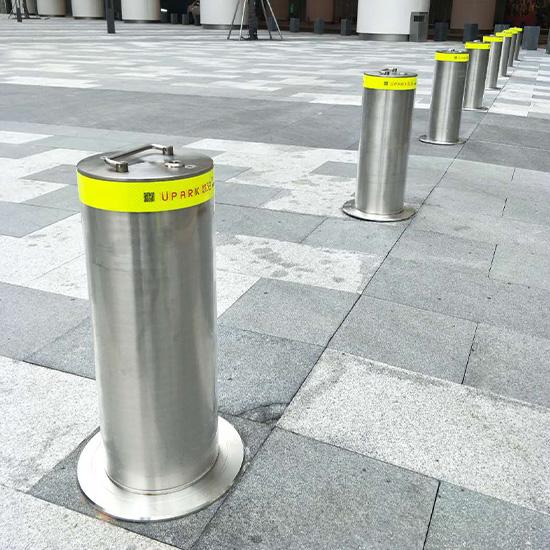
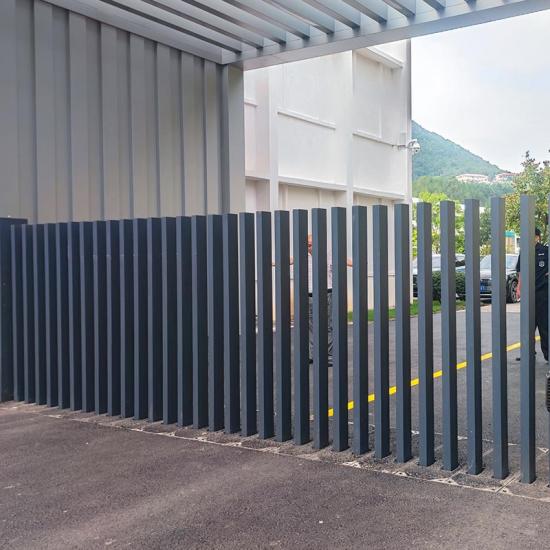
None of this means PSDs are obsolete. In fully automated metro systems where trains stop with millimeter precision, PSDs remain the right choice. But for the majority of railway and light rail platforms where stopping accuracy varies, retrofit budgets are limited, and ventilation redesign is off the table, retractable cable barriers simply make more sense. For perimeter security beyond the platform, consider automatic bollards and fence gates that complement railway safety systems.
call us :
+86 18206096507 e-mail : [email protected]




 ipv6 network supported