A summer storm announces itself. Radar, alerts, water across the car park by mid-afternoon, and someone on site watching the pit at the entrance. Winter rain does none of that. It arrives at 6°C, keeps up for thirty hours, and nobody walks the site in it because there is nothing to see.
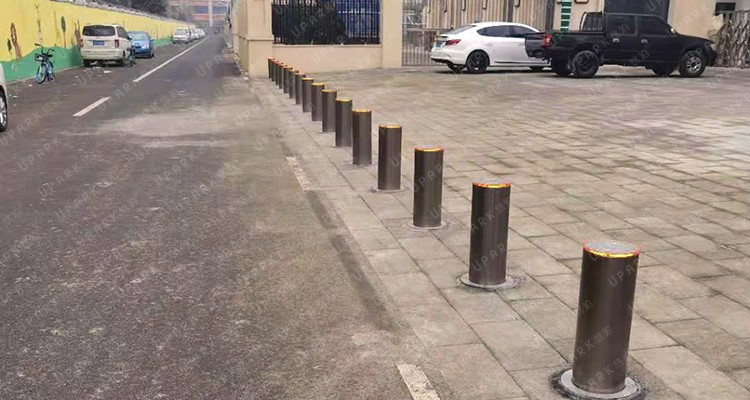
That is exactly why it costs more.
Summer rain is an event. Winter rain is an exposure. The distinction matters because a bollard does not fail from water alone. It fails from water plus time plus temperature, and winter is the only season that supplies all three at once.
The water is not the problem. The water is the carrier.
The seal stops being a seal
An IP68 rating is measured in a laboratory, at room temperature, on a new gasket, at one metre for thirty minutes. Nobody certifies that number at -5°C, on a gasket that has been compressed for two winters.
Rubber does not stay rubber as it gets cold. Nitrile hardens by roughly 10 to 15 Shore A points between 20°C and -10°C, and its rebound falls by more than half over the same range. A seal that returns to shape instantly in July sits flat and slow in January. It also shrinks slightly, which is enough to open a gap measured in microns across a flange.
Water does not need a hole. It needs a path and a pressure difference, and a fifteen-hour drizzle supplies both.
This is the first thing to understand about winter failures: they are not dramatic. There is no jet of water, no tripped breaker, no obvious event. There is a slow wetting of a surface that should have stayed dry, repeated sixty or seventy times across a season.
The water that never came in
Here is the failure that confuses people, including experienced maintenance crews.
Open a housing after a cold snap and find corrosion on the control board. No silt. No waterline. No sign that anything got past the seal. The natural conclusion is a defective gasket. Usually it is condensation.
A control box is not airtight. During the day the air inside warms and takes on moisture. Overnight the housing walls drop below the dew point and water comes out of that air onto the coldest metal in the enclosure, which is the board and the terminals. Morning warms it, the water evaporates, and a thin residue of salts stays behind. Sixty cycles later the board has green corrosion on the pins and the unit starts throwing faults that clear themselves.
The two look similar and they are not. Ingress leaves a waterline, silt in the bottom of the housing, and corrosion that starts at the lowest point. Condensation leaves droplets on the underside of the lid, corrosion concentrated on the coldest surfaces, and walls that are clean below the board.
That distinction decides the repair. A waterline means the gland, the conduit entry or the flange. Condensation means the enclosure needs a breather, a desiccant, or a move to a location with less swing between day and night.
Salt arrives with the rain
In most of the markets that get a real winter, cold rain does not arrive alone. It arrives onto roads that have been salted since November, and it washes that salt into every recess, pit and cable duct on the site.
Chloride is what attacks stainless steel. Grade 304 is the default for bollard housings and it is correct for most sites. Where roads are salted for four months a year, 316 is not an upgrade, it is the right grade, because the molybdenum in it is what resists pitting in chloride. The price difference is small next to replacing four housings.
Galvanised steel follows a predictable sequence. White rust in the first winter. Red rust at the weld seams in the second, because the zinc coating is always thinnest there. Perforation wherever water stood, in the third.
Nothing about this is visible from standing height. It happens inside a recess that nobody opens until something stops working.
The unit that freezes itself shut
Then there is the failure that is purely mechanical and entirely avoidable.
A bollard lowered overnight sits in a recess that fills with rain. Temperature drops after midnight. The water freezes, and by morning the cap is locked into a disc of ice.
At 7 a.m. someone presses raise. The motor is now pulling against a frozen seal with a drive rated for a moving load, not for breaking ice. Something gives. The seal tears, the limit switch loses its reference, or the drive stalls and trips. Either way it is a service call, and the alternative cost nothing at all.
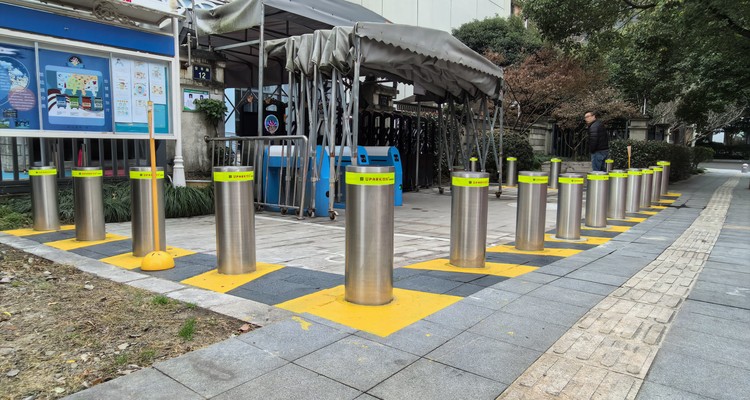
Where ice is forecast, keep the units raised overnight. A raised bollard has no recess full of water, it stays visible in the dark, and it costs one night of access control on a site that is closed anyway.
If the site has to stay open, break the ice by hand before anything is energised.
The battery is rated at 25°C
Cold takes the backup away at the worst possible moment.
A lithium pack that delivers its rated cycles at 25°C delivers roughly 60 to 70 percent of them at -10°C. The electrolyte slows, internal resistance climbs, and the voltage sags under load long before the capacity is actually empty.
Winter storms are also when the grid goes down. The two problems do not take turns.
A voltage check on a cold battery tells you almost nothing. Load-test it, in the cold, and count the cycles it completes. A pack that shows 12.6 V and delivers four raises out of a rated twenty is a pack that will strand an entrance during a blackout.
Five things to do before the cold rain
Walk the site before the first cold front, not after the first failure.
Load-test every backup battery and write down the cycle count, not the voltage.
Open one housing and read the last ingress event. Waterline or condensation. The answer changes the fix.
In salt climates, confirm the grade on the housing and inspect weld seams on galvanised parts, since that is where corrosion starts.
Check gasket material and age. Nitrile loses rebound noticeably after three winters, and a seal that has gone flat will not recover in spring.
Set the ice protocol now. Who decides to leave units raised, and who breaks ice before the morning shift.
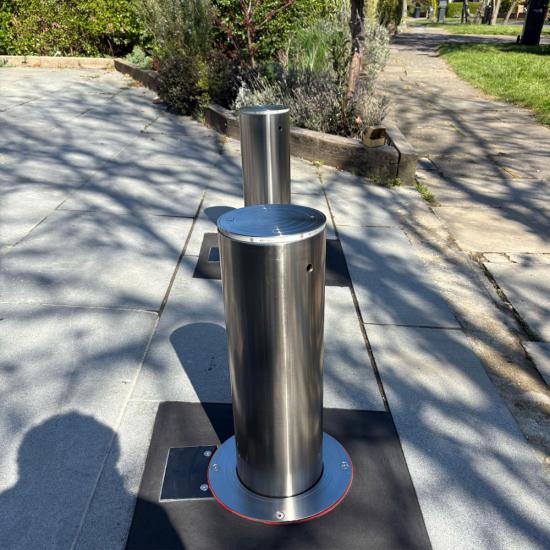
The range is built around a sealed 36 V electromechanical drive with the power conversion above ground, which keeps the part that carries current out of the part that collects water. Details are on the automatic bollards page, with fixed and removable options on the removable bollards page for positions that need occasional vehicle access.
Summer storms get the attention because they are visible. Winter rain does its work in the one season when nobody walks the site. A bollard that survives a flood and then corrodes through a wet January was not specified badly. It was specified for the wrong season.
call us :
+86 18206096507 e-mail : [email protected]




 ipv6 network supported