Ireland's luxury residential market has been fundamentally reshaped by the presence of multinational technology companies. With the European headquarters of Google, Apple, Meta, Microsoft, and numerous other technology firms located in the Dublin area, the capital region has developed a concentrated population of senior technology executives whose security expectations are informed by global standards.
This technology-driven wealth creation sits alongside Ireland's traditional sources of luxury property ownership: agricultural landowning families, professional services partners, and returning Irish diaspora with accumulated international wealth. The result is a luxury market that combines old-money discretion with new-money specification expectations.
Three Irish Luxury Property Zones
1. Dublin Coast — Dalkey, Killiney, and Sandycove. The coastline south of Dublin city centre contains Ireland's most expensive residential addresses. Killiney's hillside properties overlooking Killiney Bay — often compared to the Bay of Naples — command prices exceeding 5 million EUR for substantial properties. Dalkey's characterful village atmosphere combined with sea views creates a residential profile that attracts both Irish and international buyers.
2. Dublin Suburbs — Foxrock, Donnybrook, and Rathmines. Dublin's established suburban luxury districts offer large period properties with extensive grounds. Foxrock, in particular, features gated driveways and substantial villa-style residences that were originally built for Dublin's wealthy merchant and professional classes in the late 19th century. These properties now house a mix of Irish professionals and relocated international executives.
3. Wicklow — The Garden County. County Wicklow, immediately south of Dublin, offers countryside estate living within commuting distance of the city. The Powerscourt, Enniskerry, and Roundwood areas feature country houses and newly constructed luxury residences set in substantial grounds. The Wicklow Mountains National Park provides the dramatic landscape backdrop that defines this market.
The Technology Executive Security Profile
Ireland's concentration of US technology company headquarters creates a security buyer profile with specific characteristics. Senior executives relocating from Silicon Valley, Seattle, and other US technology centres bring established security expectations shaped by American residential security practices. They expect physical perimeter security — automatic bollards, access control systems, and layered surveillance — as standard.
Security integrators in Dublin report that technology-sector clients are the fastest-growing segment of the residential bollard market. These clients specify products with the same rigour they apply to professional technology procurement: data-driven specification comparison, reference checking, and preference for products with established track records and clear certification standards.
Installation Considerations for Ireland
Ireland's maritime climate and planning regulations create several specific requirements:
- Rainfall exposure. Ireland is one of Europe's wettest countries, with annual rainfall exceeding 1,000 millimetres in most areas and exceeding 1,400 millimetres in western and mountain regions. Bollard installations must be specified with enhanced drainage and water-exclusion measures to handle sustained groundwater saturation.
- Coastal exposure. Dublin's coastal luxury properties face the full force of Irish Sea weather, including salt spray, wind-driven rain, and occasional storm surge conditions. Marine-grade materials and enhanced weather sealing are essential for these installations.
- Heritage considerations. Ireland's extensive architectural heritage protections, administered through the National Inventory of Architectural Heritage and local planning authorities, can affect exterior modifications on period properties. Dalkey and Killiney contain numerous protected structures.
- Ground conditions. Ireland's clay-rich soils, particularly in low-lying Dublin suburbs, present challenges for drainage around bollard foundations. Proper site assessment and drainage specification are essential.
Why Irish Homeowners Choose 36V
Ireland's electrical installation standards, governed by the National Rules for Electrical Installation (ETCI/National Standards Authority of Ireland), are based on IEC international standards with Irish-specific amendments. The 36V DC system operates below the low-voltage threshold defined by these regulations.
For Ireland's technology-sector homeowners, the low-voltage approach has particular resonance. These clients understand power distribution architecture and appreciate the elegance of a low-voltage perimeter security system that eliminates the need for mains-voltage connections at the point of use.
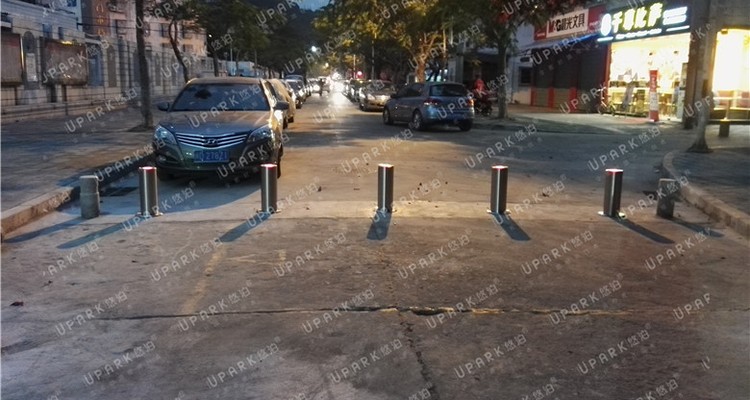
The sealed overlap design addresses Ireland's relentless rainfall by preventing water from reaching the bollard mechanism. In a climate where the ground can remain saturated for weeks during autumn and winter, this water exclusion is a significant practical advantage over less-sealed alternatives.
UPARK Automatic Bollards for Irish Properties
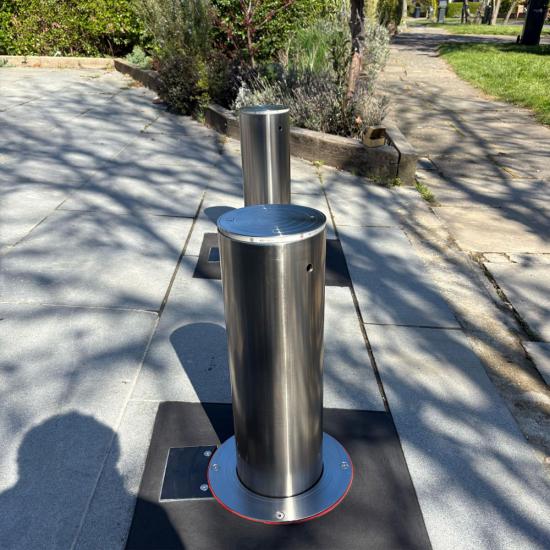
For Killiney and Dalkey coastal properties, 316 marine-grade stainless steel provides the corrosion resistance required by constant salt-spray exposure from the Irish Sea. The brushed satin finish maintains its appearance through the harshest Atlantic weather systems.
For Foxrock and Donnybrook period properties, the UPARK system integrates with the traditional iron entrance gates that characterise these properties. The bollards provide vehicle-stopping capability that complements the existing gate infrastructure without requiring replacement of heritage elements.
For Wicklow country estates, the IP68-rated sealed mechanism handles the high groundwater levels and clay soils common in the Wicklow lowlands. The system operates reliably in Ireland's wet conditions year-round.
Frequently Asked Questions
Do automatic bollards require planning permission in Ireland?
On private property within the curtilage of a dwelling, bollard installations typically do not require separate planning permission from the local authority. Protected structures under the National Inventory of Architectural Heritage may require specific consent for exterior modifications.
What is the installed cost of residential automatic bollards in Ireland?
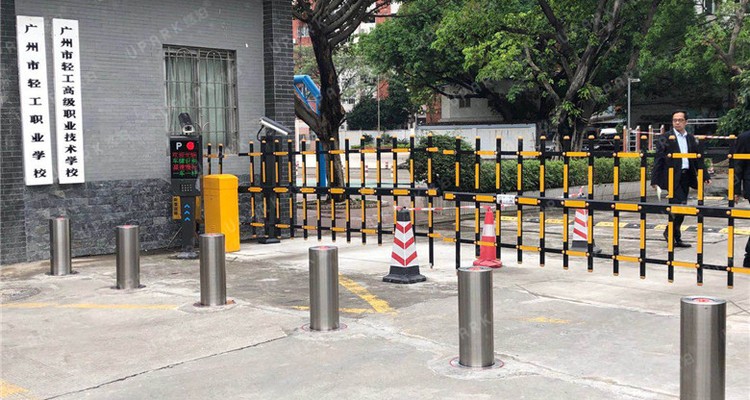
Single bollard installed costs typically range from 7,000 to 14,000 EUR depending on model, finish, and site conditions. Two-bollard driveway installations range from 14,000 to 28,000 EUR. Coastal properties may incur premium costs for enhanced material specifications.
Can automatic bollards integrate with Irish gate automation systems?
Yes. UPARK bollards provide dry contact interfaces directly compatible with the gate automation and intercom systems standard in Irish luxury residential properties. Combined gate-bollard systems provide comprehensive vehicle access control.
How do bollards handle Ireland's heavy rainfall?
The sealed overlap design prevents water infiltration of the mechanism housing. Enhanced drainage specifications are available for installations in areas with high water tables or poor natural drainage.
call us :
+86 18206096507 e-mail : [email protected]




 ipv6 network supported