Luxembourg presents a distinctive luxury residential market defined by three converging factors: the highest GDP per capita in the European Union, a concentration of international institutions and financial services firms, and a small geographic footprint that concentrates wealth into specific residential zones.
The Grand Duchy's residential landscape is shaped by its unique position as a cross-border commuter hub. While the resident population is approximately 660,000, over 200,000 workers commute daily from France, Germany, and Belgium, creating a dynamic where residential property within Luxembourg's borders commands substantial premiums.
Three Luxembourg Luxury Property Zones
1. Kirchberg Plateau. The Kirchberg district, home to the European Court of Justice, the European Investment Bank, and numerous EU institutions, has developed a surrounding residential sector serving senior officials and executives. Properties here combine proximity to institutional workplaces with elevated positions overlooking the Alzette valley. Villa-style residences in adjacent Weimerskirch and Neudorf serve this market.
2. Belair and Merl. Luxembourg City's Belair and Merl districts represent the established heartland of Luxembourgish luxury residential property. Tree-lined avenues, substantial villa plots, and proximity to the city centre create a market where properties are rarely available and command the highest per-square-metre prices in the country. These are typically multi-generational Luxembourgish family properties, alongside residences of long-established expatriate executives.
3. Commuter-Belt Luxury — Rollingergrund, Cents, and Niederanven. As city-centre availability has diminished, luxury development has extended into surrounding communes. Niederanven, positioned between Luxembourg City and Findel Airport, has become a particular focus for newly constructed executive villas with modern specifications and extensive grounds.
The Diplomatic and Institutional Dimension
Luxembourg's status as a host nation for EU institutions, NATO agencies, and private banking headquarters creates a resident population with security expectations shaped by international standards. Diplomats, EU commissioners, and senior banking executives bring experience of physical perimeter security from previous postings in Brussels, London, Washington, and Singapore.
Security consultants serving this market note that diplomatic residents are particularly specific about product specifications: certification standards, fail-safe operation, integration with existing embassy-grade security infrastructure, and discretion in visual appearance. Automatic bollards from established European manufacturers are the expected standard — this market expects products that meet the same certifications applied to institutional installations.
Installation Considerations for Luxembourg
Luxembourg's topography and regulatory environment create specific conditions:
- Terrain variation. Luxembourg City is built across a dramatic valley landscape with significant elevation changes. Many luxury properties occupy hillside positions with sloped driveways requiring careful bollard placement and drainage consideration.
- Cross-border commuting. Properties near the French, German, and Belgian borders may involve contractors and materials sourced from multiple jurisdictions. EU-harmonised product standards simplify this process.
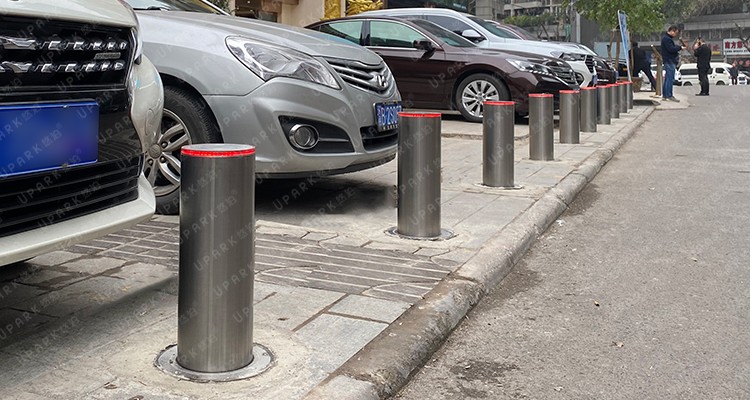
- Historic property stock. Luxembourg's Belair district includes properties dating from the late 19th and early 20th centuries. These characterful homes often have narrow entrance drives requiring compact bollard models that maintain full stopping power within reduced installation footprints.
- Noise regulations. Luxembourg's residential noise standards are enforced through the Environmental Administration. Electric and hydraulic bollards operating within declared noise emission limits are preferred for residential zones.
Why Luxembourg Homeowners Choose 36V
Luxembourg's electrical installations are governed by the Réglement Grand-Ducal framework, harmonised with EU Low Voltage Directive requirements. The 36V DC system operates below the voltage classification threshold, simplifying the regulatory pathway for residential installations.
The economic calculation is straightforward in Luxembourg's cost environment: what appears as a modest per-unit saving on electrical contractor certification costs represents a meaningful economy when applied across multi-bollard driveway installations on properties where total security infrastructure investment can exceed 100,000 EUR.
The 20-centimeter shaft-to-sleeve overlap provides additional protection against Luxembourg's significant rainfall — the country's precipitation levels, combined with valley topography and clay-rich soils, create conditions where effective water exclusion from underground mechanisms is a practical necessity.
UPARK Automatic Bollards for Luxembourg Properties
For Kirchberg executive villas, UPARK bollards in brushed 304 stainless steel provide a clean, contemporary finish that complements the modernist architectural aesthetic prevalent in this recently developed district. Integration with KNX and Loxone home automation systems is standard for properties in this market segment.
For Belair's established residential properties, the satin-finish option provides the understated presence appropriate to these characterful, often heritage-influenced streetscapes. The low operating noise level satisfies Luxembourg's residential noise requirements.
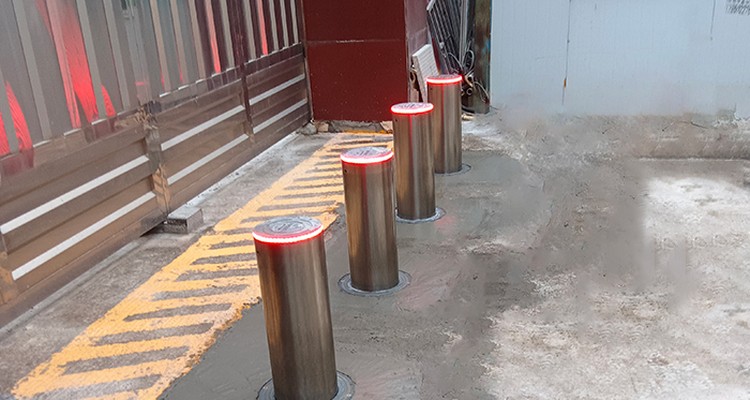
The hydraulic mechanism operates from minus 35 to plus 60 degrees Celsius — covering Luxembourg's full temperature range with margin, including the continental cold snaps that occasionally bring sub-minus-15 conditions during January and February.
Frequently Asked Questions
Do automatic bollards require building permits in Luxembourg?
On private property within cadastral boundaries, bollard installations typically do not require a separate permit from the Administration de l'Aménagement du Territoire. Properties within classified heritage zones in Luxembourg City should confirm requirements with the Service des Sites et Monuments Nationaux.
What is the installed cost of residential automatic bollards in Luxembourg?
Single bollard installed costs typically range from 8,000 to 15,000 EUR depending on model, finish, and site conditions. Two-bollard driveway installations range from 16,000 to 30,000 EUR, reflecting Luxembourg's elevated contractor rates.
Can automatic bollards integrate with EU-grade security systems?
Yes. UPARK bollards provide dry contact and serial communication interfaces compatible with the integrated security management systems standard in diplomatic and institutional properties across Luxembourg.
How do bollards perform on sloped driveways common in Luxembourg City?
UPARK installations on sloped driveways include enhanced drainage specifications and angled mounting options. Professional site assessment ensures correct placement to maintain full vehicle-stopping capability on gradient approaches.
call us :
+86 18206096507 e-mail : [email protected]




 ipv6 network supported